Tahmeena Faryal was 10 years old when the Soviet invasion forced her family from Afghanistan to a Pakistani refugee camp. Her mother was an early member and her father a supporter of RAWA. Educated in RAWA schools in Pakistan, Faryal became committed to working for human rights and women's rights. Faryal cannot use her real name or be photographed as RAWA activists have become special targets of the Taliban and fundamentalists around the world.
RAWA, the Revolutionary Association of the Women of Afghanistan, was formed in 1977 to promote women's rights through non-violent action. Based inside Afghanistan and in neighboring Pakistan, this underground organization evolved in defiance of the Taliban and other Fundamentalists and at great risk to its members.
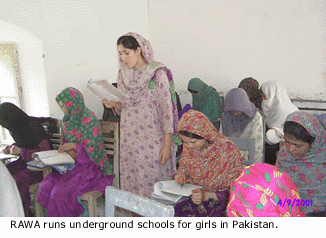
RAWA runs clandestine schools, health clinics, orphanages, self-help classes and provides emergency relief in refugee camps. The recent critically acclaimed CNN documentary "Behind The Veil", by British filmmaker Saira Shah, was made with the help of brave RAWA workers who escorted Shah in Afghanistan.
At a Khaiwa refugee camp in Pakistan, a 45-year-old woman just learning to read told her RAWA teacher how happy she is to be able to read letters from her relatives..."I now know the pleasure of my eyes."
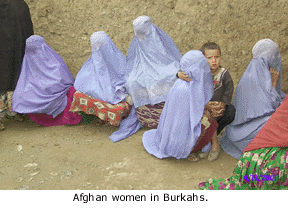
While on a secret journey into Afghanistan to check on home-based schools for girls, Faryal encountered the Taliban secret police in a crowded marketplace. Fully covered and gasping for breath, the mesh cloth covering her eyes, Faryal felt ill.
"I couldn't breathe," she said. "So I lifted the front part of the burka for air." Suddenly, a woman nearby hissed, warning her that the stick-wielding Taliban were approaching. She quickly dropped her covering and regained her anonymity beneath the burkah.
Tahmeena Faryal is a member of RAWA's Foreign Committee. Ethereal and fragile in appearance, her presence is large, committed and from the heart. She can hold an audience captive, as she recently showed the Hollywood crowd at Track 16's RAWA fundraiser to reopen the Malalai Hospital.
My Hero: "When news came that the Taliban were in retreat and the Northern Alliance was poised to take back Kabul, many people thought that a victory, but sadly we now realize that the Northern Alliance may be just as bad as the Taliban. Who do you trust?"
Faryal: "I trust RAWA. Women will never have a life in Afghanistan if fundamentalists have the power. Fundamentalists are misogynists by nature. If any of them are allowed to run the country we will be in the same position as for the last 20 years. Nothing will change."
Faryal says that Jehadi fundamentalist cliques are violently misusing Islam, interpreting the Koran according to their own personal whims and political interests, and using religion as a cover to hide their heinous crimes.
"The abuses against women don't have anything to do with our culture or religion or tradition," she said. "We have had the same culture and religion and tradition for centuries, but this is the first time that people in Afghanistan--and women in particular--have endured these terrible experiences in the name of the culture of Afghanistan."
Faryal has traveled in the U.S. to rally support for RAWA and urge U.S. policymakers to include Afghan women in any initiatives affecting that country's future. She has met with officials of the United Nations in New York and the State Department in Washington. 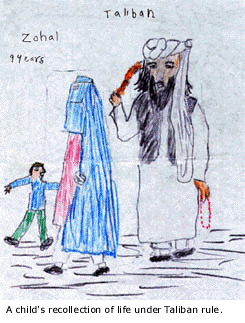
"Not just the U.S., but the United Nations and the international community should make sure that women are part of any future government of Afghanistan," Faryal said. "Our society cannot function without women's participation."
WHO ARE THE TALIBAN?
Since 1996, members of the Taliban have ruled Afghanistan. During this time they have all but eliminated women's rights. President George W. Bush recently declared, "The Taliban is the most repressive, backward group of people we have seen on the face of the earth in a long period of time." According to the U.S. State Department, Afghan women once comprised 70% of schoolteachers, 50% of government workers and university students and 40% of doctors. The Taliban closed schools saying they were "gateways to hell," and made it illegal for women to work.
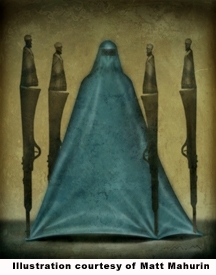
Under the Taliban, girls could not attend school and women could only leave the house in the company of a male relative and wearing the head-to-toe burkah. They could be beaten for speaking above a whisper, showing any skin or making a noise while walking.
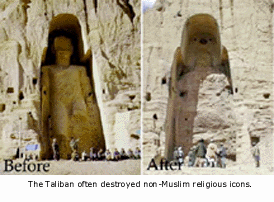
The Taliban regime cruelly reduced women and girls to poverty. "Animals have more rights than women in Afghanistan," says Faryal. "Women in Afghanistan used to take part very actively in the society. They had decent lives, hopes for their future and the future of their children. "
THE NORTHERN ALLIANCE
From 1992-1996, warring fundamentalist factions vied for control of Afghanistan. They fought among themselves and, according to Faryal, "destroyed 70 to 80 percent of Kabul. They looted museums and hospitals and schools and sold what they found. They committed atrocities on women and children. Possibly they committed the worst crimes in Afghan history." These groups have now banded together against the Taliban, calling themselves the Northern Alliance. The Northern Alliance has learned how to pose as democratic and even as supporters of women's rights. In fact, they have not changed. RAWA believes that if the Northern Alliance comes to power, they will reprise the former period of instability and infighting.
WHAT RAWA WANTS
"We want a society that respects freedom of speech and beliefs," Faryal says. "We want a secular democracy that respects women's rights and human rights. We have spoken with the U.S. State Department and Congress, but we think the United Nations is most important."
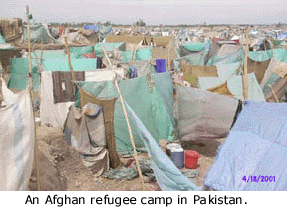
RAWA members believe that the majority of Afghans support the former King Zahir Shah (deposed in 1973). They maintain that while he was in power, Afghanistan was a completely different country, and that he could set up a transitional government which, with the help of an international peace-keeping force, would restore stability to the country and allow for free and fair elections within the period of a year.
RAWA's official position is that the UN should withdraw its recognition to the so-called Islamic government headed by Rabbani and help the establishment of a broad-based government based on democratic values.
The people of Afghanistan have been Muslims for the past several centuries and will not allow gangs of rapists, murderers and traitors to teach them their faith with a stick once again.
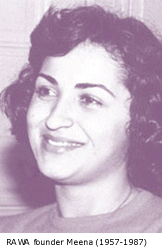
These words from a poem by RAWA'S martyred leader Meena (1957-1987), seem to be more urgent for the women of Afghanistan today than they were when she wrote them.
Has the condition of Afghan women changed after the Taliban lost power? Not much, according to reports from RAWA. Although there is a female presidential candidate, Massouda Jalal, women in post-Taliban Afghanistan are still wearing burkahs out of fear for their safety, and they are still being dragged to prison for the same "crimes" that the Taliban used to arrest them for. While fundamentalism remains strong, the violence against women continues. Still, the chaos has created a small space for women to squeeze through for a breath of fresh air, and many of them (especially the young women) are optimistic about the future.
What are the results of the United States' invasion of Afghanistan?
"Unfortunately, the news that people hear about the new government is that Afghanistan is a liberated country now. That's not the reality. Women are not liberated: there really hasn’t been much change in the situation. Human Rights Watch reported on one province where the warlord doesn’t care about the central government. They concluded that the situation isn’t any different than before: murder, explosion, an assassination attempt on the president of the country. In another Northwest Province recently there was a clash between warlords. Thirty-seven civilians were killed and 3 women raped in the Northern Provinces. Two warlords were fighting. They really smashed the dream of people for peace; they thought September 11 would be a window of opportunity for peace. Before the Taliban, the Northern Alliance killed, raped women and also forced women into marriage. About 50,000 people were killed in fighting, people welcomed the Taliban."
Page created on 8/25/2011 12:10:48 AM
Last edited 1/6/2017 4:13:59 PM
The brave women and men who support RAWA's cause and participate in both the public non-violent protests and demonstrations calling for social change and action – as well as in the often clandestine task of educating women and girls, of providing medical and other needed services and more – are bravely and selflessly continuing in the urgent struggle for women’s rights.
Since being interviewed by My Hero, the work of these heroic individuals has pressed on at what appears to be an ever-increasing rate. RAWA has received both international commendation for their work and has continued to make their presence known in Afghanistan and nearby areas - sending out a call for fairness, equality and basic human rights for all, as well as exposing the barbaric actions of fundamentalists against women.
On November 22nd, 2002 the University of Antwerp, Belgium, awarded RAWA an honorary doctorate for its service to society, honoring the “outstanding social achievements which have earned the members of RAWA international renown and great moral stature.”
On November 25th, 2003 in Barcelona, Spain, RAWA received the prestigious 20th annual Alfonso Comín Fundación Award in honor of “their commendable efforts while endangering their lives in the struggle for the rights of women and men and for democratic and secular values in Afghanistan."
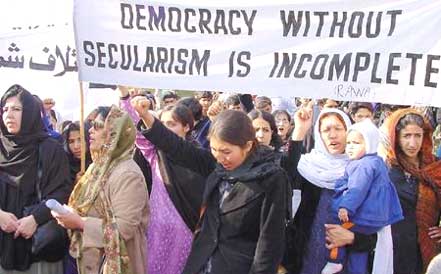
On December 10, 2003 RAWA marked International Human Rights Day by holding a demonstration in front of the UN headquarters in Islamabad. They bravely held their signs high with slogans such as: “Without separation of state from religion, restoration of human rights is not possible." Hundreds of Afghan refugee women and girls participated, but lack of funding didn’t allow for more interested women from further inside Afghanistan to come and partake.
On March 10, 2004 over 1,000 people participated in the International Women's Day event in Peshawar city. Supporters came in from other countries as well, such as Italy and Iran. A large number of women from refugee camps in Peshawar and members of RAWA centers participated. The “patriotic songs” of RAWA students were well-liked by all, and following, the students put on a theatrical performance which covered topics such as: how fundamentalism in Afghanistan was started and by whom, the crimes of warlords in Afghanistan, and the resistance of Aghan women.
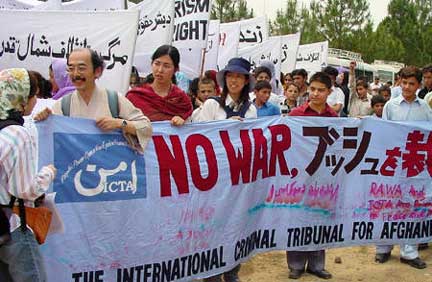
On April 27th, 2004 RAWA rallied on the "Black Day," commemorating the seizure of Kabul by fundamentalists on April 28th, 1992. RAWA demonstrated in front of the United Nations headquarters in Islamabad. A team of 12 Japanese supporters of RAWA from the International Criminal Tribunal for Afghanistan (ICTA), led by Professor Maeda Akira, came from Tokyo to join in the demonstration in a front of solidarity.
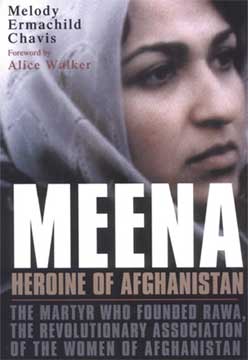
Published in fall of 2003
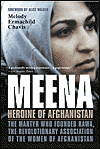
Through RAWA, Melody Ermachild Chavis wrote this touching tribute to the Afghan heroine, Meena, the brave young woman who, in 1977 at the age of 20 and while a student at Kabul University, founded and led the first movement for women's rights in Afghanistan, RAWA, until she was assassinated in 1987 at the age of 30. This is the first-ever biography of Meena, who is considered a martyr for her cause. Her life symbolizes the movement for women's rights in Afghanistan and her image, which regularly appears on signs at RAWA rallies, serves as a constant reminder of the need for an end to violence and oppression. She was a a peaceful warrior, a brave selfless leader, a promoter of human rights and dignity - who lives on in the hearts of reformist-minded women in Afghanistan and their supporters, worldwide.
Using her experience as a private investigator, Chavis traveled to Afghanistan to interview Meena's friends and colleagues, as well as men and women who are still in danger of attack by fundamentalist terrorists because of their support of women's rights. Covering a variety of historical and political topics and issues in Afghanistan and the surrounding areas as well as Meena's life story, the book provides great insight to readers worldwide, to whom many of the atrocities and suffering described may be quite shocking.
Meena is portrayed as she truly was -- a selfless, tireless warrior for women's rights who overcame personal tragedy and physical illnesses and limitations, yet steadfastly continued in her quest to help others and in her dream of democracy. She was a brave mother, a skilled poet, an intelligent and beloved leader, and a political activist.
Meena, Heroine of Afghanistan: The Martyr Who Founded RAWA, the Revolutionary Association of the Women of Afghanistan is purposefully written in a way in which both girls and women can relate to. Especially appealing to young adults, this portrayal of a true modern-day heroine will inspire young women everywhere to find the heroes around them, and the hero within themselves, as Meena once did, herself, as a young woman.
Tell anyone who will listen that women MUST have a voice in the new government of Afghanistan. They have held positions of authority before and it is now URGENT that they do so again.
The internet has been a Godsend for RAWA. When the RAWA Web site was created in 1997, members said women felt connected to the outside world for the first time. "Two people signed onto the site and we were so excited," Faryal said. "In 1999, we couldn't believe it when 300,000 people visited the site."
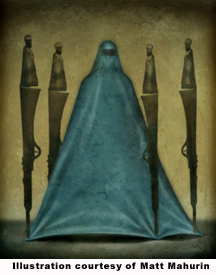
This note was recently sent to MY HERO from RAWA: please consider supporting this important organization:
Our poor people are facing even more painful tragedies and an unbelievable humanitarian crisis threatens the lives of hundreds of thousands of Afghan people. WE BEG FOR YOUR URGENT HELP.
You can contact RAWA via email at [email protected]