 |
One evening in 1955, a poor black farmer named Clarence was driving along a deserted highway in eastern Alabama. Although the ancient car rattled and chugged precariously, Clarence wanted to get home to his wife and nine children, and cautiously gained speed. The car hit a bump in the road and a tire rod came loose, putting the steering mechanism out of order. Clarence lost control; he felt the car swerve and hit the concrete median of the highway, felt his body ram against the door, and then the world before him became blurry. He pulled off the road to recover himself before driving on.
Unfortunately, a state trooper had partially witnessed the incident and, not understanding what he had seen, pulled Clarence out of the car and demanded to know why he was driving drunk. Clarence, fully aware of how powerless he was facing a white policeman, tried to argue that he wasn't drunk, just dizzy. But the trooper had no patience for him or any black man; he hit him on the head with a blackjack, dragged him to the jail in Tuskeegee, and charged him with drunk driving and (because Clarence had tried to argue on his own behalf) resisting arrest. The next morning Clarence would have to appear before the county judge.
 |
The judge was actually a justice of the peace who held court in the country store he owned on U.S. Highway 80. Clarence, far too poor to afford a lawyer, brought along the best representation he could: his boss' 19-year-old son, Morris Seligman Dees, Jr., known to people in the county as "Bubba."
The state trooper who had arrested Clarence was inside the courtroom drinking a Coke, and the presiding judge was cutting a piece of cheese for a customer. The judge eyed the two men, then addressed the younger white man.
"What do you want, Bubba?"
Dees spoke like a lawyer. He told the judge that he believed Clarence had been wrongfully arrested. He repeated his friend's story and then made a little closing argument. Then the state trooper told his side of the story. The judge banged his fist on the cheese board and pronounced Clarence guilty, and Morris Dees Sr., as Clarence's boss, would have to pay a stiff fine. Dees knew Clarence wasn’t a drinker and certainly had not been driving drunk. That night, the young man told his father the whole story. His father remarked that the judge often made money off of his "fines."
"That wasn't right," said Morris Dees Jr.
"Then why don't you become a lawyer and do something about it," answered his father.
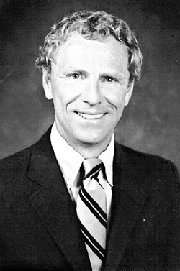
Born Dec. 16, 1936, in Shorter, Macon County, Ala., Morris Dees had been around black farmers all his life. At 10, he had worked in his father's fields alongside the other hands. And he learned. He watched once as his father drank from a water dipper after a black woman, something that impressed Dees as unusual. His father taught him to respect blacks and be mindful of their humanity, an attitude which was, for the South of the late 1940s, far ahead of its time. Early on, he had learned that his parents' attitudes towards blacks was different from that of other whites, even those in his family.
It was a time of turmoil and change when Dees attended the University of Alabama, which was still all white. In 1956, when a black woman named Arthurine Lucy showed up for her first day of class, racist whites severely harassed her. Dees responded to the occurrence by trying to discuss it with the congregation at the Baptist Sunday school session which he led on campus. The minister and congregation responded to his concerns by firing him.
By 1960, when he received his law degree at the University of Alabama School of Law, he was married, had two sons and a thriving mail-order business. Business was so good that Dees did not see the need to actually practice law for some time, nor did he give time to the civil rights demonstrations which were beginning to heat up.
In 1963, a bomb went off in a Birmingham Baptist church, killing four little girls. Dees once again tried to speak to his congregation, suggesting that they help the other Baptist church. The congregation all but refused.
Dees involved himself a little in the Civil Rights Movement, driving participants to the march led by Martin Luther King, Jr. Finally he was ostracized from the white Baptist community, and joined with the Unitarians, who shared Dees' concern for civil rights.
For some years, Dees continued to run his business, which had evolved into a large cookbook publishing company. Then one day in February 1968, a snowstorm changed the course of his life. A grounded airplane left him stuck in the Chicago airport for several hours, and he wound up in the airport's bookstore, reading through a copy of Clarence Darrow’s The Story of My Life. It was then that he realized just what he could do with his law degree. Of his sudden decision to practice civil rights law, he said: "All the things in my life that had brought me to this point, all the pulls and tugs of my conscience, found a singular peace. It did not matter what my neighbors would think, or the judges, the bankers, or even my relatives."
Dees sold his publishing company and got his new career off to a rousing start when, in 1969, he sued to integrate the YMCA. This was a complicated matter because although the 1958 desegregation laws made it illegal for blacks to be barred from public places, like parks and swimming pools, whites still held political power and avoided contact with blacks whenever they could. The city of Montgomery, Alabama, had decided to close the parks rather than force its white citizens to share space with its black ones. The Montgomery city government, while closing down public recreation facilities, had made a secret agreement for the YMCA to provide those same services in a private setting, where blacks could be excluded. And the YMCA colluded; two black boys tried to apply for its summer camp, and their applications were not accepted.
Morris Dees had his work cut out for him. Discovering the city's secret agreement set him against the interests of powerful government and city leaders. The YMCA, desperate to keep Dees quiet, began searching his past for any information with which they could blackmail him. Dees had nothing to hide, but knew about the investigation and used it to his advantage. He tricked the YMCA into admitting in writing that they were “investigating” him in exchange for an out-of-court settlement. Then, with the written admission firmly in hand, he went straight to the courts and exposed both the secret agreement and the YMCA's attempts to coerce him into quitting the case. He then argued that because the YMCA received funds from the government, it was actually a public institution and couldn't legally exclude anyone. The association was ordered by a judge to desegregate and ordered to pay attorney’s fees, which Dees and his colleagues would forefeit if the YMCA would offer scholarships to poor black children. The YMCA agreed.
This was the first of many victories for Dees' civil rights practice. He and a young lawyer named Joseph J. Levin Jr. founded a law firm that would eventually become the Southern Poverty Law Center, providing free legal services for the poor. They raised money for the center by direct mail, and a co-founder of SNCC, Julian Bond, agreed to serve as president of the Law Center.
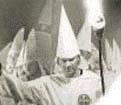 |
The Southern Poverty Law Center addresses itself to three main concerns. The first is the existence of the Ku Klux Klan, which, like a virus in the body, lingers indefinitely and occasionally flares up when times are hard. In 1981, Dees sued the KKK to prevent them from terrorizing Vietnamese fishermen in Galveston Bay, Texas. He began to follow the activities of the Klan and many of its leaders. After he began pursuing the hate group, Dees received death threats, and then one night in 1983, the Law Center, which contained files criminally implicating the Ku Klux Klan, mysteriously burned down.
 |
The Center also defends individuals against racist governmental policies and against the system of justice itself. In 1971, the SPLC defended a white person in a reverse discrimination suit. The SPLC worked to change the jury selection process so that juries would truly reflect the general population. Because blacks and poor whites receive the death penalty more often than other kinds of defendants, the SPLC takes a great interest in death penalty cases. Generally speaking, the SPLC has made it possible for Southern blacks and poor whites to get fair trials. In part Dees has tried to fix the injustice he witnessed in 1955 when his father's tractor driver Clarence was arrested and fined by a crooked justice of the peace. Though the days of the general-store courtroom are over, a distinct element of racism and classism persists in American courts today.

The Center's third effort is Teaching Tolerance, a collaborative project with schoolteachers from all over the country to educate kids about interracial respect. Morris Dees Jr. has received numerous medals and honorary degrees from law colleges around the country and has written several books, most recently The Gathering Storm: America’s Militia Threat, with James Corcoran, HarperCollins Publishers, 1996.
Facts for this story were taken from the memoir A Season for Justice: The Life and Times of Civil Rights Lawyer Morris Dees, with Steve Fiffer, Charles Scribner’s Sons, 1991, and from the Southern Poverty Law Center's website.
Morris Dees' hero is Clarence Darrow.
Page created on 6/30/2004 3:43:54 PM
Last edited 1/6/2017 4:05:50 PM
Mr. Dees has done more to help race relations in this country than anyone else I can think of. I wish more than anything that we lived in a world that was blind to a person's skin color. Like the song Garth Brooks sings, "We shall be free." In the song one line is, "And the last thing we notice is the color of skin." "We shall be Free." Thanks for this wonderful website.