![]()
|
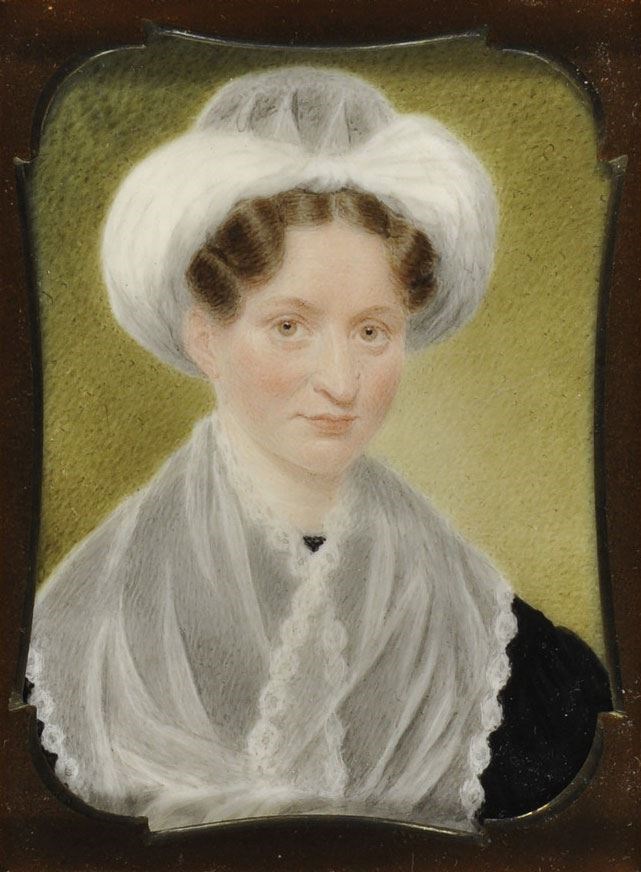
Mary Lyon, founder of Mount Holyoke College, was a pioneer in the struggle to
establish institutions of higher education for women. Mary Lyon was born
on February 28, 1797, on a remote New England farm. The Lyon family lived in Buckland, a town in the hills of western Massachusetts.
In 1814, townspeople offered Mary Lyon her first teaching job at a summer school in Shelburne Falls, a town next to Buckland. She was 17 years old. At the time, teachers needed no formal training--young Mary Lyon’s reputation as an excellent student years earlier was enough of a qualification. Female teachers were especially in demand due to a growth in population and large numbers of men moving west in search of better opportunities. Teaching fired Lyon’s desire to continue her own education, a goal not easy to achieve in the early 19th century for an intelligent young woman with little money. Although private female academies, often called seminaries, were springing up in New England, women of modest means, like Mary Lyon, could not afford their fees. Moreover, the curriculums, which included "lady-like" skills like drawing and needlework, were far less challenging than at male schools where students studied subjects like geometry, science, and Latin.
Despite the financial burden and a busy teaching schedule, Mary Lyon was determined to further
her learning. In her own words, she gained "knowledge by the handfuls." She alternated time
spent in classrooms and at lectures--sometimes traveling three days by carriage to enroll at a
school--with teaching and running a school. Against the advice of her family, Lyon paid for her
education by cashing in a small inheritance from her father. Ever frugal and resourceful, she saved
a portion of her small salary and traded coverlets and blankets she had woven for room and
board.
The year, 1834, was a turning point for Mary Lyon. She decided to leave Ipswich Female
Seminary, where she was assistant principal, and focus all of her time and efforts on founding an
institution of higher education for women. For the next three years, she crusaded tirelessly for
funds and support. It was not the best time to ask people for donations--the United States was in
a severe economic depression. But Mary Lyon persisted. She wrote circulars and ads announcing
the plan for the school, raised money, persuaded prominent men to back her enterprise, developed
a curriculum, visited schools and talked to educators as far away as Detroit, chose the school’s
location, supervised the design and construction of a building, brought equipment, hired teachers,
and selected students. She endured ridicule from those who felt her ambitious undertaking would
be "wasted" on women. Her constant travels often left her in a state of exhaustion. Yet, Mary
Lyon never doubted her belief that women deserved to have the same opportunities for higher
education as their brothers.
In 1837, Mary Lyon was an educator ahead of her time. She required seven courses in the sciences and mathematics for graduation, a requirement unheard of at other female seminaries. She introduced women to "a new and unusual way" to learn science--laboratory experiments which they performed themselves. She organized field trips on which students collected rocks, plants, and specimens for lab work, and inspected geological formations and recently discovered dinosaur tracks. She invited distinguished scientists to give lectures, and inspired women to pursue careers in the sciences as college teachers and researchers. Mary Lyon herself taught chemistry. Her interest in the sciences and high expectations for women sparked a tradition of leadership in science education that continues to this day at Mount Holyoke College.
The success of Mount Holyoke opened the doors of higher education for women. Mary Lyon
proved that women were as intellectually capable as men, and that an institution for women
offering a college curriculum could survive financially. Her impact on education was felt across
the United States and in distant corners of the world. Graduates of Mount Holyoke Female
Seminary carried Mary Lyon’s ideals and teaching methods into schools which they founded or
taught at, in places like Albert Lea, Minnesota and Marion, Alabama; Bitlis, Turkey and
Honolulu, Hawaii; Umzumbe, South Africa and the territory of the Cherokee Nation; Kobe,
Japan and Clinton, New York. One founded the first public school in Oklahoma; classes were held
in a tent. Through the work of Mount Holyoke’s alumnae teachers, the quality of elementary and
high school education improved nationwide; the presence of well-educated female teachers in the
classroom offered role models for bright and aspiring girls and young women.
|
|
Written by
Lu Stone
Photos courtesy of Mount Holyoke College |
|
Mary Lyon Website: Explore Mount Holyoke College's Mary Lyon Website. Visit Mount Holyoke College's Home Page |
|
|
RECOMMENDED
READING | |
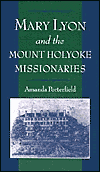
![]() Mary Lyon and the Mount Holyoke Missionaries by Amanda Porterfield |
![]() | ![]() | ![]() | |
| Ana Eugenia Posada is a dedicated teacher who provides help and support to children with learning difficulties. | Andrew Greene Jr. of Sierra Leone teaches the world about peace. | Annie Mansfield Sullivan Macy developed new methods for teaching blind and deaf students. | Atsuko Shiwaku set up the International Intercultural Mural Exchange Project to promote peaceful coexistence. |
![]() | ![]() | ||
| Baba Coleman is a drumming teacher who instills self-determination in his students. | Barry Guillot is a middle school teacher who makes science come to life through service-learning. | Barry Kramer empowers students to ask questions and find answers through Learning Circles, a telecollaborative learning experience. | Bill Belsey is a teacher with a mission to stop bullying. |
![]() | ![]() | ![]() | |
| Cheikh Darou Seck is an English teacher in Senegal who inspires his students to become MY HERO reporters. | Christa McAuliffe was the first teacher to fly in space. | Domingo F. Sarmiento was a distinguished educator and president of Argentina. | Dr. Ed Gragert works towards peace and global education. |
![]() | ![]() | ![]() | |
| Dr. H. Arief Rahman is admired by his students for the way he speaks his mind and encourages them in their studies. | Dr. Norman Isaacs is an inspiration to the staff and students at Millikan Middle School. | Dr. Robert Ballard and the JASON project bring scientific exploration to children around the world. | Eeva Reeder is passionate about teamwork and hands-on, real-life applications of abstract mathematical concepts. |
![]() | ![]() | ![]() | |
| Emi Yuliaty encourages her students to believe that where there is a will there is a way. | Erin Gruwell is the founder of Freedom Writers and an inspiration to teachers and students around the world. | Eva La Mar uses visual learning and communication tools to deepen understanding of geography, geology and local history. | Film Festival 2005 Teacher Award Get a Clue Carol Anne McGuire teaches visually impaired children and founded Rock Our World. |
![]() | ![]() | ||
| Gary Birch is a compassionate educator and role model to his students. | Geeta Malik is a media arts educator for The MY HERO Project. | George N. Parks inspires his band students to do their best and have fun with music. | Georgiana Munteanu, My English Teacher inspires her students to believe in themselves and to love and respect nature. |
![]() | ![]() | ![]() | ![]() |
| Giuseppe Fortunati is a computer teacher from Italy who uses the Internet to promote cultural exchanges. | Hero Teachers of a Dyslexic is a personal story that seeks to guide and encourage students who learn differently. | Herschel Vaughn conducts an after-school program that teaches music, discipline, and friendship. | Jacqueline Melnick is a music teacher. |
![]() | ![]() | ||
| James Burke developed a model of discovery called the Knowledge Web to connect information across space and time. | Jason Wilcox was a teacher at Glenmore Christian Academy. | Jason XV: Teacher Argonauts Eight talented teachers from the US and Bermuda took part in Jason XV: Rainforests at the Crossroads in Panama. | Jesse Thyne was a generous soul with a passion for teaching. |
![]() | ![]() | ![]() | ![]() |
| Judy Warner worked to create a public high school for technology. | Laurel Schmidt encourages her fifth graders to get involved. | Louis Braille invented a system of writing and reading used by blind people all over the world. | Luisa Orellana is an English as a second language teacher who inspires her students to reach for their dreams. |
![]() | ![]() | ![]() | |
| Mali Bickley uses technology to help her students connect with their peers around the world to build empathy and tolerance. | Marco Torres helps students empower themselves through the mastery of multimedia. | Maria Montessori developed a new approach to education. | Marsha Goren is much beloved by her students for her genuine commitment to them. |
![]() | ![]() | ![]() | ![]() |
| Martha Mecartney is a scientist, engineer and professor committed to helping young women interested in the field of science. | Mary Lyon established the U.S.'s first college for women. | Mary McLeod Bethune used education to help in the fight for racial and gender equality. | Mel Levine believes that students who understand their learning styles are better equipped for success. |
![]() | ![]() | ||
| Mia Siscawati teaches people to protect their environment. | Mirian Acosta-Sing piloted a project to provide every student and teacher at Mott Hall School with a laptop. | Mrs. Linda Klepper has changed the lives of many young children as a second grade teacher. | Mrs. Magdalena Domniteanu is a hero for her patience and ability to inspire her students with a love for learning. |
![]() | ![]() | ||
| Mrs. Mignosa is a hero to Caitlin because she helps her with her studies after school. | Mustapha Louznadji is an Algerian educator who leads by example and who brings out the best in his students and colleagues. | Pat Bolanos founded Key Learning Community to cultivate multiple intelligences. | Peggy Bryan emphasizes teacher support, parental and community involvement in the classroom. |
![]() | ![]() | ||
| Phil Layne gives encouragement, hope, and a helping hand to his students. | Raden Ajeng Kartini championed education and civil rights for women in Indonesia. | Ranald MacDonald was a Native American/Scot wayfarer who helped open up Japan to the West. | Randy Randall exhibits strength, courage, and integrity to his students. |
![]() | ![]() | ![]() | ![]() |
| Robert Moses founded The Algebra Project, which is committed to teaching math literacy. | Roberta Guaspari-Tzavaras uses music to inspire children to learn. | Rowena Gerber and her students raise money to send Solar Ovens around the world. | Ruth Simmons is breaking down barriers in the world of higher education. |
![]() | ![]() | ![]() | |
| Ruty Hotzen inspires students from around the world through Talking Kites, iEARN. | Sadie Dunn is an inspiring role model as a teacher and great-grandmother. | September McGee is an artist and a teacher. | Sequoyah invented the Cherokee alphabet, which enabled Cherokees to record their history. |
![]() | ![]() | ||
| Shannon Arnett impacts her students with her love and excitement for learning. | Stephanie Joukoff coaches synchronized swimming and is a hero to Emily. | Susan Elizabeth Blow founded the first public kindergarten school in America. | Tommie Hamaluba is a teacher in Botswana, Africa working to eradicate malaria. |
![]() | ![]() | ||
| Tony Bencivenga stresses the importance of social and emotional learning experiences. | Valentina Mindoljevic is a science teacher who helped to provide aid to women and child refugees in Croatia. | Viola Vaughn founded an organization that supports girls working to achieve academic success in Africa. | Wendy Jewell is a passionate MY HERO educator, writer and Learning Circle facilitator. |
![]() | |||
| Wendy Milette is a visionary filmmaker and educator. |
Last changed on:2/23/2007 7:12:17 AM
|
|