| There are not many women in engineering, and Martha had to be heroic to get where she is today... |
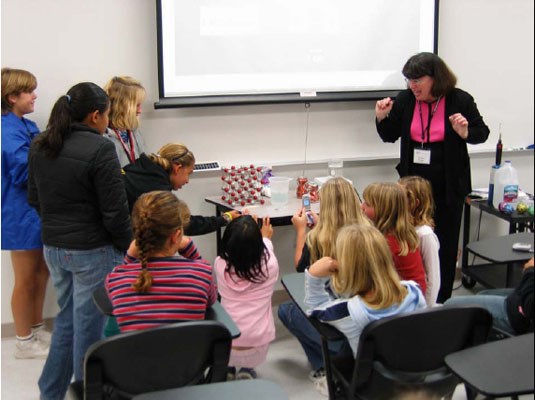
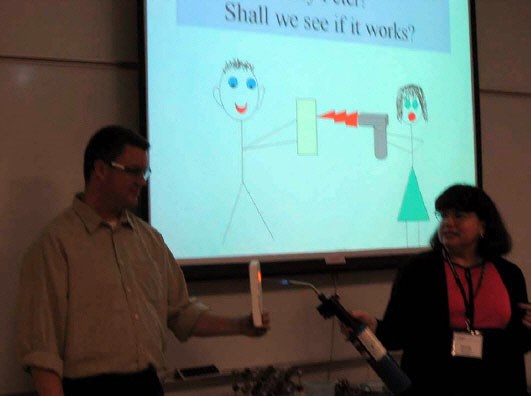
It was Sally Ride Science Day at the University of California, Irvine (UCI), where the famous astronaut was appearing at a festival to interest young women in science. In a nearby classroom, Professor Martha Mecartney and her graduate students prepared a demonstration with a superconductor - a ceramic made of the elements yttrium, barium, copper and oxygen, which, when it gets very cold, can transmit electricity without any resistance. To activate the superconductor, Professor Mecartney poured liquid nitrogen over it, and the current flowed through. When she put a magnet on top of the superconductor, the magnet levitated half an inch in the air above the frigid superconductor. Watching the demonstration, a group of ten- to twelve-year-old girls squealed and cheered when the magnet lifted off the superconductor, and several of them excitedly took pictures with their cell phones. They were living in a moment of joy and inspiration brought to them by science. That moment was made possible by Professor Mecartney. She has devoted her career not only to creating exotic materials, but also to bringing science to young women and other groups underrepresented in the sciences. She has tried to get young women to become scientists and engineers, by providing them with the opportunities and support they need to survive in the discipline. The story of how she started in science, with help from her own teachers and mentors, is inspirational.
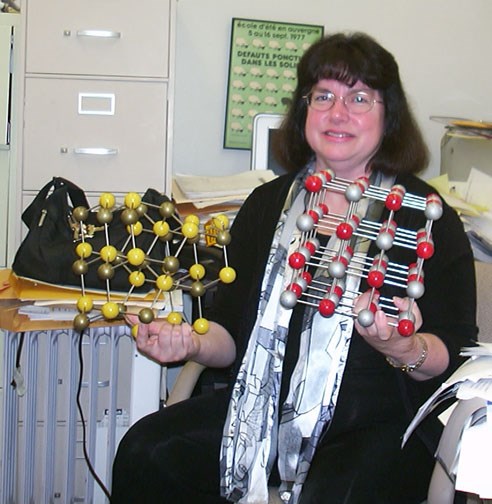
Martha Mecartney is a scientist, engineer, and professor in UCI’s School of Engineering. She works on ceramics, but doesn’t throw pottery or make coffee mugs. She makes materials that do amazing things, like the ceramic tiles on the space shuttle, which absorb 30,000 degrees of heat on their outside, but are completely cool on their inside, protecting the astronauts from roasting to death. There are not many women in engineering, and Martha had to be heroic to get where she is today. Her teachers and mentors gave her a lot of help; today, she’s giving it back to her students and to schoolchildren.
Martha Mecartney comes from the small town of Bluffton, Ohio, which, when she was a child, had around 2,000 people. Her high school graduating class had only ninety-two students. Martha was bright but didn’t get straight As. Three sets of teachers really inspired her, though: her math, science and Latin teachers, whose classes opened up worlds to her. She fell in love with mathematics, especially algebra and topology; the physical sciences (chemistry and physics); and with classical civilization - the lives of ancient Greeks and Romans. In college, at Case Western Reserve University, she struggled in the first-year math and science courses. In high school, she had been the smartest person in her class, and had graduated as valedictorian; now at Case, she was hanging out with valedictorians from bigger, better high schools. Martha was continually questioning herself, and she thought her B and C grades were the equivalent of failing. In college, (and again later in graduate school) "the dumb ones had left, leaving only the smartest" to compete with. Although she was not living her dream of easy perfection, each time she doubted herself, a professor or mentor stepped in and guided her. They saw something in her that made them persuade her to stay. They gave her good advice. For example, although she had excelled in classics, the study of ancient Greece and Rome, her college classics professors told her not to go to graduate school in classics because that field had no jobs. When she looked around for a second major, she found a small department, Metallurgical Engineering and Materials Science, whose faculty encouraged her to come back to the sciences. The department was grateful to have her - there was such a shortage of metallurgical engineers that they offered to replace her student loans with scholarships. They told her that her math and science grades weren’t "bad" after all - they were just science grades at a tough institution. And the small department was able to provide individual attention and an opportunity to work on research on materials. Martha liked the subject; she was fascinated by materials like glass, which, unlike crystalline materials (for example, diamonds), is an amorphous, shapeless substance that "flows" at phenomenally slow rates of speed. An entire class about glass piqued her interest and spurred her to study other ceramic materials. Even a seeming rejection helped to guide her. A few months before she was to graduate from Case Western Reserve, she interviewed with IBM, hoping to get a job designing new materials. She told one of her interviewers on a plant trip to San Jose, California, that she wanted to help design new materials, especially for technical ceramics. The professional replied to her that with a B.S. in metallurgical engineering and materials science, she would be rebuilding furnaces and doing other low-level technical activities. To design materials, Martha would have to get a Ph.D. Taking that good advice, she went to Stanford, and later became a professor at the University of Minnesota and the University of California, Irvine. A major part of Martha's career in science and engineering has centered around ceramics. Traditionally, you think of ceramics as being brittle, like a coffee mug. You drop a coffee mug on the floor and it breaks. It's not very "ductile" - it cannot be molded or worked. But Martha has found a way to design the molecular structure of these materials so that, at a high temperature, you can deform, shape, mold, and squeeze them without the ceramic breaking. Then you can cool the ceramic part to room temperature, and the piece will be perfectly formed. That's much better than going to a machine shop and trying to shape it with a lathe or a drill, which could crack or break it. These new ceramic materials are called "superplastic ceramics," and have attracted the interest and support of the National Science Foundation. An important tool in characterizing these kinds of new materials is the electron microscope, and Martha has pioneered the use of different kinds of electron microscopes over her years in science. These microscopes show the structures of molecules down to individual atoms, and how the atoms are arranged in regular crystals called "grains."You can see that while a coffee mug’s material has large and irregular grains, Martha’s new materials have very small uniformly shaped grains that can slide over one another and enable the material to change shape when heated.
But if all Martha did was science and engineering, she would not be the hero that she is. Over her eighteen years at UCI, she has given back to a generation of students what she received from her own mentors: support for students’ interest, studies, and careers in science. If you put into a bowl all the names of all the programs to help students she either founded or led, it would be a very large bowl of alphabet soup. Martha had several goals with these programs. First, she wanted not only to identify students with an interest in science and engineering, but to find students from families who had never sent a child to college, from families who because of their culture or poverty never would have dreamed their child could have a future as a scientist or engineer, and show them that science and engineering could be challenging and fascinating without being intimidating. Second, Martha wanted to support these students through getting to know them personally. Third, she found financial support to strengthen their backgrounds and classroom knowledge, and enable them to conduct their own research over the summer, do research at other universities in the University of California system, and bond with each other, creating a community of young scientists who kept in touch with each other through the rigors of graduate school and beyond. Finally, she made a place for especially promising materials science and engineering students in her own laboratory, where they could work on corners of some of the discipline’s most significant problems. Some of her students are now important scientists and engineers themselves, some are faculty at universities across the world, and some have pursued careers in industry, where they make significantly more money than she does.
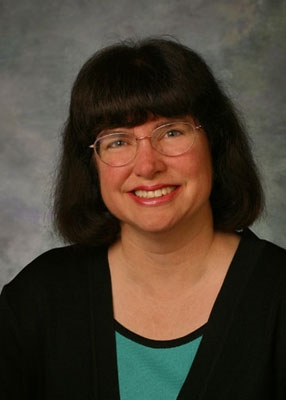
In 2003, to recognize her work mentoring students, Martha Mecartney was awarded the 2002 Presidential Award for Excellence in Math, Science, and Engineering Mentoring, conferred by President George W. Bush. This highest of awards honors her contributions to her discipline and to our country. But it was not the culmination of Professor Mecartney’s work; she continues to make important discoveries and to be a quiet hero to students, encouraging them to discover their own potential.
|
|
Written by
Jonathan Cohen
Photos courtesy of Jonathan Cohen, Martha Mecartney, NSF, Prof. W.E. Lee |
|
Women in Applied Science and Engineering Programs to help young women interested in science. The Archives of Women in Science and Engineering Starting point for learning about women in science. Science Role Models for Girls Stories of women in science. SDSC: Women In Science 16 profiles of female scientists. |
|
Bold, Kathryn. "Engineering attention ." [Online] Available http://www.today.uci.edu/features/profile_detail.asp?key=225. 2006. Nescio, Nomen. "Mecartney Wins Presidential Award." Am. Ceram. Soc.Bull.. 2003. |
![]() | ![]() | ![]() | |
| Abner Peeler is credited with the invention of the first airbrush. | Ada Lovelace was a ninteenth century woman who influenced the computer programming of today | Alan Turing laid the theoretical groundwork for the first computer. | Albert Einstein believed in the power of imagination. |
![]() | ![]() | ![]() | |
| Alexander Borodin was an accomplished chemist, composer and staunch advocate of women's rights. | Alexander Graham Bell was the inventor of the telephone. | Ameen Abdulrasool is a young inventor who developed a portable navigation system for the blind. | Amy Charkowski works on the front lines of protecting Earth's food supply. |
![]() | ![]() | ![]() | |
| Andrea Mia Ghez is an astrophysicist best known for her discoveries about the black hole at the center of our galaxy. | Ariel Ruiz i Altaba Scientist - Photographer combines art and science to research how cells are generated and formed. | Audrey Penn: Just Do It is a medical doctor who has devoted herself to studying diseases that affect muscle control. | Augusta Ada Byron developed the world's first computer program while struggling with her own personal hardships. |
![]() | ![]() | ![]() | |
| Babak Darvish, MD inspires his patients and coworkers with his upbeat attitude and determination. | Barbara McClintock was one of the first women geneticists, and a Nobel laureate. | Ben Carson is the chief of neurosurgery at Johns Hopkins University Hospital. | Benjamin Franklin was an inventor, diplomat, writer, and a huge influence on American history. |
![]() | ![]() | ||
| Benjamin Franklin was an inventor, civic leader and founding father of the U.S. | Bernard Fantus created the world's first blood bank. | Bernardo Houssay was an Argentinean physiologist and Nobel Prize winner. | Beth Rickard Environmentalist is an advocate of solar as the energy of the future. |
![]() | ![]() | ![]() | |
| Bill Fenical "Neptune's Medicine Chest" is a pioneer in the hunt for medicines from the ocean to treat cancer and other diseases. | Bonnie Dunbar helped start a scholars program to inspire students to pursue careers in aerospace and engineering. | Charles Darwin is the father of modern biology. | Chiaki Mukai is the first female Japanese astronaut. |
![]() | ![]() | ![]() | |
| Christiane Nusslein-Volhard is a Nobel Prize winner and pioneer genetic researcher. | Claudia Gerwin: Keeping the Neurons Firing researches how nerve cells relay messages to each other. | Clifford V. Johnson is a string theorist who studies the makeup of the smallest particles of the universe. | Connie Samaras has created media archives for deep space voyages. |
![]() | ![]() | ![]() | ![]() |
| Courtney Schumacher is an atmospheric scientist and educator committed to mentoring young women interested in science. | Cristina Diaz: Biologist studies intertidal and tropical sponges. | Dame Cicely Saunders founded the modern hospice to provide compassionate, holistic care to the dying. | DAREnet provides open access to Dutch academic research information and findings. |
![]() | ![]() | ![]() | |
| Darlene Cavalier founded ScienceCheerleader.com to promote science literacy. | Darlene Ketten studies stranded whales and dolphins. | Dean Kamen makes science and technology exciting for young people, | Debbye Turner became Miss America and pursued her dream to become a veterinarian. |
![]() | ![]() | ![]() | |
| Dilfuza Egamberdiyeva cares for the Earth's soil, researching ways to produce microbes to control plant diseases. | Dr Deepak Acharya is a scientist devoted to protecting India's endangered Patalkot Forest. | Dr. Alexander Langmuir Langmuir's work in epidemiology has saved millions of lives. | Dr. Barbara Ross Lee became the first African American woman dean of a US medical school. |
![]() | ![]() | ||
| Dr. Caldicott has been a lifelong anti-nuclear activist. | Dr. Carolyn Mazure founded the Yale Women's Health Program and is a forceful figure in the women's health movement. | Dr. Edward Holland Ophthalmologist transplants corneal stem cells to help give people their sight back. | Dr. Edward Jenner discovered the vaccine. |
![]() | ![]() | ||
| Dr. Elizabeth Kalko and the Jason Project studies bats in the Panamanian rainforest. | Dr. Elvia Niebla Soil Scientist is dedicated to soil conservation. | Dr. Farouk El-Baz is an Egyptian space scientist and geologist. | Dr. France Cordova is a renowned astrophysicist who has broken gender and cultural barriers. |
![]() | ![]() | ||
| Dr. Gloria WilderBrathwaite was inspired to provide health care to the poor in the innner city. | Dr. Govindappa Venkataswamy cares for the eyes of millions of people in India. | Dr. Ines Cifuentes Seismologist works to improve science programs for students in Washington, DC. | Dr. Karen Plaut has been a pioneer in animal science research. |
![]() | ![]() | ![]() | ![]() |
| Dr. Kay Jamison is both an expert on, and a sufferer of, Bipolar Disorder. | Dr. Kristi Curry-Rogers is an accomplished paleontologist who travels the globe in search of dinosaur digs. | Dr. Madan Kataria has started a revolution of joy and laughter that is spreading around the world. | Dr. Michael DeBakey is the father of modern open-heart surgery. |
![]() | ![]() | ![]() | |
| Dr. Patch Adams gives the practice of medicine a humorous twist. | Dr. Richard Murphy Marine Biologist educates others about the sea and ways to protect the oceans for the future. | Dr. Robert Ballard and the JASON project bring scientific exploration to children around the world. | Dr. Rosalie Bertell Anti-Nuclear Nun is a renowned scientist, eco-feminist and peace activist. |
![]() | |||
| Dr. Sara W. Lazar Neuroscientist - Meditator researches the effects of meditation on the brain. | Dr. Sue Savage-Rumbaugh is a scientist dedicated to the study and conservation of bonobos. | Dr. Susan Love is committed to women's health issues. | Dr. Zeda Rosenberg is working to protect women from HIV/AIDS. |
![]() | ![]() | ![]() | |
| Elizabeth Blackwell became the first female doctor and opened the first medical school for women. | Enrico Fermi was one of the 20th century's greatest physicists. | Envirofit retrofits engines to reduce pollution and enhance energy efficiency in developing countries. | Erich Jarvis observes song birds and uses his training with molecular biology to learn about brain behavior. |
![]() | ![]() | ![]() | ![]() |
| F. Sherwood Rowland discovered the 'greenhouse effect.' | Fati Kirakoya is a researcher committed to finding solutions to end HIV/AIDS. | Frederick Banting was the co-discoverer of Insulin. | Friends of the Sea Lion rescue, treat, and release these mammals back into the ocean. |
![]() | ![]() | ![]() | |
| Gail Kaaialii: Biologist investigates the origins of life and helps others value all life forms. | Galileo Galilei was the first to use a telescope to observe the stars and planets. | George Washington Carver is famous for experimenting with plants. | Gertrude B. Elion developed the AIDS drug, AZT. |
![]() | ![]() | ||
| Gina Gallant is an inventor whose passion is protecting the environment. | Grace Murray Hopper was a computer visionary and naval officer. | Guglielmo Marconi was an Italian inventor who won a Nobel Prize in Physics for wireless telegraphy. | Guion S. Bluford, Jr. became the first African-American in space. |
![]() | ![]() | ![]() | |
| Hazel Barton combines her passion for caving with researching microbes. | Hib Vaccine Team created an affordable, synthetic vaccine against the bacteria that can cause meningitis and pneumonia. | Howard Florey shared the Nobel Prize for Medicine for extracting penicillin. | Irene Ayako Uchida helped find the link between radiation and birth defects. |
![]() | ![]() | ![]() | |
| Irene Curie was the second woman in history to win the Nobel Prize in science; the first woman was her mother, Marie. | Jack St. Clair Kilby invented the microchip. | James Burke developed a model of discovery called the Knowledge Web to connect information across space and time. | Jane Mt. Pleasant is an agricultural scientist who looks to the past to meet today's farming needs. |
![]() | |||
| Jonas Salk discovered the polio vaccine. | Kathy Sullivan was the first American woman to walk in space. | Leon Lederman devotes much of his time and energy to improving science education in America. | Leonard Adleman improves lives with his work in DNA technology. |
![]() | ![]() | ![]() | ![]() |
| Leonardo da Vinci was an artist and a scientist ever curious of the world around him. | Leslie Thompson is a scientist devoted to finding a cure for Huntington's Disease. | Louis Pasteur 's discoveries advanced the practice of medicine. | Luz Maria Rodriguez-Fernandez conducts cancer research to help understand the disease process. |
![]() | ![]() | ![]() | ![]() |
| Madame Curie received the Nobel Prize for her discovery of Radium. | Mae Jemison dreamed of going to space since childhood. | Magdalena Hurtado is an anthropologist who studies the Ache people of Paraguay. | Margaret Mead was a renowned anthropologist who thought in terms of 'the interconnection of all aspects of human life.' |
![]() | ![]() | ![]() | ![]() |
| Marie Curie discovered radioactivity as an atomic property, opening the door to 20th century science. | Martha Mecartney is a scientist, engineer and professor committed to helping young women interested in the field of science. | Meenakshi Wadhwa studies meteorites and the processes involved in their formation. | Merieme Chadid is an astronomer from Morocco who did research at the South Pole. |
![]() | ![]() | ||
| Mohammed Bah Abba invented a refrigeration device that is not dependent on electricity. | Neil A. Armstrong was the first man to walk on the moon. | Nikola Tesla was the father of many modern inventions. | Norman Borlaug saved billions of lives with his agricultural discoveries. |
![]() | |||
| Orville and Wilbur Wright were brothers determined to build a better flying machine. | Patrick Nagatani uses photography and colored lights to promote good health. | Paul Farmer has dedicated his life to treating people in the poorest nations in the world | Paul Munsen Solar Oven Man manufactures sun ovens, which harness the sun's rays to provide an environmentally safe source of energy. |
![]() | ![]() | ![]() | |
| Paul Sipiera led an expedition into Antarctica to find meteorites for NASA. | Percy Julian was a groundbreaking African American chemist, inventor, and trailblazer. | Philo T. Farnsworth was the inventor of the television. | Ramani Sankaranarayanan and Geeta Vaidyanathan founded CTxGrEn to show villagers how to turn native materials into fuel for electricity. |
![]() | ![]() | ![]() | ![]() |
| Ray Kurzweil is an inventor who uses technology to restore health. | Reef Ball Foundation restores damaged coral reef systems around the world. | Richard Feynman shared the Nobel Prize in Physics for work in the field of quantum electrodynamics. | Robert Koch was an important medical researcher of the 19th century. |
![]() | ![]() | ![]() | |
| Rokhaya Gueye treats malaria and raises awareness about women's health issues in Senegal. | Saeed Awan developed a new carpet loom that reduces child labor in Pakistan. | Sandra Begay-Campbell is a Native American engineer who brings solar-powered energy to the Navajo reservation. | Shannon Hackett studies the genetic diversity and evolution in tropical birds. |
![]() | ![]() | ![]() | ![]() |
| Sir Alexander Fleming saved millions of lives with his discovery of penicillin. | Srinivasa Ramanujan made groundbreaking contributions to mathematics. | Stephanie Jenouvrier is a population ecologist researching the effects of climate change on emperor penguins. | Stephen Hawking is a renowned theoretical physicist who writes about 'black holes'. |
![]() | ![]() | ![]() | |
| Tania Ruiz is an astrophysicist committed to science education and helping women reach their goals. | Thais Corral gives women a voice in their communities through access to communication technology. | Therese Koutnik is an inspiration to her sister and a role model for girls who would like to become engineers. | Thomas Alva Edison holds the record for number of patents filed. |
![]() | ![]() | ![]() | |
| Thomas Alva Edison is considered one of the world's greatest inventors. | Tim Berners-Lee invented the World Wide Web. | Tom Chau Biomedical Engineer uses science and technology to maximize opportunities for people with disabilities. | Tom Dibblee is a legendary geologic mapper. |
![]() | ![]() | ![]() | |
| Usha Varanasi is the first woman to lead a Fisheries Science Center. | Vint Cerf , Internet pioneer, passionately believes that all people should benefit from the information revolution. | Vladimir Kosma Zworykin is called 'The Father of Television'. | Wes Jackson was a professor who returned to the land to advance sustainable agriculture practices. |
![]() | ![]() | ![]() | |
| Wilson Bentley was the first person to photograph a single snowflake. | XIV Argonauts broadcasted their explorations of the Channel Islands. | Zohra Ben Lakhdar is a physicist from Africa who does research on atomic spectroscopy. |
![]() | ![]() | ![]() | |
| Ana Eugenia Posada is a dedicated teacher who provides help and support to children with learning difficulties. | Andrew Greene Jr. of Sierra Leone teaches the world about peace. | Annie Mansfield Sullivan Macy developed new methods for teaching blind and deaf students. | Atsuko Shiwaku set up the International Intercultural Mural Exchange Project to promote peaceful coexistence. |
![]() | ![]() | ||
| Baba Coleman is a drumming teacher who instills self-determination in his students. | Barry Guillot is a middle school teacher who makes science come to life through service-learning. | Barry Kramer empowers students to ask questions and find answers through Learning Circles, a telecollaborative learning experience. | Bill Belsey is a teacher with a mission to stop bullying. |
![]() | ![]() | ![]() | |
| Cheikh Darou Seck is an English teacher in Senegal who inspires his students to become MY HERO reporters. | Christa McAuliffe was the first teacher to fly in space. | Domingo F. Sarmiento was a distinguished educator and president of Argentina. | Dr. Ed Gragert works towards peace and global education. |
![]() | ![]() | ![]() | |
| Dr. H. Arief Rahman is admired by his students for the way he speaks his mind and encourages them in their studies. | Dr. Norman Isaacs is an inspiration to the staff and students at Millikan Middle School. | Dr. Robert Ballard and the JASON project bring scientific exploration to children around the world. | Eeva Reeder is passionate about teamwork and hands-on, real-life applications of abstract mathematical concepts. |
![]() | ![]() | ![]() | |
| Emi Yuliaty encourages her students to believe that where there is a will there is a way. | Erin Gruwell is the founder of Freedom Writers and an inspiration to teachers and students around the world. | Eva La Mar uses visual learning and communication tools to deepen understanding of geography, geology and local history. | Film Festival 2005 Teacher Award Get a Clue Carol Anne McGuire teaches visually impaired children and founded Rock Our World. |
![]() | ![]() | ||
| Gary Birch is a compassionate educator and role model to his students. | Geeta Malik is a media arts educator for The MY HERO Project. | George N. Parks inspires his band students to do their best and have fun with music. | Georgiana Munteanu, My English Teacher inspires her students to believe in themselves and to love and respect nature. |
![]() | ![]() | ![]() | ![]() |
| Giuseppe Fortunati is a computer teacher from Italy who uses the Internet to promote cultural exchanges. | Hero Teachers of a Dyslexic is a personal story that seeks to guide and encourage students who learn differently. | Herschel Vaughn conducts an after-school program that teaches music, discipline, and friendship. | Jacqueline Melnick is a music teacher. |
![]() | ![]() | ||
| James Burke developed a model of discovery called the Knowledge Web to connect information across space and time. | Jason Wilcox was a teacher at Glenmore Christian Academy. | Jason XV: Teacher Argonauts Eight talented teachers from the US and Bermuda took part in Jason XV: Rainforests at the Crossroads in Panama. | Jesse Thyne was a generous soul with a passion for teaching. |
![]() | ![]() | ![]() | ![]() |
| Judy Warner worked to create a public high school for technology. | Laurel Schmidt encourages her fifth graders to get involved. | Louis Braille invented a system of writing and reading used by blind people all over the world. | Luisa Orellana is an English as a second language teacher who inspires her students to reach for their dreams. |
![]() | ![]() | ![]() | |
| Mali Bickley uses technology to help her students connect with their peers around the world to build empathy and tolerance. | Marco Torres helps students empower themselves through the mastery of multimedia. | Maria Montessori developed a new approach to education. | Marsha Goren is much beloved by her students for her genuine commitment to them. |
![]() | ![]() | ![]() | ![]() |
| Martha Mecartney is a scientist, engineer and professor committed to helping young women interested in the field of science. | Mary Lyon established the U.S.'s first college for women. | Mary McLeod Bethune used education to help in the fight for racial and gender equality. | Mel Levine believes that students who understand their learning styles are better equipped for success. |
![]() | ![]() | ||
| Mia Siscawati teaches people to protect their environment. | Mirian Acosta-Sing piloted a project to provide every student and teacher at Mott Hall School with a laptop. | Mrs. Linda Klepper has changed the lives of many young children as a second grade teacher. | Mrs. Magdalena Domniteanu is a hero for her patience and ability to inspire her students with a love for learning. |
![]() | ![]() | ||
| Mrs. Mignosa is a hero to Caitlin because she helps her with her studies after school. | Mustapha Louznadji is an Algerian educator who leads by example and who brings out the best in his students and colleagues. | Pat Bolanos founded Key Learning Community to cultivate multiple intelligences. | Peggy Bryan emphasizes teacher support, parental and community involvement in the classroom. |
![]() | ![]() | ||
| Phil Layne gives encouragement, hope, and a helping hand to his students. | Raden Ajeng Kartini championed education and civil rights for women in Indonesia. | Ranald MacDonald was a Native American/Scot wayfarer who helped open up Japan to the West. | Randy Randall exhibits strength, courage, and integrity to his students. |
![]() | ![]() | ![]() | ![]() |
| Robert Moses founded The Algebra Project, which is committed to teaching math literacy. | Roberta Guaspari-Tzavaras uses music to inspire children to learn. | Rowena Gerber and her students raise money to send Solar Ovens around the world. | Ruth Simmons is breaking down barriers in the world of higher education. |
![]() | ![]() | ![]() | |
| Ruty Hotzen inspires students from around the world through Talking Kites, iEARN. | Sadie Dunn is an inspiring role model as a teacher and great-grandmother. | September McGee is an artist and a teacher. | Sequoyah invented the Cherokee alphabet, which enabled Cherokees to record their history. |
![]() | ![]() | ||
| Shannon Arnett impacts her students with her love and excitement for learning. | Stephanie Joukoff coaches synchronized swimming and is a hero to Emily. | Susan Elizabeth Blow founded the first public kindergarten school in America. | Tommie Hamaluba is a teacher in Botswana, Africa working to eradicate malaria. |
![]() | ![]() | ||
| Tony Bencivenga stresses the importance of social and emotional learning experiences. | Valentina Mindoljevic is a science teacher who helped to provide aid to women and child refugees in Croatia. | Viola Vaughn founded an organization that supports girls working to achieve academic success in Africa. | Wendy Jewell is a passionate MY HERO educator, writer and Learning Circle facilitator. |
![]() | |||
| Wendy Milette is a visionary filmmaker and educator. |
Last changed on:3/9/2009
|
|