Print-Friendly Version


Alan Brinkley's introduction to JESSIE DANIEL AMES in the book,Invisible Giants-Fifty Americans Who Shaped the Nation But Missed the History Books.

"Historians are generally drawn to people whose impact on history is clear and unequivocal, and there is much justification for that preference. But history is also the product of struggles by courageous individuals who stand against the temper of their time and bear witness to injustice. During the long, dark period of racial segregation and oppression from the end of Reconstruction to the beginning of the modern civil rights movement, there were relatively few white Americans who were willing to work openly and actively on behalf of racial justice. Jessie Daniel Ames, a white southern woman, emerged from an unlikely background to become - at great personal risk - a powerful, committed, and effective leader in mobilizing opposition to lynching in the South."


FREEDOM HERO:
JESSIE DANIEL AMES

by

AMERICAN NATIONAL BIOGRAPHY,
edited by John Garraty,
copyright 1999
The American Council of Learned Societies.
Used by permission
of Oxford University Press, Inc.

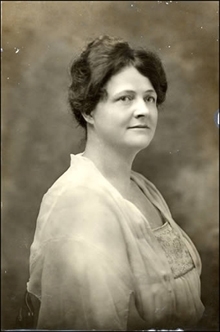
Image courtesy of the Austin History Center, a division of the Austin Public Library (Image: FPE4D91g.jp)

Jessie Daniel Ames (Nov. 2, 1883-Feb. 21, 1972): antiracism reformer and suffragist. She was born Jessie Harriet Daniel in Palestine, Texas, the daughter of James Malcolm Daniel, a train dispatcher and telegraph operator, and Laura Maria Leonard, a teacher. James and Laura Daniel were pious parents who stressed the importance of education, but showed little affection for their children. They openly preferred their younger daughter, Lulu, and Jessie suffered deeply from a lack of self-confidence. When Jessie was four, the family moved to Georgetown, Texas, an impoverished and often violent community. There Jessie attended local schools and, later, Southwestern University.

Fearful of spinsterhood, Jessie married Roger Post Ames in 1905. Roger Ames, a friend of Jessie's father, was a U.S. Public Health Service physician. The marriage was not a happy one; the couple were sexually incompatible, and the Ames family felt Roger had married "beneath" him. Rather than face pressure from his family, Roger pursued medical research in South America, deserting his wife for most of their marriage. With the exception of several trips to South America, Jessie lived with her wealthy married sister in Tennessee. In 1914, Roger Ames died of blackwater fever, leaving Jessie with the care of their two children and with a third on the way.

At age 31, Jessie Daniel Ames began her public career to support herself and her children. She and her mother ran a local telephone company. As Ames grew more confident, she developed an interest in social justice issues and began to work for woman suffrage. She was elected treasurer of the Texas Equal Suffrage Association in 1918 and worked to secure suffrage for women in primary elections. In an effort to organize woman voters, Ames became founding president of the Texas League of Women Voters and served as a delegate to the national Democratic Party conventions from 1920 to 1928. By working in organizations such as the Federation of Women's Clubs and the American Association of University Women, Ames sought to further women's participation in the reform movement.

Through her participation in woman suffrage, Ames discovered the limitations of the reform movement. She grew increasingly sensitive to the contradictions of a movement that served a predominately white constituency in a South dominated by the Ku Klux Klan. To educate herself about racial issues, Ames enrolled in courses at the University of Chicago and began to address racial concerns. Her work against racial injustice began in 1922, when she became the director of women's work for the Commission on Interracial Cooperation (CIC) in Atlanta, where she held various positions until the 1940s.

By 1930, Ames was alienated from suffragist colleagues and began to concentrate on anti-racism work. In that same year, she founded the Association of Southern Women for the Prevention of Lynching (ASWPL) as a volunteer organization within the CIC, although the ASWPL eventually outgrew its parent organization. The ASWPL was born from Ames's belief that lynching was the most visible symbol of black oppression within southern society. With the aim of exerting social control over blacks, whites used the threat of lynching as a form of coercion for enforcing labor contracts.

Ames believed that the fear of violence against white women by black men was used to justify lynching as a means of protecting white women. The goal of the ASWPL was the eradication of mob violence by whites against blacks within southern society, through educational efforts that attacked the justification for lynching and through encouraging women to refute the stereotype of themselves as vulnerable creatures in need of protection.

The cornerstone of Ames's educational campaign was the compilation of statistics from her own research into 204 lynchings over an eight-year period: only 29 percent of the victims were accused of crimes against white women.

Ames traveled extensively throughout the South as the chief organizer for the ASWPL and formed local chapters by working mainly through Protestant women's missionary societies. She also formed alliances with Jewish women's groups, the Young Women's Christian Association, and organizations such as the Parent-Teacher Association. The ASWPL gained support from both the white and the African-American press. "The daughters of the South are not content with hurling denunciations," wrote one newspaper. "They are militantly marching out to make war upon the barbarism that has flourished in their name" (Hall [1979], p. 164).

To her contemporaries, Ames appeared "animated, positive, and full of determination" (Hall [1979], p. 262). Her chief contributions were her dedication as a single-minded reformer and her genius as an organizational founder. Ultimately Ames's desire to preserve her autonomy within the ASWPL prevented the organization from working more effectively with other organizations on related causes.

Though outraged by racially motivated violence, Ames failed to collaborate with black reformers or to significantly include blacks within the ASWPL. Though quick to respond to persons less fortunate than herself, Ames was unresponsive to the issues raised by blacks themselves. Ames became increasingly alienated from the emergent liberalism of the late 1930s and early 1940s, and as the number of lynchings decreased, the ASWPL itself dissolved in 1942. Ames's attempts to reinvigorate the organization failed, and she was forced to retire from the reform movement.

In retirement, Ames moved to Tryon, N.C., and from 1944 to 1968, devoted her energies to local Democratic politics. Having always been busy, she found that the loss of her life's work took its toll, and her old feelings of insecurity returned. In addition to the rigors of her public career, Ames faced personal trials most of her life. Her youngest daughter contracted polio in 1920. Money was always a problem, and the situation worsened when her mother's resources were wiped out in the Great Depression. Influenced by her own experience, Ames ensured that all her children were educated and were financially independent. Severe arthritis eventually forced her to return to Texas to be near her daughter. Jessie Daniel Ames died in Austin, Texas.


Written by

AMERICAN NATIONAL BIOGRAPHY,
edited by John Garraty,
copyright 1999
The American Council of Learned Societies.
Used by permission
of Oxford University Press, Inc.


RELATED LINKS

Photo image courtesy of the Austin History Center, a division of the Austin Public Library


RECOMMENDED READING

Changing Character of Lynching

by Jessie Daniel Ames


More Featured Freedom Heroes

Abraham Lincoln was a U.S president who fought for the abolition of slavery while keeping the country united.Alexander Solzhenitsyn was a Russian novelist and dissident who won the Nobel Prize for Literature.Angela Davis is a
leader, author, and
professor who has fought for decades
for human rights.
Art Miki founded the National Association for Japanese Canadians to help redress Japanese rights lost during WWII.
Aung San Suu Kyi has dedicated her life to freeing Burma from a repressive dictatorship and creating democracy without violence.Bill Bradley once a pro-basketball player now is a politician who advocates reform to make America better for all.Cesar Chavez was a tireless advocate for migrant farm workers.Chief Joseph led the Nez Perce tribe in an effort to keep its homeland.
Clara Shortridge Foltz was the first woman to practice law in California.Constance Motley became the first African-American woman judge on the largest federal trial bench in the US.Craig Kielburger believes kids can change the world.Crazy Horse bravely fought for the freedom of the Sioux Nation.
Daniel Pearl was a Wall Street Journal reporter who reported the news with courage, integrity, and intelligence. Deborah Sampson  dressed as a man so that she could fight in America's Revolutionary War.Declaration of Human Rights  established the basis for human rights beliefs and practices
all over the world.
Desmond Tutu worked to end apartheid in South Africa.
Dr. Martin
Luther King, Jr.
"I Have a Dream"
 was the civil rights speech that moved the world
Dr. Martin Luther King, Jr. 
Congressman John Lewis talks about how Martin Luther King, Jr. inspired him as a young man during the Civil Rights Movement
Dr. Oscar Elias Biscet 
is known as the 'Mandela of Cuba' because he bravely defends the rights of Cuban citizens.
Eleanor Roosevelt was a champion for freedom and devoted her life to gaining rights for others
Eleanor Roosevelt was a dedicated and strong voice for her husband, FDR, and for the United States.Elizabeth Cady Stanton was a pioneer in the movement for women's rights.Ellen Johnson-Sirleaf is a leader who is bringing change and hope to Liberia.Emmeline Pankhurst fought tirelessly for
women's suffrage,
and succeeded.
Fadela Amara is recognized throughout France as a champion of women's rights.Frances Ellen Watkins was a prolific author and poet who devoted her life to speaking out against slavery. Fred Korematsu bravely protested the Japanese-American internment.Frederick Douglass courageously spoke out against slavery and became a trusted advisor to Abraham Lincoln.
George Washington  was the first President of the United States.Harriet Tubman organized the Underground Railroad and helped lead slaves to freedom.Inez Milholland Boissevain : a brief but spectacular life dedicated to women's suffrage.Inge Sargent is a Burmese princess devoted to human rights for all.
Iqbal Masih 
was a brave advocate for child labor laws in Pakistan.
James Reeb risked his own life as a brave civil rights crusader.Jane Akre & Steve Wilson  won the 2001 Goldman Environmental Prize for their courageous journalism.Janet Jagan was the first female president of Guyana and dedicated her life to building the independence of a nation.
Jessie Daniel Ames worked openly and actively on behalf of racial justice.John Adams  worked as hard for peace for the United States as he did for its independence.John Lewis has worked for civil rights for all for over 40 years.Jose Manuel Ramos-Horta is Kerry Kennedy's hero because of his human rights work in East Timor.
Jose Marti is considered the father of Cuba's battle for independence.Joseph Ki-Zerbo 
works to help
Africans retain
control of their
country's agriculture.
Joséphine Baker , popular African American dancer in France, fought for civil rights and freedom against the Nazis.Judy Feld Carr secretly helped thousands of Jews escape from Syria.
Kailash Satyarthi  is determined to end child labor practices around the world. Kofi Annan  is an honored freedom and peacemaker hero.Lyndon B. Johnson was John's great grandfather and the 36th President of the United States.Malcolm Little known as Malcom X, was a warrior in the fight against racism.
Marian Wright Edelman  is one of the country's leading advocates for children. Martin Luther King, Jr. Peaceful freedom fighter and civil rights activistMary Harris Jones  worked to free men, women, and children from industrial slavery.Medgar Wiley Evers 
worked to end
racism in America
Mohammad Hatta was a central figure in Indonesia's fight for independence.Mohandas K. Gandhi used non-violence to free India from British rule.Morris Seligman Dees  is the co-founder of the Southern Poverty Law Center.Moses  led the Jews from slavery and gave them religious laws.
Nellie McClung believed in equal rights for all womenNelson Mandela  is a peacemaker and a freedom hero.Nelson Mandela is Muhammad Ali's hero because he understands what it means to fight against enormous oddsOsceola  led the Seminoles in their battle for independence.
Paul Revere risked his life for the freedom of the American colonies.Qasim Amin
 was a forerunner in the fight for women’s liberation in the Islamic world.
Quaid-E-Azam  helped to create the nation of Pakistan and obtain significant political rights for MuslimsRAWA promotes women's rights through non-violent action.
Rev. James Reeb worked for equal rights for allReverend Peter Nguyen Van Hung works to end human trafficking of Vietnamese women workers and brides.Robert F. Kennedy was a voice for the powerless and advocate for human rights.Roger Nash Baldwin A pioneer in the struggle for civil justice.
Rosa Parks   made history when she refused to sit in the back of the bus.Ruby Bridges 
bravely led the way
to desegregation
of schools as a
child.
Sir William Wallace  was a freedom-fighter for the Scottish people in the early 1300s.Sojourner Truth  born into slavery, worked for the freedom of all.
Susan B. Anthony  led the early Women's Suffrage Movement.Susie King Taylor 
was a pioneer in the struggle for African American women's rights.
The Dalai Lama is the religious leader of Tibet and an emblem of Tibet's hopes for freedom.The Greensboro Four protested segregation with a sit-in at Woolworth's lunch counter.
The Little Rock Nine
 bravely fought discrimination to attend an all white high school in Little Rock, Arkansas.
Thomas Jefferson  helped the American Colonies achieve independence from Britain.Thurgood Marshall 
was the first
African-American
to serve on the
U.S. Supreme Court.
Tiananmen Square 
discuss freedom and democracy at Tian An Min Square.
Vaclav Havel despite censorship, wrote plays that helped keep the hope of freedom alive....Varian Fry helped thousands of refugees escape from France during WWII.W.E.B. Dubois  was a leading 19th century writer and scholar.William Wallace was a late 13th century freedom fighter for Scotland and Ireland
   
Winston Churchill was one of the first to recognize and warn others of Hitler's danger to freedom and human rights.   


Last changed on:6/29/2004 2:26:37 PM