| "I am determined that this war, with all its powers for devastation, shall not master my poeting; that is, if I am lucky enough to come through all right." |
Isaac Rosenberg was born in Bristol, England, on November 25, 1890. At age seven he moved with his parents to London. Rosenberg showed a marked talent for painting and, for awhile, was allowed to take afternoon art classes at the Stepney Green School in East London. When his parents could no longer afford the tuition, Rosenberg went to work as an apprentice with Carl Hentschel's company of engravers. He was 14 years-old.
For many years, Rosenberg worked during the day and took evening art classes at Birkbeck College. He won several awards for his paintings. In 1911 Rosenberg was admitted to the Slade School of Art and was sponsored by family friends who paid the tuition. Between 1911 and 1914 he studied painting and wrote poetry, achieving success in both the visual and written arts. A 24-page pamphlet of his poems was published in 1912.
In 1914 Britain entered into war with Germany and the government launched a massive enlistment campaign. Rosenberg signed on with the British army the next year. He wound up in the trenches in France, writing poems and letters home. For the next three years, Rosenberg lived in the trenches, writing and sending poems off to journals such as Poetry in far-off Chicago. In April of 1918, only seven months before the armistice, Rosenberg was killed in the last hour of a night patrol. Literature scholars Ellmann and O'Clair maintain that Rosenberg was heavily influenced by the Romantic poet John Keats. Aesthetic similarities between the poets aside, a certain biographical similarity certainly must have informed the tenor of their writing: Both died young, having spent their final years in forced cohabitation with their own mortality. Keats died at age 21 after a bout with tuberculosis; Rosenberg died at age 28, after enduring almost four years of government-sponsored massacre. The works with which he left us are both buoyed by clever language and freighted with the somber imagery of death and time's passing. In 1916 Rosenberg wrote, in a letter to Laurence Binyon: "I am determined that this war, with all its powers for devastation, shall not master my poeting; that is, if I am lucky enough to come through all right."
Like Keats, Rosenberg died before the full measure of his talent could be taken. But his poems contain the mischief, melancholy and disappointment of an author well versed in the beauties and horrors of human activity. Break of Day in the Trenches The darkness crumbles away. It is the same old druid Time as ever, Only a live thing leaps my hand, A queer sardonic rat, As I pull the parapet's poppy To stick behind my ear. Droll rat, they would shoot you if they knew Your Cosmopolitan sympathies. Now you have touched this English hand You will do the same to a German Soon, no doubt, if it be your pleasure To cross the sleeping green between. It seems you inwardly grin as you pass Strong eyes, fine limbs, haughty athletes, Less chanced than you for life, Bonds to the whims of murder, Sprawled in the bowels of the earth, The torn fields of France. What do you see in our eyes At the shrieking iron and flame Hurled through still heavens? What quaver—what heart aghast? Poppies whose roots are in man's veins Drop, and are ever dropping; But mine in my ear is safe— Just a little white with the dust.
June 1916
|
|
Written by
Susannah Abbey
Photos courtesy of Oxford University Humanities Computing Unit |
|
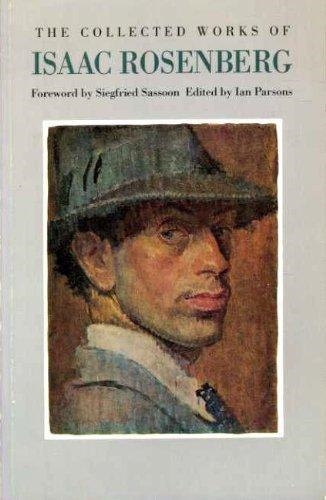
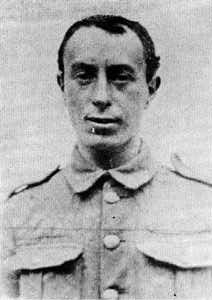
Isaac Rosenberg's self-portrait from the National Portrait Gallery in London, England Rosenberg's photograph from the National Portrait Gallery in London, England The Great War Historian Tony Novosel's comprehensive page on World War I. Poetryfoundation.org is an independent literary organization committed to a vigorous presence for poetry in American culture. It exists to discover and celebrate the best poetry and to place it before the largest possible audience. Other WWI Poetry Tutorials from Oxford University |
RECOMMENDED
READING | |
![]() Collected Works of Isaac Rosenberg by Isaac Rosenberg, Ian Parsons (Editor) |
![]() God Made Blind: Isaac Rosenberg: His Life and Poetry by Deborah Maccoby |
![]() | ![]() | ![]() | ![]() |
| A. Navoi wrote poetry over 500 years ago that has withstood the test of time. | Ada Aharoni works for peace between Israelis and Palestinians with poetry. | Alexander Pushkin is one of Russia's greatest writers. | Anna Akhmatova is considered one of Russia's best poets. |
![]() | ![]() | ![]() | ![]() |
| Carl Sandburg wrote poems, stories and nonfiction about Americans and American life. | Chairil Anwar was a beloved Indonesian poet. | Christine de Pisan was a 15th century French poet. | Dante Alighieri contributed to Italian culture by his use of the Tuscan language instead of Latin. |
![]() | ![]() | ![]() | ![]() |
| Doreen Van Lee writes about her Chicago childhood. | DuBose Heyward Wrote most of the lyrics to the famous musical, 'Porgy and Bess.' | Dylan Thomas : life will carry on, always with the same vigor. | Edgar Allan Poe was a renowned poet who overcame many hardships including depression. |
![]() | ![]() | ![]() | |
| Edna St. Vincent Millay 's poetry was both popular and critically acclaimed. | Emily Elizabeth Dickinson wrote nearly 2,000 poems in her lifetime. | Emma Lazarus was an advocate for immigrants' rights and wrote the poem inscribed on the Statue of Liberty. | Hadraawi, Beloved Peacemaker / Poet of Somalia is a powerful voice for peace in his country. |
![]() | ![]() | ![]() | |
| Henry Rago was a Poet and Professor whose poetry stands the test of time. | Ilse Bing was a remarkable poet and photographer. Her works withstand the test of time. | Isaac Rosenberg was a poet of the Great War. | Jack Prelutsky is a beloved children's book author, and the first Children's Poet Laureate |
![]() | ![]() | ||
| Khwajeh Shams al-Din Muhammad Hafez-e Shirazi is a renowned Iranian poet. | Langston Hughes was nicknamed the Poet Laureate of Harlem. | Li Bai is often referred to as the 'God of Poets' in China. | Maria Josephine Barrios Filipina poet and activist |
![]() | ![]() | ||
| Mariama Khan writes poetry to champion the cause of the voiceless. | Mattie Stepanek is a hero to people of all ages around the world. | Maya Angelou is a beloved female author and poet. | Naguib Mahfouz was the first Arab to receive the Nobel Prize in Literature. |
![]() | ![]() | ![]() | |
| Ntozake Shange is the inventor of the choreopoem. | Pablo Neruda is the most widely read Latin-American poet. | Paul Laurence Dunbar was an African-American poet of the nineteenth century. | Phillis Wheatley was the first distinguished African-American poet. |
![]() | ![]() | ![]() | ![]() |
| Robert Lee Frost was named 'the national bard.' | Robert Penn Warren was the first Poet Laureate of the United States. | Saul Williams is a Spoken Word Poet and Slam Champ. | Shel Silverstein was a poet, playwright, lyricist and good friend. |
![]() | |||
| Theodor Seuss (Dr. Seuss) Geisel | W.E.B. Dubois was a leading 19th century writer and scholar. | William Shakespeare wrote plays & poetry that continue to have a lasting effect on readers all over the world. |
Last changed on:7/17/2004 3:36:06 PM
|
|