GEORGE LUCAS RECEIVED A LIFETIME ACHIEVEMENT AWARD FROM AFI IN 2005 - CLICK HERE TO VIEW
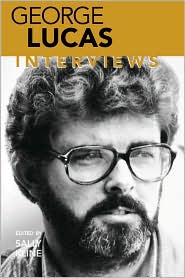
 George LucasAP Wirephoto [Public domain]George Lucas never wanted to take over his father's office supply store. He didn't think himself a businessman. He had no head for figures. Yet, before he left his hometown for college, he predicted that he would be a millionaire by the time he was thirty. He was off by two years: Lucas made his first million by the time he was twenty-eight.
Lucas, the creator of the Star Wars trilogy, is not known so much for his money-making skills as for his movie-making ones. His childhood interests--history books, music, and race cars--didn't promise much on their own, but combined with natural energy and a powerful imagination, they propelled him to success.
Modesto, California, where Lucas grew up, was not a thrilling town. Throughout his high school years he dreamed of getting out, of making it as a race car driver. His father, ever the model of encouragement, bought his son a Fiat Bianchina. Lucas souped it up then began entering and winning races. A terrible crash changed his mind about this form of work. By 1962, when he finally escaped Modesto, he had decided to be a filmmaker.
Lucas showed talent while still at USC Film School, winning prizes, scholarships and the respect of his colleagues. He always worked fast--perhaps this habit was a remnant of his car-racing days--and was remarkable for his ability to shoot and edit movies well ahead of schedule. An established producer-director, Francis Ford Coppola, helped to distribute Lucas' second feature film, "American Grafitti," which was about teenagers in 1960s Modesto. The movie took off, insuring that Lucas would have the money to make another.
He had a vague idea of what he wanted to do: something that would improve on his first feature film, a science fiction story called THX 1138. It would also be science fiction, but Lucas didn't have characters or a story--he only had mental pictures of the way such a movie might look. He had studied anthropology during college, looking for elements of the world's mythologies with which to organize these pictures. It took years, but he finally came up with the tale of Luke, Leia, and Han Solo, fighting against the evil Empire. In the end, Lucas' rich fantasy life and sweeping vision led him to make one of the most popular movies of all time.
Most filmmakers, even the great ones, are dependent on big Hollywood studios for work, and this was where Lucas separated himself from the rest. Fox, the studio that paid to make "Star Wars," had not counted on the movie's success, and Lucas was able to make an incredibly smart business decision: he agreed to give up part of his salary, in exchange for the sequel rights and merchandising rights, that is, profits from the sale of Star Wars toys, clothing, books, etcetera. The merchandising money proved many times more than the salary he gave up.
Lucas liked making movies his own way--not the way the big movie studios told him to. The money he made from "Star Wars" enabled him to finance the next two movies on his own, which is very hard for most producers to do. Financing his own movies gave him artistic control that producer-directors at big studios usually don't have. Because of the technical requirements of his movies, Lucas also founded Industrial Light & Magic, the special effects company which has since made "Indiana Jones," "Jurassic Park," "The Mask," and "Forrest Gump." ILM developed digital techniques that improved the art of special effects.
Lucas' business decisions helped him to realize other dreams. He set up a studio in Northern California called Skywalker Ranch, where people who prefer to work outside the Hollywood system can write and edit movies.
In 1991, he established The George Lucas Educational Foundation. It promotes effective schools and programs around the country, especially those that integrate technology with teaching and learning.
In Lucasfilm Ltd, Lucas created a unique type of movie studio: one devoted solely to the art of filmmaking without the undue pursuit of profit. He's also a generous boss--one of the few big producers who has actually given out percentage points (shares in the royalties from his movies) to his cast and crew. He throws company picnics and gives Thanksgiving turkeys to each employee every year.
"My father provided me with a lot of business principles, a small-town retail business ethic, and I guess I learned it," George Lucas once said. This comment makes one suspect that the office supply business isn't so different from the movie industry. Perhaps it's all a matter of scale and imagination.
This section of the story is added by The MY HERO Project in 2020.
In 2005 George Lucas was awarded a Lifetime Achievement Award from AFI we were on the red carpet to capture who his heroes are. Click the image below to watch the video clip.
 Georg Lucas receiving AFI awardMH
Page created on 7/28/2014 7:31:58 PM
Last edited 5/13/2020 5:22:29 PM
In the Fall, 1999 issue of EDUTOPIA, George Lucas wrote an introduction on The Meaning of Mentoring. "My first mentor was my father. All parents are teachers, every day of our lives, in the way we conduct ourselves. Later, when I became a filmmaker, Francis Ford Coppola became my mentor and taught me how to write screenplays and how to work with actors. At that time, I became more of a cameraman and editor, more interested in the technical side of filmmaking. My later mentor was Joseph Campbell, who asked cosmic questions and further exposed me to the mysteries of life."