| "The ultimate destination of all nursing is the nursing of the sick in their own homes.... I look to the abolition of all hospitals and workhouse infirmaries." - Florence Nightingale |
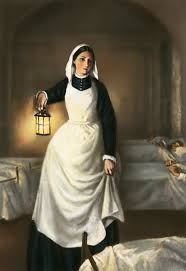
Florence Nightingale entered the hospital and was appalled and horrified by what she saw. Wounded soldiers lay on straw mats that lined the room like coffins waiting for burial. The floor was covered with dirt and blood. There were no hospital gowns: the men still wore their uniforms. As Nightingale passed them, each soldier tried to act stern and tough, but their boyish faces betrayed unmistakable pain. Those who were able to conquer their convulsions lay still, as if dead.
These were the hospital conditions in Scutari, Turkey during the Crimean War. Florence and a group of nurses were sent to this hospital to help make the hospital a more efficient place. The first change Florence made was scrubbing all the injured men's clothes. Then, she spent her own money buying bandages, operating tables and other basic necessities for the hospital. Her nurses cleaned the whole hospital so there were no more germs and this helped to stop contamination and spread of disease. She is a hero because she changed the hospital and saved lives with her determination and hard work.
Florence Nightingale also changed the profession of nursing forever. Nursing was once an occupation with little respect: people didn't think you needed any special training or skills to do it, and most nurses were poor and uneducated. It was very unusual for Florence, who came from the upper class, to work in a hospital. The hospital conditions were more sanitary after she reorganized everything. Funds and donations flooded into hospitals and the patients received better care. Hospitals around the world were changed forever, and caring for the sick became an honorable profession.
She was driven by a different dream. She believed that her attraction to nursing was God's will, or "a calling," and because of that she made many personal sacrifices to pursue her professional life with intensity. Her family disapproved of her decision to take up the nursing profession, which was seen in her day as a vocation for lower classes, one carried out under harsh conditions in dirty hospital environments. The family's disappointment did not deter her from her goal, and at the age of 33, having studied nursing for nine years, Florence began caring for the sick. In 1853, she was asked to work at the Harley Street Nursing Home. There, she made improvements that included better organization and training for the staff, and she implemented a system that piped hot water to every floor. She also created a lift to bring patients their meals (Falkus, 1980). The Crimean War began and the British army was unprepared to accommodate British battle injuries and casualties in Crimea. This led to disasters such as cholera, lack of supplies, and inadequate sanitation. British Secretary of War, Sidney Herbert asked Nightingale to take nurses and help the hospital in Scutari, Turkey. On October 21, 1854 she set out for the hospital with the 38 nurses she had trained. The state of the hospital in Turkey was horrendous but
Nightingale used her own money to make the hospital a cleaner, healthier and more efficient place for patients. She brought in basics including bandages, extra clothes, 200 scrub brushes and better food. She also took all the dirty clothing outside the hospital to be washed.
Though the male hospital team often resented her power to affect change, the troops were so grateful to her that they raised a special fund to allow her to continue her work. Through selfless devotion and sheer determination, Florence Nightingale transformed the profession of nursing forever. She gave dignity and honor to what continues to be a female-dominated profession and revolutionized hospital conditions, making them more organized and above all, sanitary. Largely because of her efforts, funds and donations flood into hospitals, allowing patients around the world to receive better care.
|
|
Written by
Gretchen from Vermont
|
|
Bullough, Vern - "Florence Nightingale" Encyclopedia Americana - 1993 Falkus, Gila - Heroes and Heroines - New York: A&W Publishers Inc., 1980 Florence Nightingale - Selected Writings of Florence Nightingale - ed. Lucy Ridgely Seymer - New York: The Macmillan Co., 1954 Hugh Small- Florence Nightingale, Avenging Angel - New York: St. Martin's Press, 1999 Sue M. Goldie - I Have Done My Duty : Florence Nightingale in the Crimean War, 1854-56 - University of Iowa Press, 1988 |

RECOMMENDED
READING | |
![]() Florence Nightingale: Avenging Angel by Hugh Small |
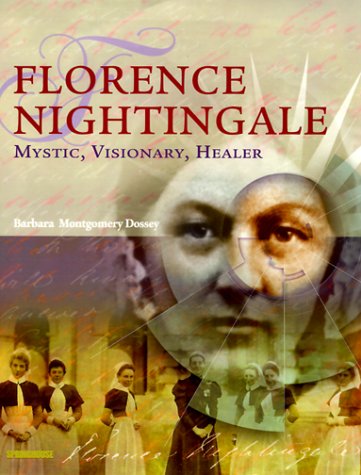
![]() Florence Nightingale: Mystic, Visionary, Reformer by Barbara Montgomery Dossey |
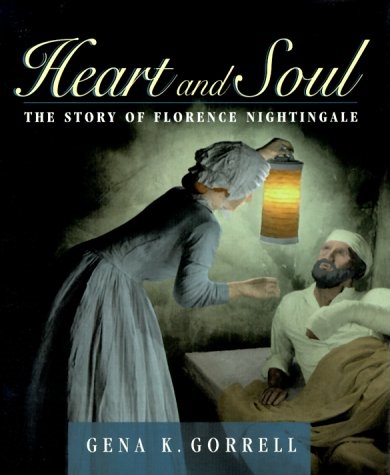
![]() Heart and Soul: The Story of Florence Nightingale by Gena K. Gorrell |
|
![]() | ![]() | ![]() | |
| A Powerful Noise promotes the global empowerment of women | A Stranger helped a young girl who was lost in the city. | Alan Beavan will be remembered for his bravery on Sept. 11, 2001. | Albert Schweitzer had a 'reverence for life.' |
![]() | ![]() | ||
| Andrea Coleman has used her passion for motorcycling to transform healthcare delivery in rural parts of Africa. | Babak Darvish, MD inspires his patients and coworkers with his upbeat attitude and determination. | Balto led his dog team on the lifesaving 1925 serum run to Rome, Alaska | Ben Carson is the chief of neurosurgery at Johns Hopkins University Hospital. |
![]() | ![]() | ![]() | |
| Bernard Fantus created the world's first blood bank. | Bernard Kouchner is the co-founder of Doctors without Borders | Bill Wilson changed countless lives and livelihoods by founding Alcoholics Anonymous. | Chiune and Yukiko Sugihara believed in freedom and saved many Jews during WWII. |
![]() | ![]() | ||
| Claire Lalanne founded the Center for Nutritional Recovery. | Colonel Jack H. Jacobs His extraordinary heroism saved the lives of 14 people. | Dan Mazur sacrificed climbing to the summit of Mt. Everest to save another climber. | Dennis Smith Dennis Smith is an author and retired firefighter |
![]() | ![]() | ![]() | |
| Desmond T. Doss became a medic during WWII and saved many lives. | Doctor Steven Kopits was a compassionate physician who lives on in the hearts of his patients. | Don Cheadle and Darfur Now deliver a call to action to stop the genocide in the Sudan. | Dr. David Applebaum was a selfless emergency room doctor in Jerusalem |
![]() | ![]() | ![]() | ![]() |
| Dr. Ginger Holt saved Drew's leg when he was in the hospital. | Dr. J. Larry Brown directs the national Center on Hunger and Poverty. | Dr. Mark Jacobson works with AIDS patients in Tanzania. | Dr. Michael DeBakey is the father of modern open-heart surgery. |
![]() | ![]() | ![]() | ![]() |
| Dr. Paul Brand was a compassionate surgeon who pioneered work in leprosy. | Dr. Van Halbach is a hero to the Ghenender family for saving Ingrid's life. | Eddie Aikau loved the sea and often risked his life to save others | Edith Cavell was a nurse who risked her own safety to help others during WWI |
![]() | ![]() | ||
| Elizabeth Blackwell became the first female doctor and opened the first medical school for women. | Evelyn H. Lauder founded the Breast Cancer Research Foundation | Fauzia Minallah is the founder of Funkor Childart Centre and an ARTIVIST. | Firefighters in New York City are the heroes of the day. |
![]() | ![]() | ![]() | |
| Fireworkers from Chernobyl bravely gave their lives to protect the safety of others during the Chernobyl nuclear disaster. | Florence Ngobeni urges African leaders to work for AIDS prevention. | Florence Nightingale revolutionized nursing. | Frances Moore Lappe works to eliminate the injustices that cause hunger. |
![]() | ![]() | ![]() | ![]() |
| Fred Hollows was an Australian ophthalmologist committed to providing eye care to Aboriginal and poor people. | Fridtjof Nansen was a daring explorer, a freedom fighter, and a selfless humanitarian. | George Latham saved a girl from a burning car and is also a hero to his daughter. | Giorgio Perlasca saved the lives of thousands of Jews during WWII |
![]() | ![]() | ![]() | ![]() |
| Harriet Tubman organized the Underground Railroad and helped lead slaves to freedom. | Helene Gayle is one of the leading authorities on AIDS research. | Hermine Santrouschitz (Miep Gies) kept Anne Frank and her family safely hidden from the Nazis. | In My Name challenges all of us to take a stand to end poverty. |
![]() | ![]() | ![]() | |
| Irena Sendler helped Jewish children escape the Warsaw ghetto during the Holocaust. | Ivan Beltrami joined the resistance during WWII and saved many Jews. | Jody Williams is a human rights activist and Nobel Peace Prize winner who began a campaign to rid the world of landmines. | John Polivchuk was a firefighter who inspired others with his bravery, selflessness and optimism. |
![]() | ![]() | ![]() | ![]() |
| Jon Rose is a surfer dedicated to bringing clean drinking water to the world. | Judith Blair donated one of her kidneys to a man in desperate need. | Juvenile Diabetes Research Foundation is a hero to Rachel who was recently diagnosed with Juvenile Diabetes. | Kurt Klein brought, among others, his future wife, Gerda, and Oskar Schindler, to safety. |
![]() | ![]() | ![]() | ![]() |
| Lillie Hitchcock-Coit was a turn of the century firefighting hero. | Liviu Librescu was a Virginia Tech teacher who sacrificed his life to save his students. | Maximilian Kolbe was a Catholic Saint known for his great humanity during WWII. | Michael Kelley beat all the odds as a paratrooper and police officer. |
![]() | ![]() | ||
| Mike Kelly risked his career as a surgeon to save Bob's life. | Mikey Ray Frasier is a lifesaver three times over. | Molly Pitcher was a Revolutionary War heroine who bravely carried water to soldiers on the battlefield. | Moses Zulu established Children's Town in Zambia to teach AIDS orphans life skills. |
![]() | ![]() | ![]() | |
| mpower harnesses the power of music to change youth attitudes about mental health. | Nathaniel Dunigan creates hope for Ugandan orphans with HIV/AIDS. | Nick Anderson and Ana Slavin challenge young people to get involved to help end the humanitarian crisis in Darfur. | Norman Borlaug saved billions of lives with his agricultural discoveries. |
![]() | ![]() | ||
| Olara Otunnu is devoted to saving the lives and futures of children in war-torn countries. | Olivia Harrison founded an organization to help abandoned children in Romania. | Oumoul Khary Sow founded the Caravan of Hope which travels to remote areas in Senegal to help prevent malaria. | Pat Pedraja and Driving for Donors is helping young and old cancer patients receive the life saving bone marrow treatments. |
![]() | ![]() | ||
| Paul Farmer has dedicated his life to treating people in the poorest nations in the world | Paul Rusesabagina saved the lives of more than 1200 Rwandans who took refuge in his hotel. | Princess Eliza Ella has been inspired by Eliza the hero in The Wild Swans by Hans Christian Anderson | Raoul Wallenberg saved thousands of lives during the Holocaust. |
![]() | ![]() | ![]() | ![]() |
| RAWA promotes women's rights through non-violent action. | Robert E. Kimura, M.D. is a hero to his niece in and out of the operating room. | Rudolph Giuliani , New York Mayor, was a compassionate leader following the World Trade Center attack. | Ryan Hreljac helps build wells for clean water in Africa. |
![]() | ![]() | ![]() | |
| Sompop Jantraka helps poor children in Thailand to avoid child prostitution and obtain an education. | To Write Love On Her Arms was founded to help people suffering from depression and substance abuse. | Tommie Hamaluba is a teacher in Botswana, Africa working to eradicate malaria. | Trisomy 18 Foundation raises awareness and supports research for cures for this genetic disorder. |
| Vilmos Farkas sacrificed his personal safety to save the lives of a couple of strangers. |
Last changed on:4/26/2009 10:20:46 AM
|
|