Print-Friendly Version


About John Lewis

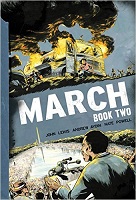
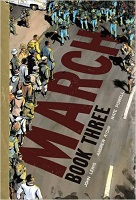
Born the son of sharecroppers in Alabama, the heart of the segregated South, Congressman John Lewis has consistently put his career and his life on the line to fight for a better America, and to protect human rights by the tenets of nonviolence. John Lewis met Dr. Martin Luther King when he was eighteen years old; and by age twenty, he had become actively involved in the civil rights movement. As a cofounder and the chairman of the Student Nonviolent Coordinating Committee (SNCC), during the early 1960s, Lewis organized sit-in demonstrations at lunch counters in Tennessee.

As a Freedom Rider, Lewis tested the Supreme Court ruling banning segregation at interstate bus terminals--and suffered severe beatings by mobs. At twenty-three, Lewis was one of the key planners and a keynote speaker at the historic March on Washington in August 1963. In 1964, he led voter registration drives in Mississippi.

In 1965, with activist Hosea Williams, Lewis led 600 marchers to the Edmund Pettus Bridge in Selma, Alabama. Here they were attacked and trampled by Alabama State Troopers on horseback and using clubs, whips and tear gas. Out of this march, which came to be known as Bloody Sunday, was born the historic Selma-to-Montgomery March--and President Lyndon Johnson's decision to sign the Voting Rights Act of 1965 just five months later.

That commitment to civil rights has continued throughout John Lewis' career. He was elected to Congress in November 1986, and is the author, with Michael D’Orso, of Walking With The Wind: A Memoir of the Movement. In the words of Senator John McCain, "I've seen courage in action on many occasions. I can't say I've seen anyone possess more of it, and use it for any better purpose and to any greater effect, than John Lewis."

To read more about John Lewis on myhero.com
CLICK HERE


A short film on John Lewis won the Special Hero Award for the 2006 My Hero Short Film Festival.
In the film, John Lewis discusses racial segregation when he grew up in the South, and how heroic actions spurred him to think deeply about the meaning of citizenship.

Click on the appropriate link below to watch "Citizenship" by Anson Schloat and John G. Young (5.45 Minutes)


HERO'S HERO:
DR. MARTIN LUTHER KING, JR.

by John Lewis


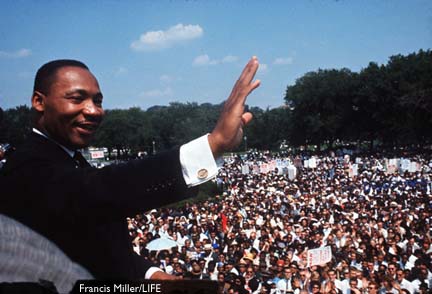
Dr. Martin Luther King, Jr. is my hero. I became a different person, a different human being, as a result of this man and my association with him. When I was child growing up in rural Alabama, it was my responsibility to care for the chickens on my father's farm. I used to talk to those chickens, preach to them, even baptize them. If you were to look around my office in the U.S. House of Representatives today, you would see that I keep stuffed roosters and brass roosters and ceramic chickens everywhere to remind me of my beginnings. Because if it hadn't been for Martin Luther King, Jr., I believe that I would still be down there in rural Alabama preaching to those chickens.

I was very young--just fifteen years old, in the 10th grade--when I first heard Dr. King's voice on the radio. His words spoke to my heart, to my very soul. In my religious tradition, people say that someone is "called" to the ministry. That means a voice, a spiritual voice, speaks to that person's soul and says, "You must do something. If you don't do it, no one will. You have to take a stand. You have to speak up. You have to speak out."

That feeling of being called is the only way I can express what I felt that day when I first heard Dr. King on the radio. I felt that he was speaking directly to me--as if he was right in the room, looking me in the eye and using my name. He said that there were people in trouble, that the society was in trouble, and I heard his message of love and nonviolence as a very personal call.


I was open to this message of change. You see, growing up in rural Alabama, I was what Martin Luther King Jr., used to call "maladjusted to the problems and conditions" of that day. I had tasted the bitter fruits of segregation and racial discrimination, and I didn’t like it. It took Martin Luther King Jr., to make me understand that being maladjusted was a good thing, a necessary thing. As a small child, when my family visited the little town of Troy, Alabama, ten miles away from our home, I saw the signs that said, "White Men," "Colored Men," "White Women," "Colored Women," "White Waiting," "Colored Waiting." I would go downtown to the little theaters from time to time, and all of us little black children had to go upstairs to the balcony, and all of the white children went downstairs on the first floor. I would come home confused and upset and ask my mother, ask my father, my grandparents, my great-grandparents, "Why segregation? Why racial discrimination?" And they would say, "That's the way it is. Don't get in trouble. Don't get in the way.”

But when I heard Martin Luther King, Jr.'s voice on the radio that day, I heard a very different message. He was saying, "John Lewis, you need to find a way to get in the way." In the Old Testament, there's a story that says the way a prophet stirs things up is just like they way a mother eagle stirs up the nest to give the little birds the courage to get out and test their wings. Martin Luther King, Jr.'s words on the radio that day agitated me to move, to get out there and stretch my wings. I was being called to get into trouble--good trouble, necessary trouble--and I've been getting in trouble ever since.

I was changed from the moment I first heard Martin Luther King, Jr.'s voice. Before long, I would meet him in person, and that meeting would change the course of my entire life. When it was time for me to go to college, I decided to apply for admission to Troy State College, a small local college near my home. I never received a response. So, without anyone knowing it, I wrote a letter to Dr. King, and I told him I wanted to try to desegregate Troy State. Dr. King wrote back to me and sent me a bus ticket to Montgomery.

Finally, on a Saturday morning in the March of 1958, my father drove me to the Greyhound bus station, and I boarded a bus and traveled the fifty miles from Troy to Montgomery. When I arrived, a young lawyer named Fred Gray met me there. He had represented Rosa Parks, Dr. King, and the Montgomery movement. He drove me to the First Baptist Church in downtown Montgomery and ushered me into the church office, where I saw Dr. King and the Reverend Ralph Abernathy standing behind a desk.

I was so scared I was shaking, and I didn't know what to say or do. Dr. King spoke up and said, "Are you the boy from Troy? Are you John Lewis?"

I found the courage to say, "Dr. King, I am John Robert Lewis." I gave my whole name; I wanted him to know that he had the right man. That was the beginning of my involvement with Dr. King and the modern-day civil rights movement, an association that would not only change my life but make me a part of something so great that together we changed the destiny of America.

Sometimes, when I look at documentaries of the Movement or I visit one of the civil rights museums, I wonder at the tremendous spirit it took to inspire a people to endure so much and struggle so hard. It took someone like Dr. King to imbue ordinary people with the extraordinary vision to risk everything they had to bring down the walls of segregation. All of us knew that if we got involved in the civil rights movement, we could be beaten, or shot, or killed, but we faced the dogs and the fire hoses because we were longing to be free, and because Dr. King made us believe that it could happen. Perhaps his greatest lesson to me was when he said that "hate is too heavy a burden to bear." That ethic of nonviolence, that fundamental belief in the transformative power of love, was the philosophy that helped us endure. When someone would beat us, throw us in jail, spit on us, or put lighted cigarettes in our hair or down our backs, Dr. King's words and his example gave us the strength not to strike back, not to return their hate. I still heed those words today as I interact with my colleagues in the U.S. Congress.

Dr. King spoke about the honor in suffering: he told us we had to redeem the soul of America, and in order to do that, we had to be willing to suffer. So, during the height of the Movement, we would remind each other of our convictions and say, "Be prepared to put your body on the line." When a group of thirteen of us, seven whites and six blacks, left Washington, D.C., in May of 1961 to go on the Freedom Ride, we truly didn't know whether we would come back alive. But we were prepared to die, if necessary, for what was right.

I'm the type of human being that I am today, I am the kind of person I am today because of Dr. King. On one occasion he told us, "When a man straightens up his back, no person can ride him." And ever since I first heard those words, I have been trying to straighten up my back--to speak up, to speak out, and to believe in something greater than myself. He freed me by giving me the courage, the know-how, and the tools to strike a blow against racism and bigotry, and the whole society changed because of who he was and what he stood for.

There's a personal story that I think shows something about the distance we've come in America in laying down the burden of race. It’s a distance that we could not have traveled--that I could not have traveled--without the words, the example, and the influence of Dr. Martin Luther King, Jr.

In 1956, when I was sixteen years old, I took my brothers and sisters and my first cousin down to the Pike County Public Library in the little town of Troy, Alabama, to get a library card. I don't know what possessed me to do it; we could have been lynched just for asking for a library card. But I wanted access to that knowledge, so I decided to test the grip of segregation. The librarian turned me away that day, explaining that the public library was not for coloreds, but for whites only.

In July of 1998, thirty years later, I went back to that library. It was in a different building, but it was still the Pike County Public Library. This time I went there, not to sign out a book, but to sign copes of my biography, "Walking with the Wind." Hundreds of citizens, black and white, showed up to hear me read and to shake my hand. The librarians there remembered that many, many years before I had been denied the chance to use the services of the public library. That day they not only welcomed me, but they also waited patiently for me to sign their books and gave me a library card.

We have come a long way in America because of Martin Luther King, Jr. He led a disciplined, nonviolent revolution under the rule of law, a revolution of values, a revolution of ideas. We’ve come a long way, but we still have a distance to go before all of our citizens embrace the idea of a truly interracial democracy, what I like to call the Beloved Community, a nation at peace with itself.

Written by John Lewis

EXTRA INFORMATION

Copyright 2005 by The MY HERO Project

MY HERO thanks John Lewis for contributing this essay to My Hero: Extraordinary People on the Heroes Who Inspire Them.

Thanks to Free Press for reprint rights of the above material.



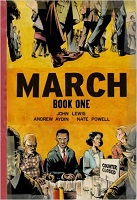
ON THE BOOKS...


More Featured Freedom Heroes

Abraham Lincoln was a U.S president who fought for the abolition of slavery while keeping the country united.Alexander Solzhenitsyn was a Russian novelist and dissident who won the Nobel Prize for Literature.Angela Davis is a
leader, author, and
professor who has fought for decades
for human rights.
Art Miki founded the National Association for Japanese Canadians to help redress Japanese rights lost during WWII.
Aung San Suu Kyi has dedicated her life to freeing Burma from a repressive dictatorship and creating democracy without violence.Bill Bradley once a pro-basketball player now is a politician who advocates reform to make America better for all.Cesar Chavez was a tireless advocate for migrant farm workers.Chief Joseph led the Nez Perce tribe in an effort to keep its homeland.
Clara Shortridge Foltz was the first woman to practice law in California.Constance Motley became the first African-American woman judge on the largest federal trial bench in the US.Craig Kielburger believes kids can change the world.Crazy Horse bravely fought for the freedom of the Sioux Nation.
Daniel Pearl was a Wall Street Journal reporter who reported the news with courage, integrity, and intelligence. Deborah Sampson  dressed as a man so that she could fight in America's Revolutionary War.Declaration of Human Rights  established the basis for human rights beliefs and practices
all over the world.
Desmond Tutu worked to end apartheid in South Africa.
Dr. Martin
Luther King, Jr.
"I Have a Dream"
 was the civil rights speech that moved the world
Dr. Martin Luther King, Jr. 
Congressman John Lewis talks about how Martin Luther King, Jr. inspired him as a young man during the Civil Rights Movement
Dr. Oscar Elias Biscet 
is known as the 'Mandela of Cuba' because he bravely defends the rights of Cuban citizens.
Eleanor Roosevelt was a champion for freedom and devoted her life to gaining rights for others
Eleanor Roosevelt was a dedicated and strong voice for her husband, FDR, and for the United States.Elizabeth Cady Stanton was a pioneer in the movement for women's rights.Ellen Johnson-Sirleaf is a leader who is bringing change and hope to Liberia.Emmeline Pankhurst fought tirelessly for
women's suffrage,
and succeeded.
Fadela Amara is recognized throughout France as a champion of women's rights.Frances Ellen Watkins was a prolific author and poet who devoted her life to speaking out against slavery. Fred Korematsu bravely protested the Japanese-American internment.Frederick Douglass courageously spoke out against slavery and became a trusted advisor to Abraham Lincoln.
George Washington  was the first President of the United States.Harriet Tubman organized the Underground Railroad and helped lead slaves to freedom.Inez Milholland Boissevain : a brief but spectacular life dedicated to women's suffrage.Inge Sargent is a Burmese princess devoted to human rights for all.
Iqbal Masih 
was a brave advocate for child labor laws in Pakistan.
James Reeb risked his own life as a brave civil rights crusader.Jane Akre & Steve Wilson  won the 2001 Goldman Environmental Prize for their courageous journalism.Janet Jagan was the first female president of Guyana and dedicated her life to building the independence of a nation.
Jessie Daniel Ames worked openly and actively on behalf of racial justice.John Adams  worked as hard for peace for the United States as he did for its independence.John Lewis has worked for civil rights for all for over 40 years.Jose Manuel Ramos-Horta is Kerry Kennedy's hero because of his human rights work in East Timor.
Jose Marti is considered the father of Cuba's battle for independence.Joseph Ki-Zerbo 
works to help
Africans retain
control of their
country's agriculture.
Joséphine Baker , popular African American dancer in France, fought for civil rights and freedom against the Nazis.Judy Feld Carr secretly helped thousands of Jews escape from Syria.
Kailash Satyarthi  is determined to end child labor practices around the world. Kofi Annan  is an honored freedom and peacemaker hero.Lyndon B. Johnson was John's great grandfather and the 36th President of the United States.Malcolm Little known as Malcom X, was a warrior in the fight against racism.
Marian Wright Edelman  is one of the country's leading advocates for children. Martin Luther King, Jr. Peaceful freedom fighter and civil rights activistMary Harris Jones  worked to free men, women, and children from industrial slavery.Medgar Wiley Evers 
worked to end
racism in America
Mohammad Hatta was a central figure in Indonesia's fight for independence.Mohandas K. Gandhi used non-violence to free India from British rule.Morris Seligman Dees  is the co-founder of the Southern Poverty Law Center.Moses  led the Jews from slavery and gave them religious laws.
Nellie McClung believed in equal rights for all womenNelson Mandela  is a peacemaker and a freedom hero.Nelson Mandela is Muhammad Ali's hero because he understands what it means to fight against enormous oddsOsceola  led the Seminoles in their battle for independence.
Paul Revere risked his life for the freedom of the American colonies.Qasim Amin
 was a forerunner in the fight for women’s liberation in the Islamic world.
Quaid-E-Azam  helped to create the nation of Pakistan and obtain significant political rights for MuslimsRAWA promotes women's rights through non-violent action.
Rev. James Reeb worked for equal rights for allReverend Peter Nguyen Van Hung works to end human trafficking of Vietnamese women workers and brides.Robert F. Kennedy was a voice for the powerless and advocate for human rights.Roger Nash Baldwin A pioneer in the struggle for civil justice.
Rosa Parks   made history when she refused to sit in the back of the bus.Ruby Bridges 
bravely led the way
to desegregation
of schools as a
child.
Sir William Wallace  was a freedom-fighter for the Scottish people in the early 1300s.Sojourner Truth  born into slavery, worked for the freedom of all.
Susan B. Anthony  led the early Women's Suffrage Movement.Susie King Taylor 
was a pioneer in the struggle for African American women's rights.
The Dalai Lama is the religious leader of Tibet and an emblem of Tibet's hopes for freedom.The Greensboro Four protested segregation with a sit-in at Woolworth's lunch counter.
The Little Rock Nine
 bravely fought discrimination to attend an all white high school in Little Rock, Arkansas.
Thomas Jefferson  helped the American Colonies achieve independence from Britain.Thurgood Marshall 
was the first
African-American
to serve on the
U.S. Supreme Court.
Tiananmen Square 
discuss freedom and democracy at Tian An Min Square.
Vaclav Havel despite censorship, wrote plays that helped keep the hope of freedom alive....Varian Fry helped thousands of refugees escape from France during WWII.W.E.B. Dubois  was a leading 19th century writer and scholar.William Wallace was a late 13th century freedom fighter for Scotland and Ireland
   
Winston Churchill was one of the first to recognize and warn others of Hitler's danger to freedom and human rights.   
More Featured Hero's Heroes

Anne Frank & Miep Gies are heroes to Freedom Writers founder and teacher, Erin Gruwell.Captain Nemo  inspired hero, Dr. Robert Ballard to explore the sea.Clarence Darrow is Morris Dees' hero.Curtis Mayfield who is Doreen Van Lee's hero, was an influential singer and songwriter.
Dan & Amy Eldon  are not only Kathy Eldon's children; they are also her heroes.Dan Eldon inspired
Kathy Eldon with
his art, his poetry
and his life.
Dr. Benjamin Elijah Mays  mentored Reverend Calvin O. Butts, who is now pastor of the Abyssinian Baptist Church in Harlem, NY.Dr. Martin Luther King, Jr. 
Congressman John Lewis talks about how Martin Luther King, Jr. inspired him as a young man during the Civil Rights Movement
Duke Ellington inspires Pulitzer Prize-winning musician Wynton Marsalis.Errol Flynn is legendary Marvel Comics founder Stan Lee's hero and inspired many of Lee's heroes.Explorers Among Robert Ballard's heroes are Jason and the Argonauts, Captain Nemo, Captain Cook and Joseph Campbell.Fridtjof Nansen is Steve Fossett's hero.
Heroic Women 
Nobel Laureate Wangari Maathai writes about the heroic women who have inspired her.
Jimmy Carter 
For as long as she can remember, Sherry Lansing has considered President Carter her hero.
Joan of Arc was poet Christine de Pisan's hero.Jose Manuel Ramos-Horta is Kerry Kennedy's hero because of his human rights work in East Timor.
Joseph Rotblat is a hero and a friend to Nobel Peace Prize-winning doctor, Bernard Lown.My Father, Arthur Newman Actor, businessman, philanthropist Paul Newman on his dad.My Father, Ronald Reagan talks about his father's examples and those of the Tibetan Monks and Nelson MandelaMy Father, Rupfure Thomas & Nelson Mandela and Rupfure Thomas are heroes to lifesaver Paul Rusesabagina.
My Sister: Jennifer Bird Women's basketball star Sue Bird talks about her sister and her hero: Jen BirdMy Teachers : Billie Jean King honors her teachers in her essay featured in My Hero.Nelson Mandela is Muhammad Ali's hero because he understands what it means to fight against enormous oddsNelson Mandela Children's troubadour Raffi writes about his hero, Nelson Mandela
Paul Robeson's Heroes include Denmark Vesey, Frederick Douglass, and Jawarahal Nehru.Saint Francis of Assisi was a true example of harmonious existence on EarthThe Concept of Heroes is the topic of Elie Wiesel's essay, published in My Hero Extraordinary People on the Heroes Who Inspire ThemVedran Smailovic 'The Cellist of Sarajevo,' is Peacemaker Jason Crowe's hero.
   
William Beebe  Sylvia Earle's hero, was a deep-sea diver and naturalist.   


Last changed on:1/17/2007 6:40:52 AM