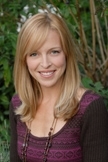
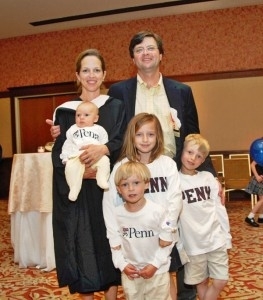
It is also Ms. Cavalier’s mission to help restore the Congressional Office of Technology Assessment, but this time with citizen involvement. OTA’s purpose was to provide Congressional members and committees with objective and authoritative analysis of the complex scientific and technical issues of our times… an office that was copied around the world until it was shuttered in 1995. To this end Darlene Cavalier spends a lot of time lobbying in the halls of congress in Washington, DC, while juggling the active schedule of a married mother of 4 young children.
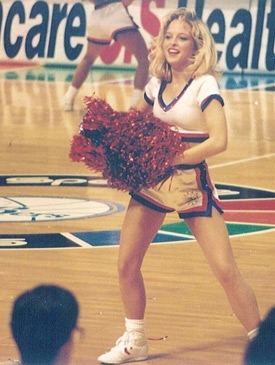
A temp job after college grew from stuffing envelopes in the mail room to working for DISCOVER magazine and their technology awards program. Darlene told me, “My job was to call the nominators and the scientists themselves and I was struck by how normal and nice they were and how I actually understood what they were talking about.” Darlene eventually became the Senior Manager of Global Business Development for Disney Publishing, specializing in development and strategic marketing. In this capacity she worked with some of the brightest minds in science, the media and government to create national science award programs, science education initiatives and science-themed round tables for Disney at EPCOT, Space.com, Sally Ride’s Imaginary Lines and the National Science Foundation. “My 10 years at Discover awoke a long-slumbering love of science and a chance conversation with an editor at Discover propelled me to go back to University to get my master’s.”
There are many of these groups active today but with the rapid changes going on in the world many more are needed for science to be able to keep up with itself. For example at GalaxyZoo.org, amateur astronomers help sift through hundreds of thousands of images and often see things people with PhD’s might miss because they just don’t have the same amount of time to devote to a single image. According to Wikipedia, the longest-running citizen science project currently active is probably the Audubon Society's Christmas Bird Count, which started in 1900. Instead of killing birds mindlessly, U.S. ornithologist Frank Chapman, an officer in the recently formed National Audubon Society, proposed counting birds on Christmas instead of killing them. In 1900, 27 observers took part in the first count in 25 places in the United States and Canada, 15 of them in the northeastern U.S. from Massachusetts to Philadelphia. Since then, the counts have been held every winter, usually with increasing numbers of observers. For instance, the 101st count, in the winter of 2000–2001, involved 52,471 people in 1,823 places in 17 countries (but mostly in the U.S. and Canada). It shows how much information can be gathered if the desire to learn and participate is high.
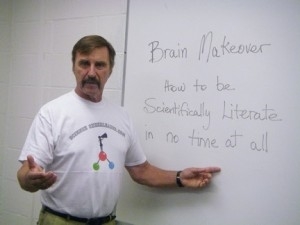
In 2008, she founded ScienceCheerleader.com to “get the conversation going, rally the troops, solicit views from all sides and change the tone of science and science policy in this country.” The response has ranged from sniggering in the halls of congress to wide-ranging appreciation from citizen science projects. To make sure people would take Darlene and her cause seriously she enlisted the help of Jim Trefil, Professor of Physics at George Mason University, to create the Brain Makeover and bring general science concepts to the public in a fun, easy to understand way. Go to her site to watch the current 76ers Cheerleaders run through the 18 key concepts in science that will help you be a “scientific literate,” pain-free! (*Concepts adapted from Professor Trefil’s book, Why Science?, Teachers College Press, 11/1/97.) To see how science literate you are, take the quiz… If you need to review, check out the 18 key concepts before you test yourself. 1. The universe is regular and predictable. 2. Energy is conserved and always moves from more useful to less useful forms. 3. Electricity and magnetism are two sides of the same coin. 4. All matter is made of atoms. 5. Everything comes in discrete units and you can’t measure anything without changing it. 6. Atoms are bound by electron glue. 7. The way a material behaves depends on how its atoms are arranged. 8. Nuclear energy comes from the conversion of mass. 9. All matter is made from quarks and leptons. 10. Stars live and stars die. 11. The universe was born at a specific time and has been expanding ever since. 12. Every observer sees the same laws of nature. 13. The surface of the Earth is constantly changing. 14. The Earth operates in many cycles. 15. All living things are made from cells, the chemical factories of life. 16. All life is based on the same genetic code. 17. All forms of life evolved by natural selection. 18. All life is connected.
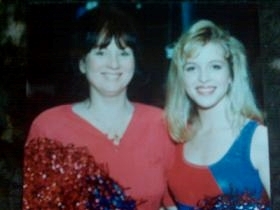
Darlene Cavalier’s love for science is probably in her DNA. Her mother, who is also her hero, loved biology and though she was a single mom of four kids, opted to enroll in college to become a nurse. Darlene told me, “She’s my hero because she’s resourceful and unstoppable; she made a quilt from the scraps she was left with and taught me that education was my key to a better future. And she was right.” Darlene’s mom passed on more than her love for science. That resourceful and unstoppable part seems to have made it as well.
|
|
Written by
Wendy Jewell
Photos courtesy of Darlene Cavalier, sciencecheerleader.com |
|
Science Cheerleader You are the new face of science. Citizens, scientists, and government folks huddle here to help you learn about, DO, and shape science. Here, you'll find links to the popular Brain Makeover (starring 76ers girls), Citizen Science Projects, and Science Policy discussions. Galaxy Zoo Help Astronomers explore the universe. The Galaxy Zoo files contain almost a quarter of a million galaxies which have been imaged with a camera attached to a robotic telescope the Sloan Digital Sky Survey, no less). In order to understand how these galaxies — and our own — formed, we need your help to classify them according to their shapes — a task at which your brain is better than even the fastest computer. Citizen Science Want to do something good for your community and the environment? Not sure where to start? Try citizen science - or volunteer environmental monitoring - and start collecting data on water quality, air quality, biodiversity, climate change and so much more from your community or watershed. Help decision-makers gather as much information as possible to make effective and sustainable choices in planning for our environment. Engineering Challenges The National Academy of Engineering (NAE), at the request of the National Science Foundation, convened a committee of leading technical thinkers to create a list of the grand challenges and opportunities for engineering facing those born at the dawn of this new century. The OTA Legacy From Princeton University, this site "honors that legacy by making available in electronic form the complete collection of OTA publications along with additional materials that illuminate the history and impact of the agency." |
|
|
![]() | ![]() | ![]() | |
| Abner Peeler is credited with the invention of the first airbrush. | Ada Lovelace was a ninteenth century woman who influenced the computer programming of today | Alan Turing laid the theoretical groundwork for the first computer. | Albert Einstein believed in the power of imagination. |
![]() | ![]() | ![]() | |
| Alexander Borodin was an accomplished chemist, composer and staunch advocate of women's rights. | Alexander Graham Bell was the inventor of the telephone. | Ameen Abdulrasool is a young inventor who developed a portable navigation system for the blind. | Amy Charkowski works on the front lines of protecting Earth's food supply. |
![]() | ![]() | ![]() | |
| Andrea Mia Ghez is an astrophysicist best known for her discoveries about the black hole at the center of our galaxy. | Ariel Ruiz i Altaba Scientist - Photographer combines art and science to research how cells are generated and formed. | Audrey Penn: Just Do It is a medical doctor who has devoted herself to studying diseases that affect muscle control. | Augusta Ada Byron developed the world's first computer program while struggling with her own personal hardships. |
![]() | ![]() | ![]() | |
| Babak Darvish, MD inspires his patients and coworkers with his upbeat attitude and determination. | Barbara McClintock was one of the first women geneticists, and a Nobel laureate. | Ben Carson is the chief of neurosurgery at Johns Hopkins University Hospital. | Benjamin Franklin was an inventor, diplomat, writer, and a huge influence on American history. |
![]() | ![]() | ||
| Benjamin Franklin was an inventor, civic leader and founding father of the U.S. | Bernard Fantus created the world's first blood bank. | Bernardo Houssay was an Argentinean physiologist and Nobel Prize winner. | Beth Rickard Environmentalist is an advocate of solar as the energy of the future. |
![]() | ![]() | ![]() | |
| Bill Fenical "Neptune's Medicine Chest" is a pioneer in the hunt for medicines from the ocean to treat cancer and other diseases. | Bonnie Dunbar helped start a scholars program to inspire students to pursue careers in aerospace and engineering. | Charles Darwin is the father of modern biology. | Chiaki Mukai is the first female Japanese astronaut. |
![]() | ![]() | ![]() | |
| Christiane Nusslein-Volhard is a Nobel Prize winner and pioneer genetic researcher. | Claudia Gerwin: Keeping the Neurons Firing researches how nerve cells relay messages to each other. | Clifford V. Johnson is a string theorist who studies the makeup of the smallest particles of the universe. | Connie Samaras has created media archives for deep space voyages. |
![]() | ![]() | ![]() | ![]() |
| Courtney Schumacher is an atmospheric scientist and educator committed to mentoring young women interested in science. | Cristina Diaz: Biologist studies intertidal and tropical sponges. | Dame Cicely Saunders founded the modern hospice to provide compassionate, holistic care to the dying. | DAREnet provides open access to Dutch academic research information and findings. |
![]() | ![]() | ![]() | |
| Darlene Cavalier founded ScienceCheerleader.com to promote science literacy. | Darlene Ketten studies stranded whales and dolphins. | Dean Kamen makes science and technology exciting for young people, | Debbye Turner became Miss America and pursued her dream to become a veterinarian. |
![]() | ![]() | ![]() | |
| Dilfuza Egamberdiyeva cares for the Earth's soil, researching ways to produce microbes to control plant diseases. | Dr Deepak Acharya is a scientist devoted to protecting India's endangered Patalkot Forest. | Dr. Alexander Langmuir Langmuir's work in epidemiology has saved millions of lives. | Dr. Barbara Ross Lee became the first African American woman dean of a US medical school. |
![]() | ![]() | ||
| Dr. Caldicott has been a lifelong anti-nuclear activist. | Dr. Carolyn Mazure founded the Yale Women's Health Program and is a forceful figure in the women's health movement. | Dr. Edward Holland Ophthalmologist transplants corneal stem cells to help give people their sight back. | Dr. Edward Jenner discovered the vaccine. |
![]() | ![]() | ||
| Dr. Elizabeth Kalko and the Jason Project studies bats in the Panamanian rainforest. | Dr. Elvia Niebla Soil Scientist is dedicated to soil conservation. | Dr. Farouk El-Baz is an Egyptian space scientist and geologist. | Dr. France Cordova is a renowned astrophysicist who has broken gender and cultural barriers. |
![]() | ![]() | ||
| Dr. Gloria WilderBrathwaite was inspired to provide health care to the poor in the innner city. | Dr. Govindappa Venkataswamy cares for the eyes of millions of people in India. | Dr. Ines Cifuentes Seismologist works to improve science programs for students in Washington, DC. | Dr. Karen Plaut has been a pioneer in animal science research. |
![]() | ![]() | ![]() | ![]() |
| Dr. Kay Jamison is both an expert on, and a sufferer of, Bipolar Disorder. | Dr. Kristi Curry-Rogers is an accomplished paleontologist who travels the globe in search of dinosaur digs. | Dr. Madan Kataria has started a revolution of joy and laughter that is spreading around the world. | Dr. Michael DeBakey is the father of modern open-heart surgery. |
![]() | ![]() | ![]() | |
| Dr. Patch Adams gives the practice of medicine a humorous twist. | Dr. Richard Murphy Marine Biologist educates others about the sea and ways to protect the oceans for the future. | Dr. Robert Ballard and the JASON project bring scientific exploration to children around the world. | Dr. Rosalie Bertell Anti-Nuclear Nun is a renowned scientist, eco-feminist and peace activist. |
![]() | |||
| Dr. Sara W. Lazar Neuroscientist - Meditator researches the effects of meditation on the brain. | Dr. Sue Savage-Rumbaugh is a scientist dedicated to the study and conservation of bonobos. | Dr. Susan Love is committed to women's health issues. | Dr. Zeda Rosenberg is working to protect women from HIV/AIDS. |
![]() | ![]() | ![]() | |
| Elizabeth Blackwell became the first female doctor and opened the first medical school for women. | Enrico Fermi was one of the 20th century's greatest physicists. | Envirofit retrofits engines to reduce pollution and enhance energy efficiency in developing countries. | Erich Jarvis observes song birds and uses his training with molecular biology to learn about brain behavior. |
![]() | ![]() | ![]() | ![]() |
| F. Sherwood Rowland discovered the 'greenhouse effect.' | Fati Kirakoya is a researcher committed to finding solutions to end HIV/AIDS. | Frederick Banting was the co-discoverer of Insulin. | Friends of the Sea Lion rescue, treat, and release these mammals back into the ocean. |
![]() | ![]() | ![]() | |
| Gail Kaaialii: Biologist investigates the origins of life and helps others value all life forms. | Galileo Galilei was the first to use a telescope to observe the stars and planets. | George Washington Carver is famous for experimenting with plants. | Gertrude B. Elion developed the AIDS drug, AZT. |
![]() | ![]() | ||
| Gina Gallant is an inventor whose passion is protecting the environment. | Grace Murray Hopper was a computer visionary and naval officer. | Guglielmo Marconi was an Italian inventor who won a Nobel Prize in Physics for wireless telegraphy. | Guion S. Bluford, Jr. became the first African-American in space. |
![]() | ![]() | ![]() | |
| Hazel Barton combines her passion for caving with researching microbes. | Hib Vaccine Team created an affordable, synthetic vaccine against the bacteria that can cause meningitis and pneumonia. | Howard Florey shared the Nobel Prize for Medicine for extracting penicillin. | Irene Ayako Uchida helped find the link between radiation and birth defects. |
![]() | ![]() | ![]() | |
| Irene Curie was the second woman in history to win the Nobel Prize in science; the first woman was her mother, Marie. | Jack St. Clair Kilby invented the microchip. | James Burke developed a model of discovery called the Knowledge Web to connect information across space and time. | Jane Mt. Pleasant is an agricultural scientist who looks to the past to meet today's farming needs. |
![]() | |||
| Jonas Salk discovered the polio vaccine. | Kathy Sullivan was the first American woman to walk in space. | Leon Lederman devotes much of his time and energy to improving science education in America. | Leonard Adleman improves lives with his work in DNA technology. |
![]() | ![]() | ![]() | ![]() |
| Leonardo da Vinci was an artist and a scientist ever curious of the world around him. | Leslie Thompson is a scientist devoted to finding a cure for Huntington's Disease. | Louis Pasteur 's discoveries advanced the practice of medicine. | Luz Maria Rodriguez-Fernandez conducts cancer research to help understand the disease process. |
![]() | ![]() | ![]() | ![]() |
| Madame Curie received the Nobel Prize for her discovery of Radium. | Mae Jemison dreamed of going to space since childhood. | Magdalena Hurtado is an anthropologist who studies the Ache people of Paraguay. | Margaret Mead was a renowned anthropologist who thought in terms of 'the interconnection of all aspects of human life.' |
![]() | ![]() | ![]() | ![]() |
| Marie Curie discovered radioactivity as an atomic property, opening the door to 20th century science. | Martha Mecartney is a scientist, engineer and professor committed to helping young women interested in the field of science. | Meenakshi Wadhwa studies meteorites and the processes involved in their formation. | Merieme Chadid is an astronomer from Morocco who did research at the South Pole. |
![]() | ![]() | ||
| Mohammed Bah Abba invented a refrigeration device that is not dependent on electricity. | Neil A. Armstrong was the first man to walk on the moon. | Nikola Tesla was the father of many modern inventions. | Norman Borlaug saved billions of lives with his agricultural discoveries. |
![]() | |||
| Orville and Wilbur Wright were brothers determined to build a better flying machine. | Patrick Nagatani uses photography and colored lights to promote good health. | Paul Farmer has dedicated his life to treating people in the poorest nations in the world | Paul Munsen Solar Oven Man manufactures sun ovens, which harness the sun's rays to provide an environmentally safe source of energy. |
![]() | ![]() | ![]() | |
| Paul Sipiera led an expedition into Antarctica to find meteorites for NASA. | Percy Julian was a groundbreaking African American chemist, inventor, and trailblazer. | Philo T. Farnsworth was the inventor of the television. | Ramani Sankaranarayanan and Geeta Vaidyanathan founded CTxGrEn to show villagers how to turn native materials into fuel for electricity. |
![]() | ![]() | ![]() | ![]() |
| Ray Kurzweil is an inventor who uses technology to restore health. | Reef Ball Foundation restores damaged coral reef systems around the world. | Richard Feynman shared the Nobel Prize in Physics for work in the field of quantum electrodynamics. | Robert Koch was an important medical researcher of the 19th century. |
![]() | ![]() | ![]() | |
| Rokhaya Gueye treats malaria and raises awareness about women's health issues in Senegal. | Saeed Awan developed a new carpet loom that reduces child labor in Pakistan. | Sandra Begay-Campbell is a Native American engineer who brings solar-powered energy to the Navajo reservation. | Shannon Hackett studies the genetic diversity and evolution in tropical birds. |
![]() | ![]() | ![]() | ![]() |
| Sir Alexander Fleming saved millions of lives with his discovery of penicillin. | Srinivasa Ramanujan made groundbreaking contributions to mathematics. | Stephanie Jenouvrier is a population ecologist researching the effects of climate change on emperor penguins. | Stephen Hawking is a renowned theoretical physicist who writes about 'black holes'. |
![]() | ![]() | ![]() | |
| Tania Ruiz is an astrophysicist committed to science education and helping women reach their goals. | Thais Corral gives women a voice in their communities through access to communication technology. | Therese Koutnik is an inspiration to her sister and a role model for girls who would like to become engineers. | Thomas Alva Edison holds the record for number of patents filed. |
![]() | ![]() | ![]() | |
| Thomas Alva Edison is considered one of the world's greatest inventors. | Tim Berners-Lee invented the World Wide Web. | Tom Chau Biomedical Engineer uses science and technology to maximize opportunities for people with disabilities. | Tom Dibblee is a legendary geologic mapper. |
![]() | ![]() | ![]() | |
| Usha Varanasi is the first woman to lead a Fisheries Science Center. | Vint Cerf , Internet pioneer, passionately believes that all people should benefit from the information revolution. | Vladimir Kosma Zworykin is called 'The Father of Television'. | Wes Jackson was a professor who returned to the land to advance sustainable agriculture practices. |
![]() | ![]() | ![]() | |
| Wilson Bentley was the first person to photograph a single snowflake. | XIV Argonauts broadcasted their explorations of the Channel Islands. | Zohra Ben Lakhdar is a physicist from Africa who does research on atomic spectroscopy. |
Last changed on:9/14/2009 11:54:19 AM
|
|