|
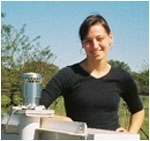
| "We have to get young women interested in science, then let them know they can do science, and then get them to stay with it. I feel very lucky, which is wrong. I shouldn't feel lucky that I wasn't discouraged. That should be the case for everybody!" |
Schumacher: There's a group of women geoscience faculty here at Texas A&M who get together for lunch every month — and we just had this conversation at our last lunch meeting. I think in second grade I asked my parents for a chemistry set. That is my first memory of actively searching out a scientific pursuit. I was always very interested in math. I enjoyed reading a lot, too, so I liked English. I was always torn between those interests. Portree: You told me that you were an "Army brat," so your family traveled around to different bases. Did living in many different places shape your interest in the natural world? Schumacher: I started elementary school in Indiana, in a farm community. Then we moved to Panama, and our house was backed by jungle. I remember taking hikes in the jungle and being alert for large snakes. And I remember the torrential rains. The natural world seemed a part of my younger years. We moved to Virginia when I was in junior high. That's where my father retired. That was the suburbs, not so much the natural environment. By then, my interest in math had kicked in. What I appreciate most about living in all those different places as a kid is all the different people I was exposed to. I felt comfortable in a lot of different environments. Especially when we lived in Panama, all my friends were from different countries. My two best friends were Indian and Greek. I feel I'm very accepting of people and their differences. This is useful to me since I work all over the world. For example, in my graduate career, I worked on a joint NASA-Japanese Space Agency project — the Tropical Rainfall Measuring Mission (TRMM) satellite. I went to Japan many times, and I have a great rapport with my Japanese colleagues. It also helped me to become adaptable. I'm an observational meteorologist, so I go on field programs all over. I live and work on a ship for many weeks, or set up instrumentation in a tropical country where people speak a different language, have a different culture. Those programs can be challenging, but I think my early experiences helped a lot. Portree: When did you decide to become a scientist? Schumacher: I work a lot with recruiting in our department, the Department of Atmospheric Sciences. High school students are always coming in and talking with me - they know they want to be an atmospheric scientist and get a Ph.D. — and some of them are just high school sophomores! I'm amazed that they already know they want to get their Ph.D. in atmospheric science. It wasn't that way with me.
I started out my undergraduate career in 1990 at the University of Virginia. I started in mathematics. I thought, I'm really good at math, I like it — then I realized it wasn't applied enough for me. I really wanted to be more active in my community and my society.
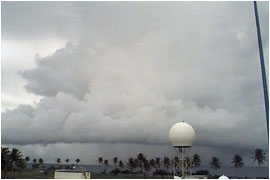
I moved toward Tropical Meteorology because I wanted to go to South America. When we lived in Panama we traveled a lot in South America. In the military, you can fly on the cargo planes really cheaply. My dad would throw the whole family on a cargo plane and we'd go to Peru or Bolivia. I wanted to go back to South America, and I wanted that to be part of my science education. I went to the professors in the department and found out who was doing work in South America. I was most excited about Mike Garstang's work. He excited me about the field — he was very important when I was an undergraduate. He was studying aerosol transport from the Sahara Desert into the Brazilian Amazon. Aerosols include dust, and also particles from biomass burning. They were looking at the chemical composition of these particles. So I spent a semester in Brazil interning with some of his colleagues in Sao Paulo. That's when I really became interested in tropical meteorology in particular. Mike Garstang started me off in tropical meteorology in the right way. When I was an undergraduate I did a lot of internships to see what part of the science I liked. I don't remember how I discovered that internships were the way to go, but I do remember knowing that I had to be proactive. Some internships were posted on bulletin boards - the American Meteorological Society puts out a newsletter with opportunities, for example. Opportunities weren't always posted, however. I'd go to professors and say, "I want to do an independent study with you," and they'd say, "Great!" That's something I tell every student I advise. Be proactive. It's how to succeed and make connections and figure out what you really want to do. I worked for the National Weather Service in Alaska for a summer to see what government weather forecasting is like. I worked for a private company in an atmospheric science capacity to see what the private sector is like. I was an intern at a foundation, so I could see what science policy work is like. I made sure I was exposed to all the different aspects of the science. I came to realize that research was where I wanted to be.
When time came to go to graduate school, I went to Mike Garstang with a list of graduate schools and told him that I really wanted to study tropical meteorology. He marked all of them off except two, and said, "These are the two people you'd want to work with." And he called them both, and I ended up at the University of Washington with Bob Houze. He's a very well-known scientist in the field. He was very impressed that Mike Garstang called him up. So, it had a lot to do with being proactive, being enthusiastic, and making connections.
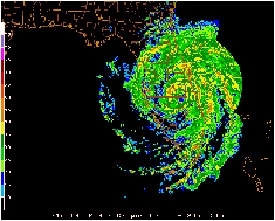
Schumacher: People always say that girls are not supported in their pursuit of science and math. I think I remember only one instance of that as I went through primary school in the late 1970s and early 1980s. I was always one of the best in the class, and my teachers just said, "Great!" I never felt anything holding me back. That's not the case for a lot of people. It can often be a challenge. We have to get young women interested in science, then let them know they can do science, and then get them to stay with it. Those hurdles might be why we have fewer women than men in math and the sciences. I was fortunate. I feel very lucky, which is wrong. I shouldn't feel lucky that I wasn't discouraged. That should be the case for everybody! Portree: Did you have any role models or mentors who encouraged you? Schumacher: Not when I was very young. When I was older. . .there are very few female scientists in my field. There was one female role model, a female professor, in my graduate program at the University of Washington. Her name was Marcia Baker. I didn't actively do research with her, but it was important to me to see that there was a woman who had succeeded, who was a good scientist, who had balanced career and family, and was well respected. I had one role model/mentor - something between - Bruce Nelson, a geologist. He was my first advisor when I was an undergraduate in environmental science. This was before I decided I actually wanted to go into meteorology. He made me realize that you could do science and have fun. I had so many interests, and I wanted to travel - he said, "You know, you can do all this." He showed me that you could have a very rich life and make science a part of your life. Science is fun! Finally, I should mention my most important mentor, my graduate advisor, Bob Houze. He was incredibly influential in the way my scientific understanding of weather developed. Portree: Let's talk about your research. You've spent a fair amount of time in the Pacific. Is that part of the tropics your research specialty? Schumacher: I look at tropical rain — that sums it up. I also look at the convective systems that produce the rain and how they organize. How does that organization vary across the tropics? A hurricane is the most organized convective storm — it's the epitome of organization. Radar is a really good way to study all this, so I also call myself a radar meteorologist. Sometimes I'll call myself a mesoscale meteorologist, because mesoscale is the scale of storms. The Pacific Basin is a very large part of the tropics, so a lot of my work has focused there. As I mentioned, my graduate career was spent working on a NASA satellite called TRMM. It was launched at the end of 1997. That was the first quantitative weather radar placed in space. The Japanese built the radar — that's why I had a lot of interaction with my Japanese colleagues. You could use it to get radar observations over the tropical oceans, which are obviously very hard to get, unless you have a radar on a ship or an island, and those are few and far between. So a lot of my past work focused on observations of the oceans because we had this new technology to observe. When I worked on TRMM, we did a field program in the Pacific to validate the satellite data — on Kwajalein island in the Marshall Islands, where they have a weather radar and lots of resources for a field campaign.
I'm transitioning away from that. Now that I'm faculty at Texas A & M, I'm writing proposals to do things in West Africa and Costa Rica and even here in southeast Texas. We're in a subtropical climate, occasionally affected by tropical influences. We have a radar on the roof here. Just like with TRMM, it's partly about going where the interest is, where the field programs are happening, where the agencies are funding proposals.
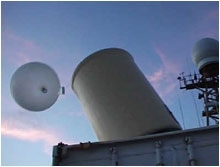
Schumacher: This is a really tough question for the office. For the field it's a much easier question. When you're a graduate student, you can focus on just one topic. You work on your dissertation, and that's it. I came directly from graduate school to my faculty position, and now it's completely different. Here my typical day includes teaching and advising students and committee work. As a graduate student I would review and write some papers, but now I'm reviewing and writing a lot more papers. I'm reviewing proposals and writing proposals. I went from totally focused to — well, I feel unfocused. If I'm lucky I might get a couple of hours working on my own research. About half my research time is spent reading and writing proposals, the other half is spent at the computer looking at the data. That's one of the things that intimidated me about going into academia. I saw how many different directions you're pulled. In academia there's three areas — research, academics, and service — that determine how well you do, whether you get tenure. All three aspects of academia interest me — now it's about finding the right balance. You wanted to talk to me in part because I'm starting out as a scientist. I'm still very much on the learning curve. I think all young faculty are a little intimidated — you have to be a good teacher, bring in a lot of money with your proposals, write a lot of good papers, and contribute to your professional society, and you have to balance all this with your regular life. I'm still having fun, though. My graduate students are challenging me, and I like that. I think the graduate students enjoy talking with me because I'm just out of graduate school. They enjoy someone they can relate to. My undergraduates are also very interesting. Portree: What's a typical research day like out in the field? Schumacher: The fieldwork is much more structured. The important thing when you're out in the field is to get consistent measurements. You want to make sure that the radar is collecting data the same way for months at a time. Field programs last a month to three months for larger projects. You set up shifts in an operations center, so there's somebody there 24 hours a day. You make sure the rain gauges are working right. We do things like launch balloons to get temperature and moisture profiles of the atmosphere. You want to launch those at the same time every day so you have a consistent data set. In a way it's boring because everything's on a set pattern, except that you get to observe the phenomenon that you study. The weather obviously changes, but some days it's calm or scattered showers, and none of the instrumentation picks up much. Then there's days that are really exciting, and you've got a huge squall line coming through, and you're getting too much data, and it's raining hard, and instruments are breaking down. You're tired. You're working hard. There are no days off. Saturdays and Sundays have no meaning.
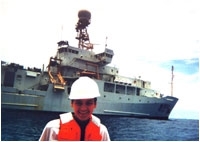
I was on a ship for seven weeks in the east Pacific. The ship was in a place where there's no land nearby, where ships normally don't travel. That's why we were there with our radar. We would do abandon ship drills. We would go to the boats, then they'd announce that the nearest point of land was like 1500 nautical miles away. We didn't see another ship for weeks.
Schumacher: Occasionally I'll be at my computer, and I'll realize something or some pattern will emerge from the data, and I'll vocalize - "oh, wow!" Those moments are great. They're what keep me going. The discovery part of science. Another exciting time is when you get into a conversation with another scientist and you really get into the details. You might not agree, but you're both learning. I remember about two years ago, there were five us in an email exchange. It was about ice formation in mesoscale convective systems. Somebody was at Utah, two of us were at the University of Washington, two were at Colorado State. We were emailing back and forth like crazy in a big argument. I was so excited. When somebody responded, I'd run to my adviser and we'd talk about it. It happens at conferences or with your colleagues in the hall, but I remember that exchange as being especially exciting and energizing. Portree: When we talked before, you mentioned your enthusiasm for encouraging diversity in the field of atmospheric science. Why is that important, and what do you do to encourage women and minority students? Schumacher: When people meet me, they say, "Wow, you don't look like an atmospheric scientist," or "You don't look like a professor." I think it's because I'm a young woman. That's just not the picture they have in their minds when they think of a scientist - the guy in the lab coat with the crazy Einstein hair. Breaking stereotypes is important. One thing I do is act as a role model. I'm a young woman Ph.D. atmospheric scientist who took a faculty position. That's one reason I chose to go into academics. It's a little more high profile. I also try to foster mentoring relationships. There's a lot of statistics that say mentoring is the best way to keep young women in the sciences. I'm the undergraduate recruiting coordinator. I chose this task because I wanted to have interaction with incoming students. Texas A&M just hired a vice president for diversity. So, there's funding to bring in Hispanic and black students and their families. I'll contact these students and their families and meet with them. That's maybe my most active role. I'm also helping out on a proposal for bringing minorities into the atmospheric sciences - we'll go to high schools and community colleges and speak. I'm not doing the science education "pipeline" all the way back to grade school, but I'm doing high school through undergraduate. Portree: Why is diversity important?
Schumacher: Well, why not have a more representative science community made up of people who think in different ways? You're limiting yourself if you're just going after the white male population. It's a more rich environment when you have different types of people. Diversity can only help the scientific process.
|
|
Written by
David S.F. Portree for Earth & Sky Permission to use this material
|
|
Earth & Sky is a non-profit organization committed to describing humanity's work to understand itself and its relationship to the Earth. The radio series and Web site provide a clear voice for science, nature and people in a complex world. Dr. Schumacher's home page at Texas A&M University, Department of Atmospheric Sciences Tropical Rainfall Measuring Mission is a joint mission between NASA and the Japan Aerospace Exploration Agency (JAXA) designed to monitor and study tropical rainfall. Destination Earth: NASA's Mission to Planet Earth NASA's Applied Science program focuses on applications of national priority to expand and accelerate the use of knowledge, science, and technologies resulting from NASA's goal of improving predictions in the areas of weather, climate, and natural hazards. National Weather Service - National Oceanic and Atmospheric Administration (NOAA) Find out the latest weather forecast. The NOAA Web site also includes valuable education resources for students and teachers. |
![]() | ![]() | ![]() | |
| Abner Peeler is credited with the invention of the first airbrush. | Ada Lovelace was a ninteenth century woman who influenced the computer programming of today | Alan Turing laid the theoretical groundwork for the first computer. | Albert Einstein believed in the power of imagination. |
![]() | ![]() | ![]() | |
| Alexander Borodin was an accomplished chemist, composer and staunch advocate of women's rights. | Alexander Graham Bell was the inventor of the telephone. | Ameen Abdulrasool is a young inventor who developed a portable navigation system for the blind. | Amy Charkowski works on the front lines of protecting Earth's food supply. |
![]() | ![]() | ![]() | |
| Andrea Mia Ghez is an astrophysicist best known for her discoveries about the black hole at the center of our galaxy. | Ariel Ruiz i Altaba Scientist - Photographer combines art and science to research how cells are generated and formed. | Audrey Penn: Just Do It is a medical doctor who has devoted herself to studying diseases that affect muscle control. | Augusta Ada Byron developed the world's first computer program while struggling with her own personal hardships. |
![]() | ![]() | ![]() | |
| Babak Darvish, MD inspires his patients and coworkers with his upbeat attitude and determination. | Barbara McClintock was one of the first women geneticists, and a Nobel laureate. | Ben Carson is the chief of neurosurgery at Johns Hopkins University Hospital. | Benjamin Franklin was an inventor, diplomat, writer, and a huge influence on American history. |
![]() | ![]() | ||
| Benjamin Franklin was an inventor, civic leader and founding father of the U.S. | Bernard Fantus created the world's first blood bank. | Bernardo Houssay was an Argentinean physiologist and Nobel Prize winner. | Beth Rickard Environmentalist is an advocate of solar as the energy of the future. |
![]() | ![]() | ![]() | |
| Bill Fenical "Neptune's Medicine Chest" is a pioneer in the hunt for medicines from the ocean to treat cancer and other diseases. | Bonnie Dunbar helped start a scholars program to inspire students to pursue careers in aerospace and engineering. | Charles Darwin is the father of modern biology. | Chiaki Mukai is the first female Japanese astronaut. |
![]() | ![]() | ![]() | |
| Christiane Nusslein-Volhard is a Nobel Prize winner and pioneer genetic researcher. | Claudia Gerwin: Keeping the Neurons Firing researches how nerve cells relay messages to each other. | Clifford V. Johnson is a string theorist who studies the makeup of the smallest particles of the universe. | Connie Samaras has created media archives for deep space voyages. |
![]() | ![]() | ![]() | ![]() |
| Courtney Schumacher is an atmospheric scientist and educator committed to mentoring young women interested in science. | Cristina Diaz: Biologist studies intertidal and tropical sponges. | Dame Cicely Saunders founded the modern hospice to provide compassionate, holistic care to the dying. | DAREnet provides open access to Dutch academic research information and findings. |
![]() | ![]() | ![]() | |
| Darlene Cavalier founded ScienceCheerleader.com to promote science literacy. | Darlene Ketten studies stranded whales and dolphins. | Dean Kamen makes science and technology exciting for young people, | Debbye Turner became Miss America and pursued her dream to become a veterinarian. |
![]() | ![]() | ![]() | |
| Dilfuza Egamberdiyeva cares for the Earth's soil, researching ways to produce microbes to control plant diseases. | Dr Deepak Acharya is a scientist devoted to protecting India's endangered Patalkot Forest. | Dr. Alexander Langmuir Langmuir's work in epidemiology has saved millions of lives. | Dr. Barbara Ross Lee became the first African American woman dean of a US medical school. |
![]() | ![]() | ||
| Dr. Caldicott has been a lifelong anti-nuclear activist. | Dr. Carolyn Mazure founded the Yale Women's Health Program and is a forceful figure in the women's health movement. | Dr. Edward Holland Ophthalmologist transplants corneal stem cells to help give people their sight back. | Dr. Edward Jenner discovered the vaccine. |
![]() | ![]() | ||
| Dr. Elizabeth Kalko and the Jason Project studies bats in the Panamanian rainforest. | Dr. Elvia Niebla Soil Scientist is dedicated to soil conservation. | Dr. Farouk El-Baz is an Egyptian space scientist and geologist. | Dr. France Cordova is a renowned astrophysicist who has broken gender and cultural barriers. |
![]() | ![]() | ||
| Dr. Gloria WilderBrathwaite was inspired to provide health care to the poor in the innner city. | Dr. Govindappa Venkataswamy cares for the eyes of millions of people in India. | Dr. Ines Cifuentes Seismologist works to improve science programs for students in Washington, DC. | Dr. Karen Plaut has been a pioneer in animal science research. |
![]() | ![]() | ![]() | ![]() |
| Dr. Kay Jamison is both an expert on, and a sufferer of, Bipolar Disorder. | Dr. Kristi Curry-Rogers is an accomplished paleontologist who travels the globe in search of dinosaur digs. | Dr. Madan Kataria has started a revolution of joy and laughter that is spreading around the world. | Dr. Michael DeBakey is the father of modern open-heart surgery. |
![]() | ![]() | ![]() | |
| Dr. Patch Adams gives the practice of medicine a humorous twist. | Dr. Richard Murphy Marine Biologist educates others about the sea and ways to protect the oceans for the future. | Dr. Robert Ballard and the JASON project bring scientific exploration to children around the world. | Dr. Rosalie Bertell Anti-Nuclear Nun is a renowned scientist, eco-feminist and peace activist. |
![]() | |||
| Dr. Sara W. Lazar Neuroscientist - Meditator researches the effects of meditation on the brain. | Dr. Sue Savage-Rumbaugh is a scientist dedicated to the study and conservation of bonobos. | Dr. Susan Love is committed to women's health issues. | Dr. Zeda Rosenberg is working to protect women from HIV/AIDS. |
![]() | ![]() | ![]() | |
| Elizabeth Blackwell became the first female doctor and opened the first medical school for women. | Enrico Fermi was one of the 20th century's greatest physicists. | Envirofit retrofits engines to reduce pollution and enhance energy efficiency in developing countries. | Erich Jarvis observes song birds and uses his training with molecular biology to learn about brain behavior. |
![]() | ![]() | ![]() | ![]() |
| F. Sherwood Rowland discovered the 'greenhouse effect.' | Fati Kirakoya is a researcher committed to finding solutions to end HIV/AIDS. | Frederick Banting was the co-discoverer of Insulin. | Friends of the Sea Lion rescue, treat, and release these mammals back into the ocean. |
![]() | ![]() | ![]() | |
| Gail Kaaialii: Biologist investigates the origins of life and helps others value all life forms. | Galileo Galilei was the first to use a telescope to observe the stars and planets. | George Washington Carver is famous for experimenting with plants. | Gertrude B. Elion developed the AIDS drug, AZT. |
![]() | ![]() | ||
| Gina Gallant is an inventor whose passion is protecting the environment. | Grace Murray Hopper was a computer visionary and naval officer. | Guglielmo Marconi was an Italian inventor who won a Nobel Prize in Physics for wireless telegraphy. | Guion S. Bluford, Jr. became the first African-American in space. |
![]() | ![]() | ![]() | |
| Hazel Barton combines her passion for caving with researching microbes. | Hib Vaccine Team created an affordable, synthetic vaccine against the bacteria that can cause meningitis and pneumonia. | Howard Florey shared the Nobel Prize for Medicine for extracting penicillin. | Irene Ayako Uchida helped find the link between radiation and birth defects. |
![]() | ![]() | ![]() | |
| Irene Curie was the second woman in history to win the Nobel Prize in science; the first woman was her mother, Marie. | Jack St. Clair Kilby invented the microchip. | James Burke developed a model of discovery called the Knowledge Web to connect information across space and time. | Jane Mt. Pleasant is an agricultural scientist who looks to the past to meet today's farming needs. |
![]() | |||
| Jonas Salk discovered the polio vaccine. | Kathy Sullivan was the first American woman to walk in space. | Leon Lederman devotes much of his time and energy to improving science education in America. | Leonard Adleman improves lives with his work in DNA technology. |
![]() | ![]() | ![]() | ![]() |
| Leonardo da Vinci was an artist and a scientist ever curious of the world around him. | Leslie Thompson is a scientist devoted to finding a cure for Huntington's Disease. | Louis Pasteur 's discoveries advanced the practice of medicine. | Luz Maria Rodriguez-Fernandez conducts cancer research to help understand the disease process. |
![]() | ![]() | ![]() | ![]() |
| Madame Curie received the Nobel Prize for her discovery of Radium. | Mae Jemison dreamed of going to space since childhood. | Magdalena Hurtado is an anthropologist who studies the Ache people of Paraguay. | Margaret Mead was a renowned anthropologist who thought in terms of 'the interconnection of all aspects of human life.' |
![]() | ![]() | ![]() | ![]() |
| Marie Curie discovered radioactivity as an atomic property, opening the door to 20th century science. | Martha Mecartney is a scientist, engineer and professor committed to helping young women interested in the field of science. | Meenakshi Wadhwa studies meteorites and the processes involved in their formation. | Merieme Chadid is an astronomer from Morocco who did research at the South Pole. |
![]() | ![]() | ||
| Mohammed Bah Abba invented a refrigeration device that is not dependent on electricity. | Neil A. Armstrong was the first man to walk on the moon. | Nikola Tesla was the father of many modern inventions. | Norman Borlaug saved billions of lives with his agricultural discoveries. |
![]() | |||
| Orville and Wilbur Wright were brothers determined to build a better flying machine. | Patrick Nagatani uses photography and colored lights to promote good health. | Paul Farmer has dedicated his life to treating people in the poorest nations in the world | Paul Munsen Solar Oven Man manufactures sun ovens, which harness the sun's rays to provide an environmentally safe source of energy. |
![]() | ![]() | ![]() | |
| Paul Sipiera led an expedition into Antarctica to find meteorites for NASA. | Percy Julian was a groundbreaking African American chemist, inventor, and trailblazer. | Philo T. Farnsworth was the inventor of the television. | Ramani Sankaranarayanan and Geeta Vaidyanathan founded CTxGrEn to show villagers how to turn native materials into fuel for electricity. |
![]() | ![]() | ![]() | ![]() |
| Ray Kurzweil is an inventor who uses technology to restore health. | Reef Ball Foundation restores damaged coral reef systems around the world. | Richard Feynman shared the Nobel Prize in Physics for work in the field of quantum electrodynamics. | Robert Koch was an important medical researcher of the 19th century. |
![]() | ![]() | ![]() | |
| Rokhaya Gueye treats malaria and raises awareness about women's health issues in Senegal. | Saeed Awan developed a new carpet loom that reduces child labor in Pakistan. | Sandra Begay-Campbell is a Native American engineer who brings solar-powered energy to the Navajo reservation. | Shannon Hackett studies the genetic diversity and evolution in tropical birds. |
![]() | ![]() | ![]() | ![]() |
| Sir Alexander Fleming saved millions of lives with his discovery of penicillin. | Srinivasa Ramanujan made groundbreaking contributions to mathematics. | Stephanie Jenouvrier is a population ecologist researching the effects of climate change on emperor penguins. | Stephen Hawking is a renowned theoretical physicist who writes about 'black holes'. |
![]() | ![]() | ![]() | |
| Tania Ruiz is an astrophysicist committed to science education and helping women reach their goals. | Thais Corral gives women a voice in their communities through access to communication technology. | Therese Koutnik is an inspiration to her sister and a role model for girls who would like to become engineers. | Thomas Alva Edison holds the record for number of patents filed. |
![]() | ![]() | ![]() | |
| Thomas Alva Edison is considered one of the world's greatest inventors. | Tim Berners-Lee invented the World Wide Web. | Tom Chau Biomedical Engineer uses science and technology to maximize opportunities for people with disabilities. | Tom Dibblee is a legendary geologic mapper. |
![]() | ![]() | ![]() | |
| Usha Varanasi is the first woman to lead a Fisheries Science Center. | Vint Cerf , Internet pioneer, passionately believes that all people should benefit from the information revolution. | Vladimir Kosma Zworykin is called 'The Father of Television'. | Wes Jackson was a professor who returned to the land to advance sustainable agriculture practices. |
![]() | ![]() | ![]() | |
| Wilson Bentley was the first person to photograph a single snowflake. | XIV Argonauts broadcasted their explorations of the Channel Islands. | Zohra Ben Lakhdar is a physicist from Africa who does research on atomic spectroscopy. |
![]() | ![]() | ||
| A Powerful Noise promotes the global empowerment of women | Abigail Adams mended the riff between two former U.S. presidents. | Ada Aharoni works for peace between Israelis and Palestinians with poetry. | Ada Lovelace was a ninteenth century woman who influenced the computer programming of today |
![]() | ![]() | ![]() | ![]() |
| Adi Roche founded an oranization that helps orphans of nuclear disaster. | Aletta Jacobs was a Dutch doctor, a feminist, a pacifist, and a human rights activist. | Alexandrine Tinne was a young Dutch explorer and the first female to attempt to cross the Sahara. | Alice Waters created the world famous Edible Schoolyard Project. |
![]() | ![]() | ![]() | |
| Alicia O'Brien was the inspiration for Cherie Bennett's novel, Zink. | Amy Biehl gave her life to ending apartheid in South Africa. | Amy Charkowski works on the front lines of protecting Earth's food supply. | Andrea Mia Ghez is an astrophysicist best known for her discoveries about the black hole at the center of our galaxy. |
![]() | ![]() | ![]() | ![]() |
| Angela Brooks is an architect who works to create sustainable and affordable housing. | Ann Armstrong-Dailey founded Children's Hospice International. | Anna Akhmatova is considered one of Russia's best poets. | Anna Jarvis is the mother of Mother's Day. |
![]() | ![]() | ![]() | ![]() |
| Anne Frank : 'When I write, I can shake off all my cares.' | Annie Mansfield Sullivan Macy developed new methods for teaching blind and deaf students. | Artemisia Gentileschi was a female post-Renaissance artist who tackled challenging themes. | Audrey Penn: Just Do It is a medical doctor who has devoted herself to studying diseases that affect muscle control. |
![]() | ![]() | ||
| Augusta Ada Byron developed the world's first computer program while struggling with her own personal hardships. | Aung San Suu Kyi has dedicated her life to freeing Burma from a repressive dictatorship and creating democracy without violence. | Barbara McClintock was one of the first women geneticists, and a Nobel laureate. | Bella Abzug was a New York Congresswoman who fought for women's rights. |
![]() | ![]() | ||
| Beth Rickard Environmentalist is an advocate of solar as the energy of the future. | Billie Jean King is an advocate for women in sports and champion tennis player | C. Vivian Stringer despite great challenges, pursued her passion for basketball and is known for turning women into champions. | Catherine Malonza saved her brother's life. |
![]() | ![]() | ![]() | ![]() |
| Cathy Freeman wins races and respect for the plight of native Australian people. | Chamique Holdsclaw is one of the most celebrated players in women's basketball. | Chiaki Mukai is the first female Japanese astronaut. | Chief Wilma Mankiller was the first woman to serve as Principal Chief of the Cherokee Nation. |
![]() | ![]() | ![]() | |
| Christiane Nusslein-Volhard is a Nobel Prize winner and pioneer genetic researcher. | Christine de Pisan was a 15th century French poet. | Christine Silverberg was the first female Chief of Police in Canada. | Claire Lalanne founded the Center for Nutritional Recovery. |
![]() | ![]() | ![]() | |
| Clara Barton was known as the 'Angel of the Battlefield.' | Clara Hale was foster mother and founder of the Hale House. | Clara Shortridge Foltz was the first woman to practice law in California. | Claudia Gerwin: Keeping the Neurons Firing researches how nerve cells relay messages to each other. |
![]() | ![]() | ||
| Clotilde Dedecker provides educational opportunities for girls in Afghanistan. | Connie Samaras has created media archives for deep space voyages. | Constance Motley became the first African-American woman judge on the largest federal trial bench in the US. | Corrie Ten Boom risked her life to help hundreds of Jews escape during WWII. |
![]() | ![]() | ![]() | |
| Courtney Schumacher is an atmospheric scientist and educator committed to mentoring young women interested in science. | Cristina Diaz: Biologist studies intertidal and tropical sponges. | Dame Cicely Saunders founded the modern hospice to provide compassionate, holistic care to the dying. | Dana Reeve was an actress and advocate for the disabled. She was the heroic wife of Christopher Reeve. |
![]() | ![]() | ![]() | ![]() |
| Daphna Ziman founded Children Uniting Nations. | Darlene Ketten studies stranded whales and dolphins. | Debbye Turner became Miss America and pursued her dream to become a veterinarian. | DeeDee Jonrowe is a veteran dog sled musher in the Iditarod Race |
![]() | ![]() | ![]() | ![]() |
| Dian Fossey worked to protect the endangered Mountain Gorilla. | Diane Challis Davy directs the Laguna Beach Pageant of the Masters. | Dilfuza Egamberdiyeva cares for the Earth's soil, researching ways to produce microbes to control plant diseases. | Dolley Madison was admired for her social graces, courage and patriotism as First Lady of the US. |
![]() | ![]() | ![]() | ![]() |
| Dolores Olmedo Patino was a Mexican businesswoman, philanthropist, and art collector. | Doreen Van Lee writes about her Chicago childhood. | Dorothea Lange captured powerful moments in history with a keen eye for the human condition. | Dorothea Lynde Dix was an advocate for the rights of the mentally ill. |
![]() | ![]() | ||
| Dr. Barbara Ross Lee became the first African American woman dean of a US medical school. | Dr. Caldicott has been a lifelong anti-nuclear activist. | Dr. Carolyn Mazure founded the Yale Women's Health Program and is a forceful figure in the women's health movement. | Dr. Elizabeth Kalko and the Jason Project studies bats in the Panamanian rainforest. |
![]() | ![]() | ![]() | |
| Dr. Elvia Niebla Soil Scientist is dedicated to soil conservation. | Dr. France Cordova is a renowned astrophysicist who has broken gender and cultural barriers. | Dr. Gloria WilderBrathwaite was inspired to provide health care to the poor in the innner city. | Dr. Ines Cifuentes Seismologist works to improve science programs for students in Washington, DC. |
![]() | ![]() | ![]() | ![]() |
| Dr. Karen Plaut has been a pioneer in animal science research. | Dr. Kay Jamison is both an expert on, and a sufferer of, Bipolar Disorder. | Dr. Kristi Curry-Rogers is an accomplished paleontologist who travels the globe in search of dinosaur digs. | Dr. Rosalie Bertell Anti-Nuclear Nun is a renowned scientist, eco-feminist and peace activist. |
![]() | ![]() | ||
| Dr. Sara W. Lazar Neuroscientist - Meditator researches the effects of meditation on the brain. | Dr. Shirley McGreal founded the International Primate Protection League. | Dr. Sue Savage-Rumbaugh is a scientist dedicated to the study and conservation of bonobos. | Dr. Susan Love is committed to women's health issues. |
![]() | ![]() | ![]() | |
| Dr. Zeda Rosenberg is working to protect women from HIV/AIDS. | Edith Cavell was a nurse who risked her own safety to help others during WWI | Edmonia Lewis defied restrictions on black women and achieved respect in the art community. | Edna St. Vincent Millay 's poetry was both popular and critically acclaimed. |
![]() | ![]() | ![]() | |
| Eleanor of Aquitaine was a powerful and independant woman in the Middle Ages. | Eleanor Roosevelt was a champion for freedom and devoted her life to gaining rights for others | Eleanor Roosevelt was a dedicated and strong voice for her husband, FDR, and for the United States. | Elizabeth Blackwell became the first female doctor and opened the first medical school for women. |
![]() | ![]() | ![]() | |
| Elizabeth Cady Stanton was a pioneer in the movement for women's rights. | Elizabeth Glaser created the Pediatric AIDS Foundation. | Elizabeth Jane Cochrane (Nellie Bly) was a journalist who went around the world in 72 days. | Ellen Church pioneered the idea of having flight attendants on flights. |
![]() | |||
| Ellen Johnson-Sirleaf is the president of Liberia and the first woman to be head of state in all of Africa. | Ellen MacArthur has broken numerous records with her courageous solo sailing adventures. | Ellen Ochoa was the first Hispanic woman astronaut. | Emily Elizabeth Dickinson wrote nearly 2,000 poems in her lifetime. |
![]() | ![]() | ![]() | |
| Emily Greene Balch received the Nobel Peace Prize in 1946. | Emily Murphy was a key figure in the women's rights movement in Canada. | Emma Lazarus was an advocate for immigrants' rights and wrote the poem inscribed on the Statue of Liberty. | Emme Aronson is an outspoken advocate for bettering self esteem and body images. |
![]() | ![]() | ![]() | |
| Erin Gruwell is the founder of Freedom Writers and an inspiration to teachers and students around the world. | Fadela Amara is recognized throughout France as a champion of women's rights. | Farkhonda Hassan is an Egyptian politician, scientist, professor, and women's rights activist. | Fateme was the prophet Mohammad's daughter and a leader to the people. |
![]() | ![]() | ![]() | ![]() |
| Fati Kirakoya is a researcher committed to finding solutions to end HIV/AIDS. | Fay Clayton is an attorney who works pro bono assisting civil rights cases. | Florence Griffith-Joyner was one of the greatest athletes of all time. | Florence Kelley was an outspoken leader against child labor. |
![]() | ![]() | ![]() | ![]() |
| Florence Kelley was a faithful fighter for child labor laws, women's rights, and civil rights in the U.S. | Florence Ngobeni urges African leaders to work for AIDS prevention. | Florence Nightingale revolutionized nursing. | Frances Ellen Watkins was a prolific author and poet who devoted her life to speaking out against slavery. |
![]() | ![]() | ![]() | |
| Frida Kahlo became a famous Mexican artist despite polio and injuries. | Gabrielle (Coco) Chanel revolutionized women's fashion and empowered women | Gail Kaaialii: Biologist investigates the origins of life and helps others value all life forms. | Gerda Klein is a Holocaust survivor who works to stamp out intolerance, hatred, and childhood hunger. |
![]() | ![]() | ![]() | |
| Gertrude B. Elion developed the AIDS drug, AZT. | Gina Gallant is an inventor whose passion is protecting the environment. | Grace Murray Hopper was a computer visionary and naval officer. | Harriet Tubman organized the Underground Railroad and helped lead slaves to freedom. |
![]() | ![]() | ![]() | |
| Hattie Elizabeth Alexander saved the lives of thousands of children through her work. | Hazel Barton combines her passion for caving with researching microbes. | Helen Adams Keller wrote about her own life and education. | Helen Freeman survived the Holocaust and shares her story. |
![]() | ![]() | ||
| Helene Gayle is one of the leading authorities on AIDS research. | Her Majesty Queen Beatrix of the Netherlands honors the bond formed between Canada and Holland during WWII with tulips. | Hermine Santrouschitz (Miep Gies) kept Anne Frank and her family safely hidden from the Nazis. | Heroic Women Nobel Laureate Wangari Maathai writes about the heroic women who have inspired her. |
![]() | ![]() | ![]() | ![]() |
| Ilse Bing was a remarkable poet and photographer. Her works withstand the test of time. | Inez Milholland Boissevain : a brief but spectacular life dedicated to women's suffrage. | Irene Curie was the second woman in history to win the Nobel Prize in science; the first woman was her mother, Marie. | Isabel Allende is one of the first and most successful, eloquent, and admired female novelists in Latin America. |
![]() | ![]() | ![]() | |
| J.K. Rowling is the author of the Harry Potter books. | Jane Mt. Pleasant is an agricultural scientist who looks to the past to meet today's farming needs. | Janet Guthrie First woman to race in the Indianapolis 500 | Janet Jagan was the first female president of Guyana and dedicated her life to building the independence of a nation. |
![]() | ![]() | ![]() | ![]() |
| Jessie Christopherson helps the physically and mentally challenged accomplish things they never thought possible. | Jessie Daniel Ames worked openly and actively on behalf of racial justice. | Joan of Arc died for her beliefs. | Jody Williams is a human rights activist and Nobel Peace Prize winner who began a campaign to rid the world of landmines. |
![]() | ![]() | ![]() | ![]() |
| Johnie Sue Reinhard is a cancer survivor who inspires others with her positive attitude and tenacity for life. | Josefina Lopez is a Latina screenwriter who believes in the power of women. | Josephine Ruffin served as the editor and publisher of the first newspaper published by and for African-American women. | Judit Polgar is breaking the gender barrier in the world of chess. |
![]() | ![]() | ||
| Judith A. Resnik inspired others with her determination to become a scientist and an astronaut. | Judy Warner worked to create a public high school for technology. | Julia Hill brought public attention to deforestation in California. | Julie Krone a female jockey and first woman to win the Triple Crown |
![]() | ![]() | ![]() | ![]() |
| Karen Tse is an attorney dedicated to ensuring basic legal rights for Asian citizens. | Karla Diane Hurrell and her husband have fostered over 150 children. | Kathy Eldon inspired by her son, works for peace and tolerance. | Kathy Sullivan was the first American woman to walk in space. |
![]() | ![]() | ![]() | |
| Katie Lee is a passionate advocate for wilderness. | Kelly Perkins climbs mountains to raise support for organ donation. | Kory Johnson was honored with the Goldman Environmental Prize in 1998. | Laura Bush works to promote early literacy and encourages families to read together. |
![]() | ![]() | ![]() | |
| Laura Ingalls Wilder offered young readers a glimpse of American life in the 1800s. | Laurel Burch is an artist who has inspired other artists and women in need across the globe | Le Ly Hayslip is a humanitarian, memoirist, and powerful peacemaker. | Leslie Thompson is a scientist devoted to finding a cure for Huntington's Disease. |
![]() | ![]() | ![]() | ![]() |
| Libby Riddles won the Iditarod dog sled race in 1985. | Lillie Hitchcock-Coit was a turn of the century firefighting hero. | Lucy Stone was a pioneer for womens rights. | Luz Maria Rodriguez-Fernandez conducts cancer research to help understand the disease process. |
![]() | ![]() | ![]() | ![]() |
| Madam C.J. Walker used her business success to fight discrimination and open doors for others. | Madame Curie received the Nobel Prize for her discovery of Radium. | Madeleine L'Engle , the award-winning author of A Wrinkle in Time inspired young people with her books. | Mae Jemison dreamed of going to space since childhood. |
![]() | ![]() | ![]() | ![]() |
| Magdalena Hurtado is an anthropologist who studies the Ache people of Paraguay. | Margot Fonteyn was a world-renowned dancer. | Maria Josephine Barrios Filipina poet and activist | Maria Montessori developed a new approach to education. |
![]() | ![]() | ![]() | |
| Mariama Khan writes poetry to champion the cause of the voiceless. | Marian Anderson was a world-renowned opera singer. | Marian Wright Edelman is one of the country's leading advocates for children. | Marie Curie discovered radioactivity as an atomic property, opening the door to 20th century science. |
![]() | ![]() | ![]() | |
| Mariel (Mia) Hamm has inspired the next generation of women athletes with her talent, her mentoring and her humanitarian work. | Marjory Stoneman Douglas worked tirelessly to preserve the Everglades. | Mary Baker Eddy was the founder of Christian Science. | Mary Edwards Walker was the first and only woman to receive the U.S. Congressional Medal of Honor |
![]() | ![]() | ![]() | |
| Mary Harris Jones worked to free men, women, and children from industrial slavery. | Mary Lou Naso & Harry visit hospitals to spread smiles. | Mary Lyon established the U.S.'s first college for women. | Mary Mason Lyon Mary Lyon, an American pioneer, transformed education for women. |
![]() | ![]() | ![]() | |
| Maxine Waters is a Congresswoman who works fervently for her community. | Maya Angelou is a beloved female author and poet. | Maya Lin is an architect and sculptor. | Meenakshi Wadhwa studies meteorites and the processes involved in their formation. |
![]() | ![]() | ![]() | |
| Mia Hamm has inspired the next generation of women athletes. | Mildred "Babe" Didrikson excelled in every sport she played. | Mother Teresa gained international prominence as a modern-day saint. | Mrs. Mei Ng: Friends of the Earth (Hong Kong) uses education to foster environmental awareness in China |
![]() | ![]() | ![]() | ![]() |
| Nawal El Saadawi continued writing while in prison, her words could not be silenced. | Nellie McClung believed in equal rights for all women | Nickole Evans is using technology for peace. | Ntozake Shange is the inventor of the choreopoem. |
![]() | ![]() | ![]() | |
| Oprah was honored by the Elie Wiesel Foundation for Humanity . | Oprah Winfrey's Leadership Academy for Girls has opened up opportunities to South African girls. | Oriana Fallaci was an important Italian journalist. | Oseola McCarty donated her life savings so others could go to college. |
![]() | ![]() | ![]() | ![]() |
| Phillis Wheatley was the first distinguished African-American poet. | Picabo Street is one of the greatest alpine skiers ever. | Pleasant T. Rowland created the American Girls Collection. | Princess Diana campaigned passionately for various causes. |
![]() | ![]() | ![]() | ![]() |
| Queen Emma left a legacy of hospitals and schools for the people of Hawaii | Queen Noor passionately works for peace, human rights, and wildlife conservation. | Queen Rania of Jordan is a crusader for the rights of women and children. | RA Kartini fought for women's rights in Indonesia |
![]() | ![]() | ||
| Rachel Carson was the mother of the environmental movement. | Raden Ajeng Kartini championed education and civil rights for women in Indonesia. | Raden Ayu Kartini worked to give Indonesian women the right to an education | Raja Weksler helped her daughter survive in a concentration camp. |
![]() | ![]() | ![]() | ![]() |
| RAWA promotes women's rights through non-violent action. | Rigoberta Menchu Tum was the first Guatemalan to receive the Nobel Peace Prize. | Roberta Guaspari-Tzavaras uses music to inspire children to learn. | Robyn Van En worked to save organic farming businesses in North America. |
![]() | ![]() | ![]() | |
| Rokhaya Gueye treats malaria and raises awareness about women's health issues in Senegal. | Rosa Parks made history when she refused to sit in the back of the bus. | Rosalynn Carter is a humanitarian and former First lady who inspires others through her good works. | Rosario Iglesias was 80 years old when she became a runner and started to win medals. |
![]() | ![]() | ![]() | |
| Rose Marie Thomas donated time and effort to combatting childhood catastrophic diseases. | Rosemarie L. Poeppelman is a foster mom and an adoptive parent who has changed the lives of many children. | Rosemary MacAdam is a young activist determined to fight the oppression of women in sweatshops. | Ruby Bridges bravely led the way to desegregation of schools as a child. |
![]() | ![]() | ![]() | |
| Ruth Simmons is breaking down barriers in the world of higher education. | Sabriye Tenberken helps to educate and better the lives of blind people living in Tibet. | Sacajawea guided Lewis and Clark across the northwestern territories. | Sadako Sasaki inspired an international peace movement. |
![]() | ![]() | ![]() | |
| Sally Fox produced a cotton that naturally comes in different colors. | Sally Ride was the first American woman to go into space. | Sandra Begay-Campbell is a Native American engineer who brings solar-powered energy to the Navajo reservation. | Sandra Kay Yow is admired for being a groundbreaking collegiate women's basketball coach and for her brave battle against cancer. |
![]() | ![]() | ![]() | |
| Sandra Postel believes in the importance of water conservation. | Sandra Schmirler was Saskatchewan's beloved curling champion. | SAUR MARLINA MANURUNG provides educational opportunities in a remote Indonesian village. | September McGee is an artist and a teacher. |
![]() | ![]() | ![]() | |
| Shania Twain is a beloved country music singer who overcame the odds. | Shannon Hackett studies the genetic diversity and evolution in tropical birds. | Sojourner Truth born into slavery, worked for the freedom of all. | Sor Juana Inez de la Cruz couldn't live without learning. |
![]() | ![]() | ![]() | ![]() |
| Stephanie Jenouvrier is a population ecologist researching the effects of climate change on emperor penguins. | Susan B. Anthony led the early Women's Suffrage Movement. | Susie King Taylor was a pioneer in the struggle for African American women's rights. | Suzanne Mubarak works to ensure education for the children of Egypt and the world. |
![]() | ![]() | ![]() | |
| Sylvia Earle is a marine biologist and ambassador of the oceans. | Tania Ruiz is an astrophysicist committed to science education and helping women reach their goals. | Thais Corral gives women a voice in their communities through access to communication technology. | Titiek Puspa with her music and compassionate lyrics has inspired women throughout Indonesia. |
![]() | ![]() | ||
| Tori Degen is a cancer survivor who helps others with MAKE A WISH Foundation | Usha Varanasi is the first woman to lead a Fisheries Science Center. | Venus Williams won the 2000 US Open tennis tournament. | Vicky Colbert de Arboleda is a leader in the movement to transform education in Colombia to provide equal access to all children. |
![]() | ![]() | ![]() | |
| Victoria Woodhull was the first woman to run for President of the U.S. | Wang Yani has been painting since she was three years old. | Waris Dirie works to protect the rights of women. | Wilma Rudolph was the first American woman to win 3 Olympic gold medals. |
![]() | ![]() | ![]() | |
| Women Heroes Of the Early West were strong, valiant women who broke social constraints. | Zaha Hadid is the first woman to be awarded the Pritzker Architecture Prize. | Zohra Ben Lakhdar is a physicist from Africa who does research on atomic spectroscopy. |
Last changed on:3/6/2009 8:12:48 AM
|
|