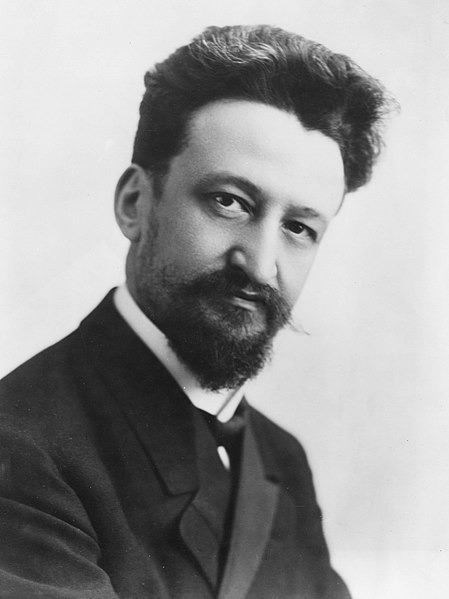
Dr. Bernard Fantus (1874-1940) was a tireless champion of life and health for all in his community, especially the poor. Living by his deep humanistic principles, he did not seek after personal wealth. He applied his sharp intellect, his marvelous organizational skills and his boundless kindness to the betterment of mankind. Although busy with creating, perfecting and running the world's first blood bank, he never gave up his private practice for the indigent poor or forgot that the simplest kindnesses make our world a happier place.
|
|
"The world and its creation is the great divine miracle before which humanity bows reverently but not without hope of an ultimate better understanding" ~ Dr. Bernard Fantus |
Bernard Fantus, the Father of the American Blood Bank, was born in Budapest, Austria-Hungary, on September 1, 1874. The eldest of five sons of David and Ida (Gentili) Fantus, Bernard was destined to work in the medical field from an early age. His father, who had not had the opportunity to pursue his own dream to become a physician, would frequently say to his eldest, "You're going to be a doctor" to which young Bernard would often add with confidence, "I'll be a professor." Bernard completed his pre-medicine studies at the Real-Gymnasium in Vienna before he and his family moved to the United States in 1889. Bernard was seventeen. In 1892, the family moved to Chicago, Illinois. During his early years in the United States, Bernard worked as a drugstore pharmacy assistant for income. Work at the pharmacy was fascinating to Bernard and he acquired knowledge and skills there that he would apply to his work throughout his life. In the meantime, his father had not given up on his plan for his bright son. David Fantus offered to barter his print work to the University of Illinois in exchange for his son's admission and first year tuition to the College of Physicians and Surgeons in Chicago. Happily, the university took a chance on Bernard Fantus. Bernard's subsequent work at the college was so outstanding that he was able to earn enough scholarships to fund his remaining years and obtained his degree in 1899. After graduation, Dr. Bernard Fantus fulfilled his internship at Cook County Hospital and then continued to push the limits of his knowledge. His academic work was impressive; he studied pharmacology in Strasbourg and Berlin and received a Master of Science degree at the University of Michigan. His medical expertise also was notable, involving his staff responsibilities in Cook County Hospital, his teaching, research and writing, his work in pharmacology, and his own private practice. Each one of these areas would require pages of tribute for his accomplishments!
The turn of the century was an historic time in the organization of medical practice and Dr. Fantus; wide abilities, avid curiosity, drive to understand and passion to serve, combined with happy consequence for us all in a major way.
To understand how far medicine progressed during Dr. Fantus' lifetime, one need only view photographs and read personal accounts from that era of his childhood and young adulthood. Imagine someone in a major city like Chicago in the late 1880's. Say they had just been in a terrible traffic accident and had sustained major injuries. After enduring a bumpy ride to the hospital in the back of an open patrol wagon-ambulance, and having lost a good bit of blood, the patient's relatives and friends would be fetched in the hope that several of them might be able to provide enough blood for the patient to survive long enough for the needed surgeries. These "excitable relations," as they were called by hospital staff, often filled the hospitals of this time. If the patient was from out of town, or homeless, or had no relatives, "donors" would be called for. As Dr. Fantus related, "The response sometimes would be a horde of noisy, gesticulation foreigners" from whom "a little blood had to be drawn from half a dozen or even more" to find a match. It was often hit or miss as to whether the doctors would be able to find the correct blood type match for the patient in time - not to mention the time required to perform the Wasserman reaction test for syphilis or malaria. "The patient not infrequently expired before the blood suitable for transfusion was obtainable." (Dr. Fantus) Even if they were fortunate enough to have several matches, their assisting relatives or friends (or donors) might have eaten a meal just recently (changing the chemistry of the blood), or have had an undiagnosed communicable disease, either of which might dramatically lessen the patient's chances for recovery. A safe and ready blood supply would be indispensable for survival, would it not?
Dr. Fantus' interest in blood transfusion heightened after reading about the breakthrough work of Russian scientist, S.S. Yudin. Yudin had successfully saved and used cadaver blood for transfusions after discovering the timing of coagulation. After considering this resource, Dr. Fantus realized that only the blood from healthy, living donors would be acceptable to the patients of his community. He fervently dedicated himself to the goal of establishing a steady and safe supply of blood for his patients at Cook County Hospital.
How do you start a blood bank?We may not think about it today, but the concept of a "blood bank" was practically unknown until Dr. Fantus started one. He invented the name itself, inspired by the idea of the community making deposits of blood "on account" to be available to any who needed it.But first, there were problems to solve... "Cook County Hospital had become a "trial and error" laboratory where physicians observed observed the advantages of transfusions, but also observed reactions which occurred in recipients who had received carefully preserved blood. Dr. Fantus was thus able to correlate all the phenomena involved in transfusion. Not only did he initiate the use of preserved human blood but, with the cooperation of the medical staff, observed both good and bad reactions, searched for the causes of untoward after effects, corrected technique, taught his methods to innumerable physicians, and gave blood banking a foundation for future achievements."To say that Dr. Fantus and his staff satisfactorily solved all of these problems would be true but that would sound too easy! His staff's painstaking care, rigorous observation and precise implementation, taken over time, made the program the permanent success that it is today. Modern surgery worldwide would not exist without it. Dr. Fantus opened his blood bank at Cook County Hospital on March 15, 1937. Before the bank, Cook County physicians did about 40 transfusions a month. Transfusions increased in the first three months to 400; they shot up to 700 the following year.
"Doctor Fantus' idea revolutionized surgery and transfusion therapy. Most major surgery done today would be impossible without the existence of blood banks. Today we take them for granted, but in fact we owe their existence to the creative thinking of a pioneer of American medicine." (Ronald Reagan, 6/29/87)Dr. Fantus not only conquered the myriad challenges of creating the world's first blood bank; in July 10, 1937, in the Journal of the American Medical Association, he published in precise detail the principles of organizing a blood bank so that hospitals worldwide would have a master plan of their own to follow. It wasn't a moment too soon. In 1940, when the German "blitz" struck London, blood banks there were already up and working. It is no wonder that JAMA considers Dr. Fantus' article to have been one of the most important they have ever published. It literally saved thousands of lives and paved the way for procedures such as the open-heat surgery and bone marrow transplants that we count on today.
LegacyThe young Bernard, who had always wanted to be a doctor and professor, had grown into someone not only respected but also very beloved by his community. All who knew him marveled at his wisdom, his dedication and his intelligent kindness. Many of his nurses even referred to him as the "Christ-like Dr. Fantus."As a teacher, he inspired his students to selfless dedication. As a writer, he encouraged his fellow scientists and physicians to share all they had learned so that their valuable experiences would not be lost. As a pharmacist, he helped to standardize the field of drugs: he made available the first "Candy Medication" for children in order to "rob childhood of one of its terrors, namely, nasty medicine." As a crusader for public health, he wrote numerous articles on the dangers of quack medicine and was an effective whistle blower against popular but deadly nostrums - as well as against the newspapers that made money from their advertisements. As an advocate of the poor, he was alert to any procedures and methods that would assuage their suffering and improve their health. As an administrator of the hospital, he strengthened and expanded it in ways that all have appreciated ever since.
"Exploitation of the fellowman is the greatest sin, intelligent cooperation for man's common good the greatest service. Humanism demands a shared life in a shared world." ~ Bernard FantusIn 1939, Dr. Fantus suffered a heart attack. Knowing that his time was short, he concentrated his efforts on making himself available so that others could carry on his work as well as any of the projects that required his assistance. He even kept a careful account of his illness so that he might add to the knowledge of heart ailments. He died peacefully a year later, at the age of sixty-six, on April 14, 1940. His wife, Emily Senn Fantus, a nurse who throughout their marriage had assisted him in his dedication to serve, and the couple's only child, Ruth, survived him."The place to be happy is here, the time to be happy is now, and the way to be happy is to make others so." Robert G. IngersollAbout Dr. Bernard Fantus, his niece, Muriel Fulton said it best: "He had this deep conviction that a scientist was to take no credit for his successful work. He put all his time, attention and interest in helping needy people. Can you imagine the millions and millions of people who are walking this Earth today who would not be here if it weren't for the blood bank?"
|
|
Written by
Rebecca Miller
Photos courtesy of Mrs. Muriel Fantus Fulton |
|
Bernard Fantus from PBS - Red Gold: The epic story of blood The History of Cook County Hospital Timeline Karl Landsteiner's work from Nobel Prize - on blood types Merck Manual History with mention of Dr. Fantus |
Editor of the Merck Manual - Fantus was the first person to be named as a contributor and was a rare liaison between pharmaceutical and medical worldsCandy Medication by Dr. Bernard Fantus (published in 1914) described formula for simple sugar flavoring that any pharmacist could use, including tolu coating to disguise unpleasant flavor (used in cough lozenges even today) Bibliography
Fantus, Bernard. "The Therapy of the Cook County Hospital." Landmark Article July 10, 1937 JAMA.Lowrie, Reed. "Dr. Bernard Fantus: Father of the Blood Bank."(Special Collections Research Center, The University of Chicago) Mullen, William. "Remembering a simple but profound idea" Chicago Tribune, January 11, 2005. Norwood, Terrance S., "Cook County Hospital Blood Bank: First Blood Bank in the U.S.A." Cook County Hospital Archives, March 19, 1982. Reagan, Ronald, The White House. "Washington on the anniversary of blood banking in the United States," June 29, 1987. Telishi, M., "Evolution of Cook County Hospital Blood Bank" Cook County Hospital Blood Bank, Chicago, Illinois, January 7, 1974. Wilson, Edwin H., Minister, Third Unitarian Church of Chicago, "A Life of Kindness Guided by Intelligence" Funeral Address for Dr. Bernard Fantus. |

![]() | ![]() | ![]() | |
| A Powerful Noise promotes the global empowerment of women | A Stranger helped a young girl who was lost in the city. | Alan Beavan will be remembered for his bravery on Sept. 11, 2001. | Albert Schweitzer had a 'reverence for life.' |
![]() | ![]() | ||
| Andrea Coleman has used her passion for motorcycling to transform healthcare delivery in rural parts of Africa. | Babak Darvish, MD inspires his patients and coworkers with his upbeat attitude and determination. | Balto led his dog team on the lifesaving 1925 serum run to Rome, Alaska | Ben Carson is the chief of neurosurgery at Johns Hopkins University Hospital. |
![]() | ![]() | ![]() | |
| Bernard Fantus created the world's first blood bank. | Bernard Kouchner is the co-founder of Doctors without Borders | Bill Wilson changed countless lives and livelihoods by founding Alcoholics Anonymous. | Chiune and Yukiko Sugihara believed in freedom and saved many Jews during WWII. |
![]() | ![]() | ||
| Claire Lalanne founded the Center for Nutritional Recovery. | Colonel Jack H. Jacobs His extraordinary heroism saved the lives of 14 people. | Dan Mazur sacrificed climbing to the summit of Mt. Everest to save another climber. | Dennis Smith Dennis Smith is an author and retired firefighter |
![]() | ![]() | ![]() | |
| Desmond T. Doss became a medic during WWII and saved many lives. | Doctor Steven Kopits was a compassionate physician who lives on in the hearts of his patients. | Don Cheadle and Darfur Now deliver a call to action to stop the genocide in the Sudan. | Dr. David Applebaum was a selfless emergency room doctor in Jerusalem |
![]() | ![]() | ![]() | ![]() |
| Dr. Ginger Holt saved Drew's leg when he was in the hospital. | Dr. J. Larry Brown directs the national Center on Hunger and Poverty. | Dr. Mark Jacobson works with AIDS patients in Tanzania. | Dr. Michael DeBakey is the father of modern open-heart surgery. |
![]() | ![]() | ![]() | ![]() |
| Dr. Paul Brand was a compassionate surgeon who pioneered work in leprosy. | Dr. Van Halbach is a hero to the Ghenender family for saving Ingrid's life. | Eddie Aikau loved the sea and often risked his life to save others | Edith Cavell was a nurse who risked her own safety to help others during WWI |
![]() | ![]() | ||
| Elizabeth Blackwell became the first female doctor and opened the first medical school for women. | Evelyn H. Lauder founded the Breast Cancer Research Foundation | Fauzia Minallah is the founder of Funkor Childart Centre and an ARTIVIST. | Firefighters in New York City are the heroes of the day. |
![]() | ![]() | ![]() | |
| Fireworkers from Chernobyl bravely gave their lives to protect the safety of others during the Chernobyl nuclear disaster. | Florence Ngobeni urges African leaders to work for AIDS prevention. | Florence Nightingale revolutionized nursing. | Frances Moore Lappe works to eliminate the injustices that cause hunger. |
![]() | ![]() | ![]() | ![]() |
| Fred Hollows was an Australian ophthalmologist committed to providing eye care to Aboriginal and poor people. | Fridtjof Nansen was a daring explorer, a freedom fighter, and a selfless humanitarian. | George Latham saved a girl from a burning car and is also a hero to his daughter. | Giorgio Perlasca saved the lives of thousands of Jews during WWII |
![]() | ![]() | ![]() | ![]() |
| Harriet Tubman organized the Underground Railroad and helped lead slaves to freedom. | Helene Gayle is one of the leading authorities on AIDS research. | Hermine Santrouschitz (Miep Gies) kept Anne Frank and her family safely hidden from the Nazis. | In My Name challenges all of us to take a stand to end poverty. |
![]() | ![]() | ![]() | |
| Irena Sendler helped Jewish children escape the Warsaw ghetto during the Holocaust. | Ivan Beltrami joined the resistance during WWII and saved many Jews. | Jody Williams is a human rights activist and Nobel Peace Prize winner who began a campaign to rid the world of landmines. | John Polivchuk was a firefighter who inspired others with his bravery, selflessness and optimism. |
![]() | ![]() | ![]() | ![]() |
| Jon Rose is a surfer dedicated to bringing clean drinking water to the world. | Judith Blair donated one of her kidneys to a man in desperate need. | Juvenile Diabetes Research Foundation is a hero to Rachel who was recently diagnosed with Juvenile Diabetes. | Kurt Klein brought, among others, his future wife, Gerda, and Oskar Schindler, to safety. |
![]() | ![]() | ![]() | ![]() |
| Lillie Hitchcock-Coit was a turn of the century firefighting hero. | Liviu Librescu was a Virginia Tech teacher who sacrificed his life to save his students. | Maximilian Kolbe was a Catholic Saint known for his great humanity during WWII. | Michael Kelley beat all the odds as a paratrooper and police officer. |
![]() | ![]() | ||
| Mike Kelly risked his career as a surgeon to save Bob's life. | Mikey Ray Frasier is a lifesaver three times over. | Molly Pitcher was a Revolutionary War heroine who bravely carried water to soldiers on the battlefield. | Moses Zulu established Children's Town in Zambia to teach AIDS orphans life skills. |
![]() | ![]() | ![]() | |
| mpower harnesses the power of music to change youth attitudes about mental health. | Nathaniel Dunigan creates hope for Ugandan orphans with HIV/AIDS. | Nick Anderson and Ana Slavin challenge young people to get involved to help end the humanitarian crisis in Darfur. | Norman Borlaug saved billions of lives with his agricultural discoveries. |
![]() | ![]() | ||
| Olara Otunnu is devoted to saving the lives and futures of children in war-torn countries. | Olivia Harrison founded an organization to help abandoned children in Romania. | Oumoul Khary Sow founded the Caravan of Hope which travels to remote areas in Senegal to help prevent malaria. | Pat Pedraja and Driving for Donors is helping young and old cancer patients receive the life saving bone marrow treatments. |
![]() | ![]() | ||
| Paul Farmer has dedicated his life to treating people in the poorest nations in the world | Paul Rusesabagina saved the lives of more than 1200 Rwandans who took refuge in his hotel. | Princess Eliza Ella has been inspired by Eliza the hero in The Wild Swans by Hans Christian Anderson | Raoul Wallenberg saved thousands of lives during the Holocaust. |
![]() | ![]() | ![]() | ![]() |
| RAWA promotes women's rights through non-violent action. | Robert E. Kimura, M.D. is a hero to his niece in and out of the operating room. | Rudolph Giuliani , New York Mayor, was a compassionate leader following the World Trade Center attack. | Ryan Hreljac helps build wells for clean water in Africa. |
![]() | ![]() | ![]() | |
| Sompop Jantraka helps poor children in Thailand to avoid child prostitution and obtain an education. | To Write Love On Her Arms was founded to help people suffering from depression and substance abuse. | Tommie Hamaluba is a teacher in Botswana, Africa working to eradicate malaria. | Trisomy 18 Foundation raises awareness and supports research for cures for this genetic disorder. |
| Vilmos Farkas sacrificed his personal safety to save the lives of a couple of strangers. |
![]() | ![]() | ![]() | |
| Abner Peeler is credited with the invention of the first airbrush. | Ada Lovelace was a ninteenth century woman who influenced the computer programming of today | Alan Turing laid the theoretical groundwork for the first computer. | Albert Einstein believed in the power of imagination. |
![]() | ![]() | ![]() | |
| Alexander Borodin was an accomplished chemist, composer and staunch advocate of women's rights. | Alexander Graham Bell was the inventor of the telephone. | Ameen Abdulrasool is a young inventor who developed a portable navigation system for the blind. | Amy Charkowski works on the front lines of protecting Earth's food supply. |
![]() | ![]() | ![]() | |
| Andrea Mia Ghez is an astrophysicist best known for her discoveries about the black hole at the center of our galaxy. | Ariel Ruiz i Altaba Scientist - Photographer combines art and science to research how cells are generated and formed. | Audrey Penn: Just Do It is a medical doctor who has devoted herself to studying diseases that affect muscle control. | Augusta Ada Byron developed the world's first computer program while struggling with her own personal hardships. |
![]() | ![]() | ![]() | |
| Babak Darvish, MD inspires his patients and coworkers with his upbeat attitude and determination. | Barbara McClintock was one of the first women geneticists, and a Nobel laureate. | Ben Carson is the chief of neurosurgery at Johns Hopkins University Hospital. | Benjamin Franklin was an inventor, diplomat, writer, and a huge influence on American history. |
![]() | ![]() | ||
| Benjamin Franklin was an inventor, civic leader and founding father of the U.S. | Bernard Fantus created the world's first blood bank. | Bernardo Houssay was an Argentinean physiologist and Nobel Prize winner. | Beth Rickard Environmentalist is an advocate of solar as the energy of the future. |
![]() | ![]() | ![]() | |
| Bill Fenical "Neptune's Medicine Chest" is a pioneer in the hunt for medicines from the ocean to treat cancer and other diseases. | Bonnie Dunbar helped start a scholars program to inspire students to pursue careers in aerospace and engineering. | Charles Darwin is the father of modern biology. | Chiaki Mukai is the first female Japanese astronaut. |
![]() | ![]() | ![]() | |
| Christiane Nusslein-Volhard is a Nobel Prize winner and pioneer genetic researcher. | Claudia Gerwin: Keeping the Neurons Firing researches how nerve cells relay messages to each other. | Clifford V. Johnson is a string theorist who studies the makeup of the smallest particles of the universe. | Connie Samaras has created media archives for deep space voyages. |
![]() | ![]() | ![]() | ![]() |
| Courtney Schumacher is an atmospheric scientist and educator committed to mentoring young women interested in science. | Cristina Diaz: Biologist studies intertidal and tropical sponges. | Dame Cicely Saunders founded the modern hospice to provide compassionate, holistic care to the dying. | DAREnet provides open access to Dutch academic research information and findings. |
![]() | ![]() | ![]() | |
| Darlene Cavalier founded ScienceCheerleader.com to promote science literacy. | Darlene Ketten studies stranded whales and dolphins. | Dean Kamen makes science and technology exciting for young people, | Debbye Turner became Miss America and pursued her dream to become a veterinarian. |
![]() | ![]() | ![]() | |
| Dilfuza Egamberdiyeva cares for the Earth's soil, researching ways to produce microbes to control plant diseases. | Dr Deepak Acharya is a scientist devoted to protecting India's endangered Patalkot Forest. | Dr. Alexander Langmuir Langmuir's work in epidemiology has saved millions of lives. | Dr. Barbara Ross Lee became the first African American woman dean of a US medical school. |
![]() | ![]() | ||
| Dr. Caldicott has been a lifelong anti-nuclear activist. | Dr. Carolyn Mazure founded the Yale Women's Health Program and is a forceful figure in the women's health movement. | Dr. Edward Holland Ophthalmologist transplants corneal stem cells to help give people their sight back. | Dr. Edward Jenner discovered the vaccine. |
![]() | ![]() | ||
| Dr. Elizabeth Kalko and the Jason Project studies bats in the Panamanian rainforest. | Dr. Elvia Niebla Soil Scientist is dedicated to soil conservation. | Dr. Farouk El-Baz is an Egyptian space scientist and geologist. | Dr. France Cordova is a renowned astrophysicist who has broken gender and cultural barriers. |
![]() | ![]() | ||
| Dr. Gloria WilderBrathwaite was inspired to provide health care to the poor in the innner city. | Dr. Govindappa Venkataswamy cares for the eyes of millions of people in India. | Dr. Ines Cifuentes Seismologist works to improve science programs for students in Washington, DC. | Dr. Karen Plaut has been a pioneer in animal science research. |
![]() | ![]() | ![]() | ![]() |
| Dr. Kay Jamison is both an expert on, and a sufferer of, Bipolar Disorder. | Dr. Kristi Curry-Rogers is an accomplished paleontologist who travels the globe in search of dinosaur digs. | Dr. Madan Kataria has started a revolution of joy and laughter that is spreading around the world. | Dr. Michael DeBakey is the father of modern open-heart surgery. |
![]() | ![]() | ![]() | |
| Dr. Patch Adams gives the practice of medicine a humorous twist. | Dr. Richard Murphy Marine Biologist educates others about the sea and ways to protect the oceans for the future. | Dr. Robert Ballard and the JASON project bring scientific exploration to children around the world. | Dr. Rosalie Bertell Anti-Nuclear Nun is a renowned scientist, eco-feminist and peace activist. |
![]() | |||
| Dr. Sara W. Lazar Neuroscientist - Meditator researches the effects of meditation on the brain. | Dr. Sue Savage-Rumbaugh is a scientist dedicated to the study and conservation of bonobos. | Dr. Susan Love is committed to women's health issues. | Dr. Zeda Rosenberg is working to protect women from HIV/AIDS. |
![]() | ![]() | ![]() | |
| Elizabeth Blackwell became the first female doctor and opened the first medical school for women. | Enrico Fermi was one of the 20th century's greatest physicists. | Envirofit retrofits engines to reduce pollution and enhance energy efficiency in developing countries. | Erich Jarvis observes song birds and uses his training with molecular biology to learn about brain behavior. |
![]() | ![]() | ![]() | ![]() |
| F. Sherwood Rowland discovered the 'greenhouse effect.' | Fati Kirakoya is a researcher committed to finding solutions to end HIV/AIDS. | Frederick Banting was the co-discoverer of Insulin. | Friends of the Sea Lion rescue, treat, and release these mammals back into the ocean. |
![]() | ![]() | ![]() | |
| Gail Kaaialii: Biologist investigates the origins of life and helps others value all life forms. | Galileo Galilei was the first to use a telescope to observe the stars and planets. | George Washington Carver is famous for experimenting with plants. | Gertrude B. Elion developed the AIDS drug, AZT. |
![]() | ![]() | ||
| Gina Gallant is an inventor whose passion is protecting the environment. | Grace Murray Hopper was a computer visionary and naval officer. | Guglielmo Marconi was an Italian inventor who won a Nobel Prize in Physics for wireless telegraphy. | Guion S. Bluford, Jr. became the first African-American in space. |
![]() | ![]() | ![]() | |
| Hazel Barton combines her passion for caving with researching microbes. | Hib Vaccine Team created an affordable, synthetic vaccine against the bacteria that can cause meningitis and pneumonia. | Howard Florey shared the Nobel Prize for Medicine for extracting penicillin. | Irene Ayako Uchida helped find the link between radiation and birth defects. |
![]() | ![]() | ![]() | |
| Irene Curie was the second woman in history to win the Nobel Prize in science; the first woman was her mother, Marie. | Jack St. Clair Kilby invented the microchip. | James Burke developed a model of discovery called the Knowledge Web to connect information across space and time. | Jane Mt. Pleasant is an agricultural scientist who looks to the past to meet today's farming needs. |
![]() | |||
| Jonas Salk discovered the polio vaccine. | Kathy Sullivan was the first American woman to walk in space. | Leon Lederman devotes much of his time and energy to improving science education in America. | Leonard Adleman improves lives with his work in DNA technology. |
![]() | ![]() | ![]() | ![]() |
| Leonardo da Vinci was an artist and a scientist ever curious of the world around him. | Leslie Thompson is a scientist devoted to finding a cure for Huntington's Disease. | Louis Pasteur 's discoveries advanced the practice of medicine. | Luz Maria Rodriguez-Fernandez conducts cancer research to help understand the disease process. |
![]() | ![]() | ![]() | ![]() |
| Madame Curie received the Nobel Prize for her discovery of Radium. | Mae Jemison dreamed of going to space since childhood. | Magdalena Hurtado is an anthropologist who studies the Ache people of Paraguay. | Margaret Mead was a renowned anthropologist who thought in terms of 'the interconnection of all aspects of human life.' |
![]() | ![]() | ![]() | ![]() |
| Marie Curie discovered radioactivity as an atomic property, opening the door to 20th century science. | Martha Mecartney is a scientist, engineer and professor committed to helping young women interested in the field of science. | Meenakshi Wadhwa studies meteorites and the processes involved in their formation. | Merieme Chadid is an astronomer from Morocco who did research at the South Pole. |
![]() | ![]() | ||
| Mohammed Bah Abba invented a refrigeration device that is not dependent on electricity. | Neil A. Armstrong was the first man to walk on the moon. | Nikola Tesla was the father of many modern inventions. | Norman Borlaug saved billions of lives with his agricultural discoveries. |
![]() | |||
| Orville and Wilbur Wright were brothers determined to build a better flying machine. | Patrick Nagatani uses photography and colored lights to promote good health. | Paul Farmer has dedicated his life to treating people in the poorest nations in the world | Paul Munsen Solar Oven Man manufactures sun ovens, which harness the sun's rays to provide an environmentally safe source of energy. |
![]() | ![]() | ![]() | |
| Paul Sipiera led an expedition into Antarctica to find meteorites for NASA. | Percy Julian was a groundbreaking African American chemist, inventor, and trailblazer. | Philo T. Farnsworth was the inventor of the television. | Ramani Sankaranarayanan and Geeta Vaidyanathan founded CTxGrEn to show villagers how to turn native materials into fuel for electricity. |
![]() | ![]() | ![]() | ![]() |
| Ray Kurzweil is an inventor who uses technology to restore health. | Reef Ball Foundation restores damaged coral reef systems around the world. | Richard Feynman shared the Nobel Prize in Physics for work in the field of quantum electrodynamics. | Robert Koch was an important medical researcher of the 19th century. |
![]() | ![]() | ![]() | |
| Rokhaya Gueye treats malaria and raises awareness about women's health issues in Senegal. | Saeed Awan developed a new carpet loom that reduces child labor in Pakistan. | Sandra Begay-Campbell is a Native American engineer who brings solar-powered energy to the Navajo reservation. | Shannon Hackett studies the genetic diversity and evolution in tropical birds. |
![]() | ![]() | ![]() | ![]() |
| Sir Alexander Fleming saved millions of lives with his discovery of penicillin. | Srinivasa Ramanujan made groundbreaking contributions to mathematics. | Stephanie Jenouvrier is a population ecologist researching the effects of climate change on emperor penguins. | Stephen Hawking is a renowned theoretical physicist who writes about 'black holes'. |
![]() | ![]() | ![]() | |
| Tania Ruiz is an astrophysicist committed to science education and helping women reach their goals. | Thais Corral gives women a voice in their communities through access to communication technology. | Therese Koutnik is an inspiration to her sister and a role model for girls who would like to become engineers. | Thomas Alva Edison holds the record for number of patents filed. |
![]() | ![]() | ![]() | |
| Thomas Alva Edison is considered one of the world's greatest inventors. | Tim Berners-Lee invented the World Wide Web. | Tom Chau Biomedical Engineer uses science and technology to maximize opportunities for people with disabilities. | Tom Dibblee is a legendary geologic mapper. |
![]() | ![]() | ![]() | |
| Usha Varanasi is the first woman to lead a Fisheries Science Center. | Vint Cerf , Internet pioneer, passionately believes that all people should benefit from the information revolution. | Vladimir Kosma Zworykin is called 'The Father of Television'. | Wes Jackson was a professor who returned to the land to advance sustainable agriculture practices. |
![]() | ![]() | ![]() | |
| Wilson Bentley was the first person to photograph a single snowflake. | XIV Argonauts broadcasted their explorations of the Channel Islands. | Zohra Ben Lakhdar is a physicist from Africa who does research on atomic spectroscopy. |
Last changed on:4/7/2008 6:39:52 AM
|
|