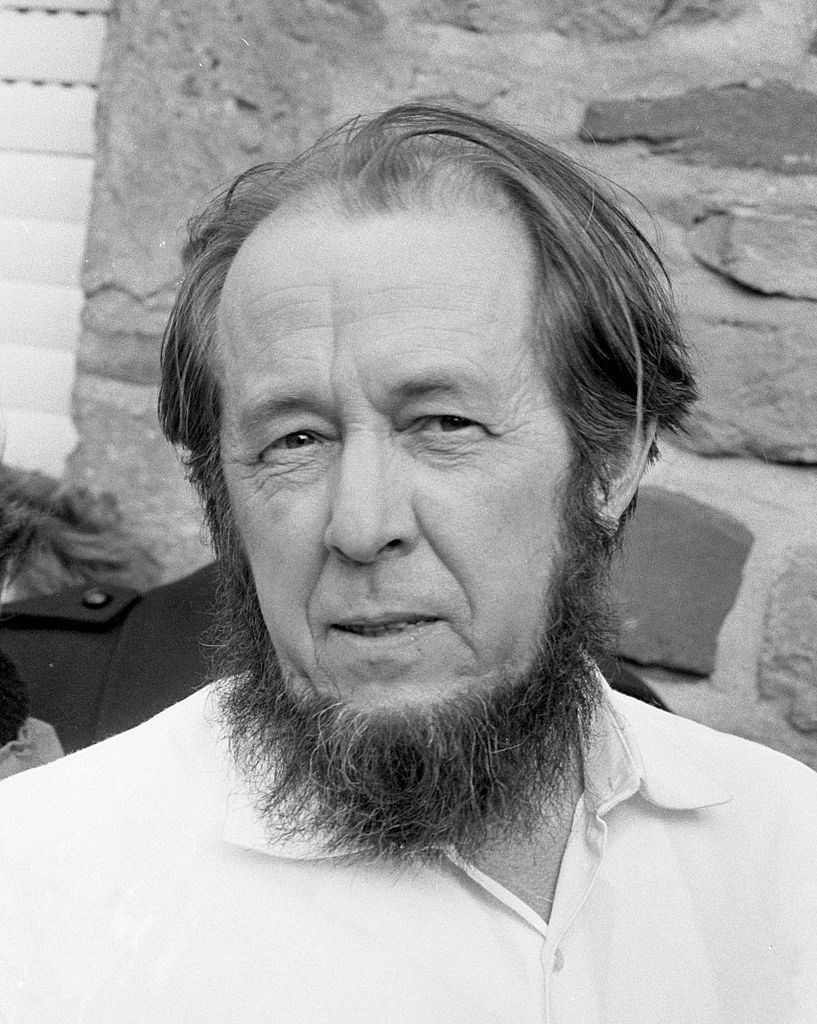
Alexander Isaevich Solzhenitsyn is my hero because he is one of most far- reaching thinkers, writers and humanitarians of the 20th century. Until the end of his days, he fought for Russia not only to move away from its totalitarian past, but also to have a worthy future. He wanted Russia to become a free and democratic country.
Alexander Isaevich Solzhenitsyn was born on December 11, 1918, in Kislovodsk. He was raised by his mother, a typist, because his father died in an accident six months before he was born. He studied mathematics and physics at Rostov-on-Don State University while at the same time taking correspondence courses from the Moscow Institute of Philosophy, Literature and History. He graduated from the University in 1941, just days before Nazi Germany invaded the Soviet Union.
When war broke out, he enlisted in the Red Army and rose to the rank of artillery captain. Decorated twice, he witnessed some of the fiercest battles of World War II, leading an artillery company on the front November 1942 to February 1945. It was then that Solzhenitsyn was arrested for «anti-Soviet agitation» - he made critical references to Stalin in correspondence with a friend - and was sentenced to eight years in prison. Thanks to his mathematical training, Solzhenitsyn was initially spared the worst excesses of the Gulag. From 1946 to 1950, he was confined to a «sharashka», a special prison for scientists forced to work government projects. The experience later became the bases for his novel The First Circle.
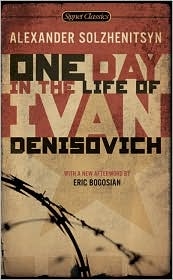
In 1950, he was sent to a special camp for political prisoners in the town of Ekibastuz in Kazakhstan where he spent the next three years working as a miner, bricklayer, and foundry man. His experiences at Ekibastuz formed the bases for the book One Day in the Life of Ivan Denisovich. While there he was diagnosed with a stomach tumor which was operated on, though no cancer was diagnosed then. Following Stalin`s death in 1953, Solzhenitsyn was exiled to southern Kazakhstan, where his health continued to deteriorate. In 1954, he was permitted to travel to Tashkent for successful treatment of stomach cancer. Later these experiences became basis for the novel Cancer Ward.
Solzhenitsyn`s exile ended only after Khrushchev made his famous «secret speech» denouncing Stalin`s crimes in 1956. After rehabilitation, Solzhenitsyn settled in Ryazan as a teacher (1957). During all those years of exile he taught mathematics and physics at school and wrote prose in secret. In the relatively liberal atmosphere of the Khrushchev years, Solzhenitsyn decided to try getting published. The novel One Day in the Life of Ivan Denisovich appeared in print in 1962 and immediately made him, an unknown math teacher from a provincial town, a celebrity. Solzhenitsyn was invited to join the Writer`s Union. His success was short-lived, however, and after the publication of the stories «Matryona`s Home» and «An Incited at Krechetovka Station» he found that he could no longer get his works printed. In 1968, Solzhenitsyn`s The First Circle and Cancer Ward were published in the West. The books made him a figure of international renown. And in 1970 he was awarded the Nobel Prize for Literature. Though invited to Stockholm to accept the prize, he declined to go out of fear that the Soviet authorities would not let him return to his family. (Solzhenitsyn received his prize at the 1974 ceremony after he had been deported from the Soviet Union.)
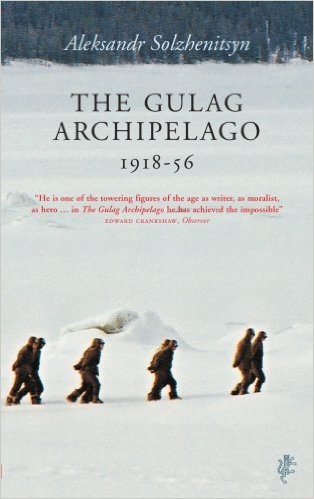
One of Solzhenitsyn`s main dilemmas at the time was what to do with the text of The Gulag Archipelago. It is a timeless, truly great memorial to the victims of Stalinist repression, a memorial to all those who suffered and all those who died, which he had completed in 1968. For this work Solzhenitsyn collected excerpts from documents, oral testimonies, eyewitness reports, and other materials. Alexander Isaevich hid portions of the book`s manuscript at the homes of trusted friends and in 1972 he started smuggling it to the West with the help of a Swedish foreign correspondent. The book first appeared in Paris in December 1973, leading to a flurry of bad publicity for the Soviet Union in the international press. The Politburo met on Jan. 7, 1974, to discuss what to do with Solzhenitsyn.
On Feb. 12 he was arrested and charged with treason. On the following day he was stripped of citizenship and deported from the Soviet Union to West Germany. He lived first in Switzerland before immigrating to the Union States in 1976. In the US the writer retreated into seclusion, moving to the small town of Cavendish, Vermont. He spent most of the next two decades working on- The Red Wheel- a multi-volume epic history of the events which led to the Russian Revolution.
President Mikhail Gorbachev restored Solzhenitsyn`s citizenship in 1990.
A.I. Solzhenitsyn returned to Russia on May 27, 1994. He spent most of his last years in the house specially built for him in Troitse- Lukovo in western Moscow, doing what he loved most: writing. He published several works of nonfiction and memoirs. In his political writing, such as «Rebuilding Russia» (1990) and «Russia in Collapse» (1998), Solzhenitsyn criticized the oligarchic excesses of the new Russian `democracy`, while opposing any nostalgia for Soviet communism. He defended moderate and self-critical patriotism (as opposed to extreme nationalism), argued for the indispensability of local self-government to a free Russia, and expressed concerns for the fate of the 25 million ethnic Russians in the «near abroad» of the former Soviet Union.
Solzhenitsyn also launched several charitable projects, using the proceeds from sales of The Gulag Archipelago and his Nobel Prize award money. In 1997, he established an annual literary prize that continues to be awarded today. He also helped open the Russian Abroad Foundation Library, an archive and research center near Taganskaya metro station that collects the papers of Russian émigrés. On June 12, 2007, Vladimir Putin visited his home to give him Russia`s highest award, the State Prize for humanitarian achievement, saying that millions of people around the world associate Solzhenitsyn`s name and work with the very fate of Russia itself. The great writer died on August 3, 2008 and was laid to rest at the Donskoi Monastery in central Moscow.
I think Alexander Solzhenitsyn is a real hero because he was brave, honest and generous; he had a strong character and firmness. I admire this great person and try to be always a worthy person. His hard life and heroic actions taught me to never give up.
|
|
Written by
Artyom from Tselina, Russia
|
|
Nobel Prize in Literature 1970 Autobiography Harvard University Alexander Solzhenitsyn's Address to the Class of 1978 NPR: Alexander Solzhenitsyn, A 'Man With A Mission' Catholic Education Resource Center An Interview with Alexander Solzhenitsyn PBS: The Online NewsHour Read a memoriam about Russian author Aleksandr Solzhenitsyn. |
![]() | ![]() | ||
| Abraham Lincoln was a U.S president who fought for the abolition of slavery while keeping the country united. | Alexander Solzhenitsyn was a Russian novelist and dissident who won the Nobel Prize for Literature. | Angela Davis is a leader, author, and professor who has fought for decades for human rights. | Art Miki founded the National Association for Japanese Canadians to help redress Japanese rights lost during WWII. |
![]() | ![]() | ![]() | ![]() |
| Aung San Suu Kyi has dedicated her life to freeing Burma from a repressive dictatorship and creating democracy without violence. | Bill Bradley once a pro-basketball player now is a politician who advocates reform to make America better for all. | Cesar Chavez was a tireless advocate for migrant farm workers. | Chief Joseph led the Nez Perce tribe in an effort to keep its homeland. |
![]() | ![]() | ![]() | ![]() |
| Clara Shortridge Foltz was the first woman to practice law in California. | Constance Motley became the first African-American woman judge on the largest federal trial bench in the US. | Craig Kielburger believes kids can change the world. | Crazy Horse bravely fought for the freedom of the Sioux Nation. |
![]() | |||
| Daniel Pearl was a Wall Street Journal reporter who reported the news with courage, integrity, and intelligence. | Deborah Sampson dressed as a man so that she could fight in America's Revolutionary War. | Declaration of Human Rights established the basis for human rights beliefs and practices all over the world. | Desmond Tutu worked to end apartheid in South Africa. |
![]() | ![]() | ||
| Dr. Martin Luther King, Jr. "I Have a Dream" was the civil rights speech that moved the world | Dr. Martin Luther King, Jr. Congressman John Lewis talks about how Martin Luther King, Jr. inspired him as a young man during the Civil Rights Movement | Dr. Oscar Elias Biscet is known as the 'Mandela of Cuba' because he bravely defends the rights of Cuban citizens. | Eleanor Roosevelt was a champion for freedom and devoted her life to gaining rights for others |
![]() | ![]() | ||
| Eleanor Roosevelt was a dedicated and strong voice for her husband, FDR, and for the United States. | Elizabeth Cady Stanton was a pioneer in the movement for women's rights. | Ellen Johnson-Sirleaf is a leader who is bringing change and hope to Liberia. | Emmeline Pankhurst fought tirelessly for women's suffrage, and succeeded. |
![]() | ![]() | ![]() | |
| Fadela Amara is recognized throughout France as a champion of women's rights. | Frances Ellen Watkins was a prolific author and poet who devoted her life to speaking out against slavery. | Fred Korematsu bravely protested the Japanese-American internment. | Frederick Douglass courageously spoke out against slavery and became a trusted advisor to Abraham Lincoln. |
![]() | ![]() | ![]() | ![]() |
| George Washington was the first President of the United States. | Harriet Tubman organized the Underground Railroad and helped lead slaves to freedom. | Inez Milholland Boissevain : a brief but spectacular life dedicated to women's suffrage. | Inge Sargent is a Burmese princess devoted to human rights for all. |
![]() | ![]() | ![]() | |
| Iqbal Masih was a brave advocate for child labor laws in Pakistan. | James Reeb risked his own life as a brave civil rights crusader. | Jane Akre & Steve Wilson won the 2001 Goldman Environmental Prize for their courageous journalism. | Janet Jagan was the first female president of Guyana and dedicated her life to building the independence of a nation. |
![]() | ![]() | ||
| Jessie Daniel Ames worked openly and actively on behalf of racial justice. | John Adams worked as hard for peace for the United States as he did for its independence. | John Lewis has worked for civil rights for all for over 40 years. | Jose Manuel Ramos-Horta is Kerry Kennedy's hero because of his human rights work in East Timor. |
![]() | ![]() | ![]() | ![]() |
| Jose Marti is considered the father of Cuba's battle for independence. | Joseph Ki-Zerbo works to help Africans retain control of their country's agriculture. | Joséphine Baker , popular African American dancer in France, fought for civil rights and freedom against the Nazis. | Judy Feld Carr secretly helped thousands of Jews escape from Syria. |
![]() | ![]() | ![]() | |
| Kailash Satyarthi is determined to end child labor practices around the world. | Kofi Annan is an honored freedom and peacemaker hero. | Lyndon B. Johnson was John's great grandfather and the 36th President of the United States. | Malcolm Little known as Malcom X, was a warrior in the fight against racism. |
![]() | ![]() | ||
| Marian Wright Edelman is one of the country's leading advocates for children. | Martin Luther King, Jr. Peaceful freedom fighter and civil rights activist | Mary Harris Jones worked to free men, women, and children from industrial slavery. | Medgar Wiley Evers worked to end racism in America |
![]() | ![]() | ![]() | ![]() |
| Mohammad Hatta was a central figure in Indonesia's fight for independence. | Mohandas K. Gandhi used non-violence to free India from British rule. | Morris Seligman Dees is the co-founder of the Southern Poverty Law Center. | Moses led the Jews from slavery and gave them religious laws. |
![]() | ![]() | ![]() | ![]() |
| Nellie McClung believed in equal rights for all women | Nelson Mandela is a peacemaker and a freedom hero. | Nelson Mandela is Muhammad Ali's hero because he understands what it means to fight against enormous odds | Osceola led the Seminoles in their battle for independence. |
![]() | ![]() | ![]() | ![]() |
| Paul Revere risked his life for the freedom of the American colonies. | Qasim Amin was a forerunner in the fight for women’s liberation in the Islamic world. | Quaid-E-Azam helped to create the nation of Pakistan and obtain significant political rights for Muslims | RAWA promotes women's rights through non-violent action. |
![]() | |||
| Rev. James Reeb worked for equal rights for all | Reverend Peter Nguyen Van Hung works to end human trafficking of Vietnamese women workers and brides. | Robert F. Kennedy was a voice for the powerless and advocate for human rights. | Roger Nash Baldwin A pioneer in the struggle for civil justice. |
![]() | ![]() | ![]() | ![]() |
| Rosa Parks made history when she refused to sit in the back of the bus. | Ruby Bridges bravely led the way to desegregation of schools as a child. | Sir William Wallace was a freedom-fighter for the Scottish people in the early 1300s. | Sojourner Truth born into slavery, worked for the freedom of all. |
![]() | ![]() | ![]() | ![]() |
| Susan B. Anthony led the early Women's Suffrage Movement. | Susie King Taylor was a pioneer in the struggle for African American women's rights. | The Dalai Lama is the religious leader of Tibet and an emblem of Tibet's hopes for freedom. | The Greensboro Four protested segregation with a sit-in at Woolworth's lunch counter. |
![]() | ![]() | ![]() | ![]() |
| The Little Rock Nine bravely fought discrimination to attend an all white high school in Little Rock, Arkansas. | Thomas Jefferson helped the American Colonies achieve independence from Britain. | Thurgood Marshall was the first African-American to serve on the U.S. Supreme Court. | Tiananmen Square discuss freedom and democracy at Tian An Min Square. |
![]() | ![]() | ![]() | |
| Vaclav Havel despite censorship, wrote plays that helped keep the hope of freedom alive.... | Varian Fry helped thousands of refugees escape from France during WWII. | W.E.B. Dubois was a leading 19th century writer and scholar. | William Wallace was a late 13th century freedom fighter for Scotland and Ireland |
![]() | |||
| Winston Churchill was one of the first to recognize and warn others of Hitler's danger to freedom and human rights. |
Last changed on:10/21/2009
|
|