Our heroes tend to show up when we need them and, often, from places we would never expect. For Academy Award winning screenwriter David Seidler, an act of heroism changed the course of his life when he was a young child and it came in the form of radio messages from across the Atlantic Ocean.
The year was 1940 and World War II was in full swing. Seidler's grandparents had been killed in the holocaust, which prompted his parents to make a difficult choice. They would leave their London home and set sail for the United States. Seidler was not yet 3-years-old.
Surrounded by loss, panic and the terror of war, young Seidler struggled to make sense of the world. By the time the steamship landed in New York, the emotional trauma had taken its toll. He had developed a painful and embarrassing stutter that would plague him through adolescence.
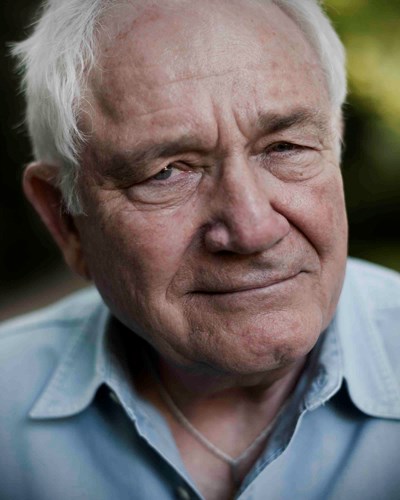 |
| David Seidler |
"My ray of hope during those bleak years were the radio speeches of George VI," wrote Seidler in his Huffington Post blog. "'Listen to the King,' my parents would tell me, 'he was much worse than you," wrote Seidler, shortly after his 2011 Academy Award for Screenwriting for The King's Speech.
King George VI was waging his own private battle with intense stuttering when he was called upon to meet the demands of his royal heritage. His father, King George V, had died and his brother, Edward VIII, abdicated the throne so he would be free of the laws that forbade him to marry his girlfriend, a twice-divorced woman. George VI reluctantly donned the weighty cloak of leadership and ascended to the throne as the King of England.
In the midst of World War II, when his country needed a strong leader to rally its people, the very reticent George VI pushed aside his anxiety, dread, and fear of humiliation and summoned the courage to stand before clusters of radio microphones, cumbersome film cameras and thousands of British citizens to deliver words of encouragement and inspiration to the allied nations at war.
Young Seidler had listened intently. The King's speech was full of involuntary pauses and abnormal hesitations but his words and his perseverance carried a message of hope.
"And there he was, not perfect by any means, but bravely doggedly giving magnificent stirring speeches that helped rally the free world," wrote Seidler. "A world that was listening, often critically, to every syllable he uttered. If he could do that, there was hope for me."
The king's act of gallantry made a huge impression on young Seidler, who grasped the lessons of his hero and took the bold steps that would lead him to success. As an adult, he wanted to share the story of his hero through his craft of screenwriting.
In the 1970s, Seidler began his research. He contacted Dr. Valentine Logue, the son of speech therapist, Dr. Lionel Logue, who worked with the king and helped him prepare for his public talks. The younger doctor, a retired surgeon, agreed to share information about his father's famous patient and even offered to show Seidler the records and medical notebooks the doctor kept that chronicled the king's treatment. Logue's only demand was that Seidler get written permission from the Queen Mother, the widow of King George VI, before he would proceed.
Decades had past since that critical time when the former Queen helped her husband struggle to meet the demands of his position. Still, the memories were too painful. She agreed that Seidler could tell story but asked that he not do so during her lifetime.
"Of course I wanted to respect her wishes, and, truth be told, I wasn't terribly worried about much time passing," wrote Seidler. "After all, in 1982, the Queen Mum was 81."
The Queen Mother lived another 20 years. When she died, at age 101, Seidler put pen to paper.
"My memories and admiration remained vivid, however. I read everything I could get my hands on about George VI, his life and his times," he wrote. "I did my best to do justice to a largely forgotten story about a king who, aided by a remarkable therapist, overcame a speech impediment to lead his country through some of its darkest hours."
The King's Speech was released on September 6, 2010, at the Telluride Film Festival in Colorado. Critics and audiences agreed that justice had indeed been done. The beautiful and moving film, shot entirely in Britain, was rich with details of the period, including some quotations from Logue's notebooks, which were worked into the script. The film was praised for its acting, art direction and visual style.
Completed on a budget of $15 million, the film grossed more than $400 million and received 7 Golden Globe nominations. It set a new record with 14 nominations for British Academy of Film and Television Arts awards and 12 Academy Awards nominations, more than any other film in 2010.
The British historical drama earned four Academy Awards: Best Picture, Best Director (Tom Hooper), Best Actor (Colin Firth) and Best Original Screenplay. Seidler, at age 73, became the oldest person in history to win an Oscar for Best Original Screenplay. A stage version, written by Seidler during the screenplay process, opened to a standing ovation and critical acclaim at London's West End Wyndham Theatre on March 27th of this year(2012).
Seidler's story perfectly illustrates the role of heroism as it comes full circle. It began with a simple, uncalculated act of courage witnessed by a small boy in need. The brave act inspired young Seidler and gave him the courage to transform and heal. Through his keen storytelling ability, Seidler shared the heroic tale with the world; the story of a brave king whose fortitude and nobility inspired a young boy, and perhaps countless others, to push past any obstacles in their paths and keep moving forward, toward their goals.
Page created on 4/4/2012 11:17:25 PM
Last edited 1/6/2017 10:48:15 PM