"The art of film-making and advocacy through films is a valuable tool that allows students to relate to their own culture and to connect the new generation with their society values, history, culture and identity."
-Site Facilitator Rula Nasser (Jordan)
"MY HERO has served as a very effective platform/tool to work in post-conflict, ethnically-mixed areas and communities and through its activities has fostered debates on important issues of our society...In certain cases the project has generated a lot of positive energy and has contributed to (re)establishing of trust, like for example in some mixed areas where the ethnic communities were always divided… Promoting project values and animating people with the idea of heroism we have succeeded in moving attention from things that divided to the things that unite different community members."
-Site Administrator Bujar Luma (Macedonia) The Global Exchange is an ongoing project that promotes cross-cultural understanding, increases media and computer literacy, bridges the digital divide, and empowers young people to believe in their own ability to create positive change in the world.
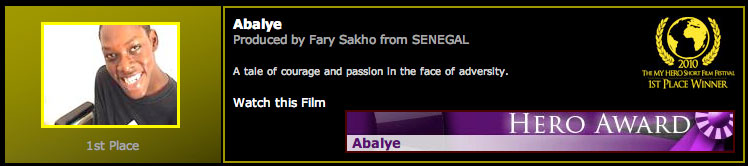
The GLOBAL EXCHANGE was launched in 2006 by The MY HERO Project, with support from a grant from the U.S. State Department Bureau of Educational and Cultural Affairs. Representatives from Macedonia, Kosovo, Bosnia and Herzegovina, Belarus, Senegal, and Jordan attended workshops in Los Angeles to advance their skills in digital media production by creating "hero films" with the MY HERO team. The program was designed to help them understand how to prepare their communities to take part in this global exchange. MY HERO video artists and media educators then lead workshops in their countries to introduce young people to 21st Century digital arts and media literacy skills.
Over the course of the Global Exchange Project, 135 participants were directly involved and more than seventy videos were produced. Participants continue to share their hero stories, art and films with MY HERO's global online audience today.
|
MY HERO bridges cultural and political divides and fosters a spirit of cooperation. In many cases, participants from ethnic backgrounds historically at odds set aside differences and lingering culture-grudges to collaborate on the creation of their videos. Participants saw MY HERO as a vehicle for enhancing the notion of "global citizenship." The influence and impact of cross-cultural interactions was ever-present and extremely pervasive among Global Exchange project participants.
...the MY HERO team has delivered a high-quality program with accomplishments as practical as they are noble: an ever-growing repository of videos and MY HERO stories on the web, the skills necessary to produce more videos and share more stories, and exchanges that bridge ethnic, national, and cross-cultural divides.
MY HERO workshops provided a successful program for building video production skills; increased participation not only from the site administrators, but also from the students and artists who attended the workshops, deepened cultural awareness and understanding of the concept of heroism; promoted positive role models; and generated excitement within the participants' communities to take part in this multimedia global storytelling initiative.

|
The My Hero Project is tax exempt under Section 501(c)(3) of the Internal Revenue
Service Code. Donations to this non-profit project are fully tax deductible.

THANK YOU FOR YOUR SUPPORT!
The MY HERO Project
1278 Glenneyre, #286
Laguna Beach, CA 92651
Phone (949) 376-5964
Fax (949) 376-9540
Email [email protected]
URL www.myhero.com
|
 |
|
|
| |
"The art of film-making and advocacy through films is a valuable tool that allows students to relate to their own culture and to connect the new generation with their society values, history, culture and identity."
-Site Facilitator Rula Nasser (Jordan)
"MY HERO has served as a very effective platform/tool to work in post-conflict, ethnically-mixed areas and communities and through its activities has fostered debates on important issues of our society...In certain cases the project has generated a lot of positive energy and has contributed to (re)establishing of trust, like for example in some mixed areas where the ethnic communities were always divided… Promoting project values and animating people with the idea of heroism we have succeeded in moving attention from things that divided to the things that unite different community members."
-Site Administrator Bujar Luma (Macedonia) |
The Global Exchange is an ongoing project that promotes cross-cultural understanding, increases media and computer literacy, bridges the digital divide, and empowers young people to believe in their own ability to create positive change in the world.
The GLOBAL EXCHANGE was launched in 2006 by The MY HERO Project, with support from a grant from the U.S. State Department Bureau of Educational and Cultural Affairs. Representatives from Macedonia, Kosovo, Bosnia and Herzegovina, Belarus, Senegal, and Jordan attended workshops in Los Angeles to advance their skills in digital media production by creating "hero films" with the MY HERO team. The program was designed to help them understand how to prepare their communities to take part in this global exchange. MY HERO video artists and media educators then lead workshops in their countries to introduce young people to 21st Century digital arts and media literacy skills.
Over the course of the Global Exchange Project, 135 participants were directly involved and more than seventy videos were produced. Participants continue to share their hero stories, art and films with MY HERO's global online audience today.
|
MY HERO is actively looking for new partnerships to expand the Global Exchange Project. Our team of media artists and educators are available to lead and assist groups interested in planning MY HERO digital arts workshops and launching a Global Exchange portal in their community. For more information, or to become involved as a partner or mentor, please contact The MY HERO Project at [email protected].
Independent research and evaluation firm Rockman et al collected data to evaluate the project's effectiveness. Following are just a few highlights of their findings. Click here to read the complete report.
MY HERO bridges cultural and political divides and fosters a spirit of cooperation. In many cases, participants from ethnic backgrounds historically at odds set aside differences and lingering culture-grudges to collaborate on the creation of their videos. Participants saw MY HERO as a vehicle for enhancing the notion of "global citizenship." The influence and impact of cross-cultural interactions was ever-present and extremely pervasive among Global Exchange project participants.
...the MY HERO team has delivered a high-quality program with accomplishments as practical as they are noble: an ever-growing repository of videos and MY HERO stories on the web, the skills necessary to produce more videos and share more stories, and exchanges that bridge ethnic, national, and cross-cultural divides.
MY HERO workshops provided a successful program for building video production skills; increased participation not only from the site administrators, but also from the students and artists who attended the workshops, deepened cultural awareness and understanding of the concept of heroism; promoted positive role models; and generated excitement within the participants' communities to take part in this multimedia global storytelling initiative.
|
|
The My Hero Project is tax exempt under Section 501(c)(3) of the Internal Revenue
Service Code. Donations to this non-profit project are fully tax deductible.
THANK YOU FOR YOUR SUPPORT!
The MY HERO Project
1278 Glenneyre, #286
Laguna Beach, CA 92651
Phone (949) 376-5964
Fax (949) 376-9540
Email [email protected]
URL www.myhero.com
|
|